This Is Hollywood’s Most Disturbing Cold Case
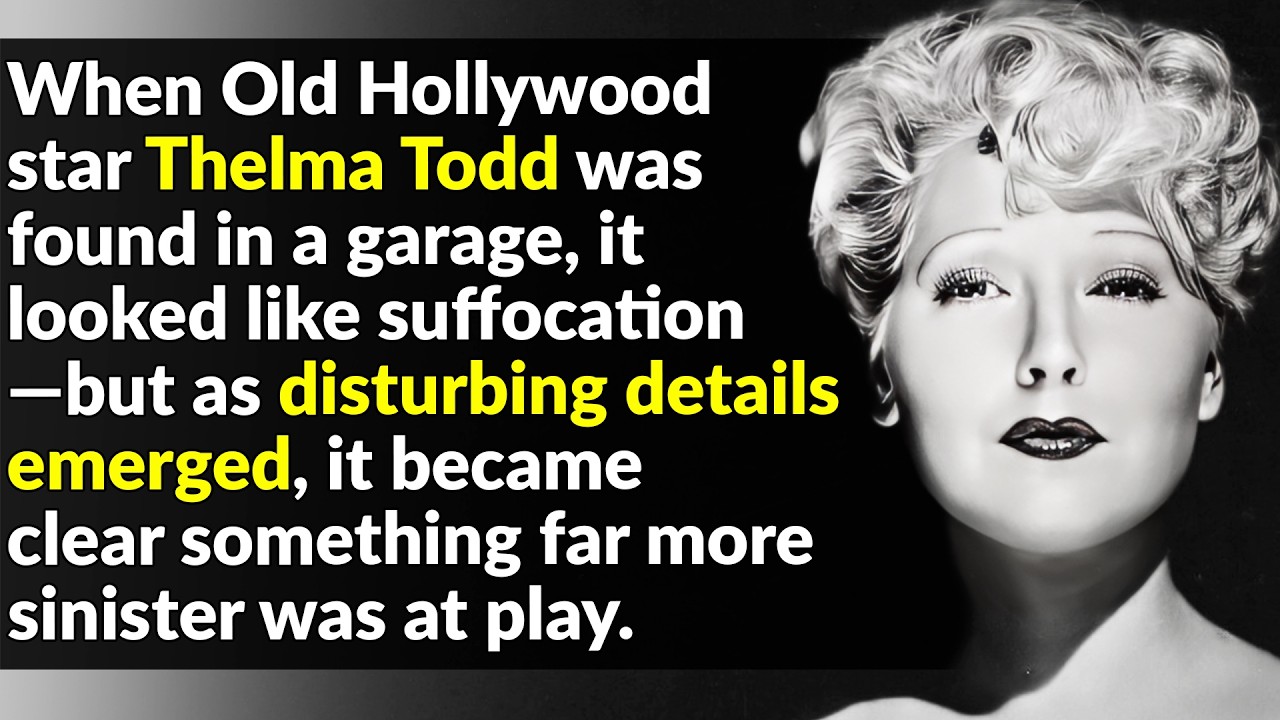
The gloved hand of a maid, reaching into the chocolate-brown Lincoln convertible, touched the cold, silk-clad arm of a Hollywood icon and recoiled. It was December 16, 1935. Thelma Todd, the “Ice Cream Blonde,” the radiant comedienne who had made America laugh alongside Laurel and Hardy, was dead at 29, slumped in the driver’s seat of her own car, elegantly dressed in a mauve and silver gown, a mink stole draped over her shoulders. On the surface, it was a picture of tragedy. The coroner would eventually label her death a “suicide” and then a “tragic accident,” pointing to carbon monoxide poisoning. But the swirling life that preceded that frozen moment, involving a secret affair, a volatile gangster, and a business empire built on a sea of secrets, has left Hollywood with its most disturbing, unresolved cold case—a puzzle of passion, corruption, and murder that refuses to be relegated to the history books. The official narrative, accepted for decades, is a cruel irony. Thelma Todd was a brilliant and disciplined star, yet her final hours were governed by chaos. On the night of November 16th, after a party at the Trocadero nightclub in West Hollywood, she was driven home to her luxurious apartment situated above her beloved restaurant, Thelma Todd’s Sidewalk Cafe. It was cold, and, according to the theory, she pulled into the garage of her building, started the engine to generate warmth, and fell asleep. The garage, located on Garlingford Avenue, was not attached to her apartment. She was found there two days later, the engine silent but the exhaust still potent. The coroner claimed she had no wounds, no signs of struggle. It was the perfect accident for a town eager to clean up its messes. But even the most cursory glance at the last week of her life paints a portrait of a woman in a violent storm. Todd was not a simple victim of her own vices; she was a targeted pawn in a seedy chess game of Hollywood’s dark underbelly. A grand jury eventually ruled there was no foul play, yet the mountains of contradictory evidence, the threats she reportedly made, and the roster of suspects with ironclad motives all point far past simple fatigue. The Academy of Motion Picture Arts and Sciences itself briefly investigated, but the case was ultimately closed, leaving an unfillable void where justice should reside. Who were the architects of this deadly narrative? The first layer is the archetypal Hollywood horror story: a mother’s ambition. Todd’s story begins with a mother-in-law named Alice Todd who tore her Pennsylvania-born daughter from the arms of a potential teaching career, dragging her into the world of beauty pageants and then Hollywood. Alice Todd saw her daughter not as a woman but as a capital investment. She lived vicariously through Thelma’s fame and counted the earnings. When Thelma died, Alice, defined as her sole heir, stood to inherit a multi-million dollar fortune. Several acquaintances reported overhearing the elder Todd celebrating her daughter’s death with chants of, “Now I can build that investment!” This was never officially investigated, surfacing only as street talk. Beyond the avarice of her mother, the cloud of potential killers forms a monstrous pantheon. First, there is Roland West, the legendary director who discovered her, who was her lover, and too, the co-owner of the Cafe. West was married to Jewel Carmen, yet he groomsed Thelma for years. Their relationship was a hot civil war; West was controlling, and he was reportedly furious at Thelma’s forays into other relationships. He and Thelma split at one point, and she married a thief named Patrick DiCicco. DiCicco was a failed life of crime in a Hollywood blazer; he was physically abusive, and the marriage ended in a volatile 1934. When she returned to West, it was as if she had just left the frying pan for the fire. Yet, the most chilling suspect remains the shadow that was cast over the entire last year of her life: Lucky Luciano. The gangster king, who was true Capone of Los Angeles syndicate, had a plan. He saw the goldmine of Thelma Todd’s Restaurant and its location above the city. His scheme was to turn the rooftop terrace into a lavish gambling den, bankrolled by Hollywood executives and wealthy patricians. Thelma, fiercely protective of her establishment, stood in his way. Eyewitnesses from the famous Trocadero nightclub would testify that a few nights before her death, the two argued. She screamed, “You can open your nightclub over my dead body!” Luciano, according to testimony, replied with a cold, eternal smile, “That can be arranged.” This exchange was reported but never taken seriously by authorities. Then there is the fatal cavity of the final night itself. The official report places Todd in her garage at 2 a. m. But a key witness, which the grand jury later deemed unreliable, stated they saw Todd on a busy street driving on Sunday afternoon. Also, the condition of her clothing belies a simple nap. She was found folded over, as if someone had sealed her into the car. A famous actor named Chester Morris, who was a friend of West, told an extraordinary story. As Roland West lay dying in 1952, he called Morris to his deathbed and confessed. He allegedly said, “I killed her. I went out there to talk to her and saw her there in the car, and I was so angry I put a tube from the exhaust into the window and closed the door.” The story of the confession was publicized widely but remained hearsay, a matter of a dying man’s tongue. What are we to make of the physical evidence? Multiple inspections of the Mahogany car revealed that the ignition key was not in the ignition on the steering column. The key was later found in the car’s glove compartment. Investigators never could retrieve a key to explain why Todd would turn off a running engine and then go back to sleep. The garage was also remarkably clean of exhaust, yet the coroner measured the room. If she had fallen asleep with the engine running, the carbon monoxide would have overtaken the entire closed garage, and any mechanic would find her bloated from the fumes. Her corpse was elegant, perfectly, with a thin layer of cold piercing from the cold air. The physical evidence points to a staged scene rather than a fatal mistake. But the district attorney, under intense pressure from Hollywood, packaged it as a suicide. Even the type of engine it was matters: a Lincoln convertible. She was in a state of health and beauty, a predator of bread and bread. Why would she choose to meet her maker in a convertible with the top down? In a attempt to find warmth, she would have had to have placed the top up. The idea of a woman of her vanity dying of gas in a cold convertible seems as absurd as the cause. It is a calculated placement. The killer needed her in that car, curled like a decorated doll, to suggest she had simply crawled in to escape the frost. The corpse was a stage prop. The grand jury’s failure to indict provided the cover for the culprits. In the 1930s, Hollywood was raw and corrupt. The studios were at war with themselves, and the city fearful of the gangster resurgence that could damage the multi-million dollar industry. Luciano’s reach extended the city’s political machine; he was untouchable. The evidence against him was the reputation of a man who had reflexes to violence. The LAPD had been contacted by a man who claimed to be the getaway driver, telling them he saw Luciano and Chico in the garage, and that they forced air out of the car. This witness wasn’t taken in. Why? Because he was a known criminal. The case was buried under the weight of the two most exploitable groups in 1930s America: women in a mans world, and the fallibilities of the justice system. Years later, when George Schenck, a famed studio head, said, “It was a fortuitous accident for a lot of people,” the sentiment was unmistakable. There was no Paradise at the end of Berkeley Street. Instead, there was the impossible gap between the laws and justice. The truth of the exact mechanics of her death may have died with Roland West on his deathbed. But what the film industry learned, and what the public inherited, is the dark lesson of Hollywood’s ability to shape a violent, and real events, into a sanitized public narrative. Todd’s contemporaries, on the other hand, knew the truth. She was a woman who saw the world through the bouquet of dollar signs and love letters gone awry. She famously said, “I am a blonde, and I’ve had men wrap themselves in my platinum hair.” But that same blondness was, in the end, her terminal hour. The public had a thirst for scandal; the men around her had a hunger for control and wealth; the studio had a need to protect its investment. All three forces collided in that garage to produce a corpse that held too much truth. Was it Luciano who ordered the hit because she rejected his casino? Or West, the cuckold who was drowning in debt and being outshone by his own star? Or the third party, the stud, a hitman who was poorly paid and wanted to sink the body in a way that wouldn’t land on him? Or her mother who did not. In the decades since, a physical evidence—a ring, a note—has not been uncovered. The cold case file is still a pile of noisy allegations. This case is a ghost of a generation that still haunts the Hollywood legend. It is not merely the story of a beautiful woman found dead in a car. It’s the story of the dark intersection of silent film’s youth meeting the gritty corruption of the syndicate’s grasp. Every forensic professional who looks at the photos knows the puncture. The cold blackness of that lost, the carburetor wasn’t from a failing motor, it was from a murderer’s desire for power. As the world moved back to war and then to the Red Scare, Thelma Todd faded, just another name in the headstones. But her case screams a message across the decades. It wasn’t the automobile that killed her. It was the secret the Golden Age carried within it—a rot of greed and ill intent. The investigation into Todd’s death continues to this day. The mystery that remains is not what happened—it’s why there are so many killers alive, and none of them got to feel the justice of a courtroom. In that, she is the patron saint of the unsound.

10 September 2026

Soul Train Nearly Went Off The Air After Don Cornelius Did This…

The legendary host who gave America its first national stage for Black music and culture spent his final years in a shadow of chronic illness, legal turmoil, and isolation, a new examination of the program’s history reveals. The man who ended every broadcast with the iconic phrase “Love, peace, and soul” died by suicide in 2012, leaving behind a legacy marred by a series of devastating decisions and health crises that nearly destroyed the institution he built. The story of how Soul Train almost went off the air is not one of ratings failures, but of a founder’s willingness to risk everything to maintain control over a cultural movement he refused to let corporate America dominate. The genesis of the groove was born in the late 1960s when Cornelius, a radio announcer in Chicago, observed a glaring void on television. He saw that rhythm and blues, soul, and the nascent sounds of funk were reshaping American culture, yet networks largely ignored the young Black audiences fueling that transformation. The idea of a dedicated platform was first tested through local dance events known as the Soul Train Caravan, which provided proof that a substantial audience yearned for a dedicated presentation of their culture. In August 1970, the official Soul Train premiered on Chicago’s WCIU-TV, a modest station whose small budget could not match the major networks, but the raw energy filled a void that immediately resonated. The concept of the show was built around the African-American experience, with Cornelius acting as the prime architect of a youth culture takeover. The program was a deliberate and calculated response to the exclusion of Black youth from network television, with dancers showcasing natural rhythm and distinctive style. One key figure in the expansion was George Johnson, founder of Johnson Products Company, the makers of Afro Sheen, who saw the commercial and cultural potential of the show. Johnson’s partnership alongside Cornelius formed a business alliance that rooted the expansion in Black ownership and entrepreneurship. In 1971, the production moved to Los Angeles, a relocation that placed the show at the epicenter of the American music industry. To manage the financial weight, the production shifted to a system of concentrated taping sessions, filming several episodes on a single Saturday. Yet the visual heart of the show, the dancers, were operating under a system where opportunity and food replaced monetary compensation. Dancers were often recruited from the streets and dance communities of LA, and while their appearances launched cultural trends, the barriers inside the studio were intense. Behind the curtain of Soul Train, the environment was not as glamorous as it appeared, with many dancers enduring long, exhausting production days without conventional pay. The catering reportedly consisted of boxes of Kentucky Fried Chicken, creating a class divide where high-profile artists received celebrity treatment while the dancers provided the energy that made the program iconic. This imbalance created a resentment and intense competition, where an informal hierarchy developed–dancers with closer ties to the production studio got better placement on the floor, and a few seconds in front of the camera became a battleground for those seeking fame. The famous Soul Train line itself was shaped by these internal tensions. Initially a balanced, structured environment required dancers to perform in couples, but a tug-of-war over creative freedom led to differences. Dancers wanted to establish their own identities rather than be part of a pair, and Cornelius eventually adapted, allowing individuals to go down the line, giving rise to the spontaneous expression that made the line legendary. But the singers themselves also often battled the production’s rules, with the show frequently relying on pre-recorded tracks, forcing artists to lip-sync, a setup that frustrated stars whose power was born on the stage and bandstand. Cornelius was preoccupied with the image of Black America on national television, a pressure that led to a revealing decision regarding the show’s popular Scramble Board segment. He was concerned about contestants being publicly embarrassed on national television over iconic Black history figures. To prevent what he felt was symbolic damage to the image of Black culture during a period of high scrutiny, he quietly gave contestants the answers beforehand. It was an ordinary production decision at the time, but it represented the burden of being the standard-bearer for the culture, and it would be a premonition of the larger battle. The success of the show made it a threat to the existing status quo, and in 1973, a major conflict erupted that almost dismantled the show. This was the period of the Black Media War, where television giant Dick Clark, whose American Bandstand had dominated the genre, saw the rise of Soul Train as a threat to his influence over the dance show format. Cornelius would not relinquish ownership, and perceiving the rejection, Clark struck back by launching a new program, Soul Unlimited, on ABC. The new show was similar, using contemporary Black music and an adapted format that looked like a direct attempt to value the success of Soul Train. ABC possessed a massive institutional structure, and the threat of a rival show jeopardized Soul Train’s access to affiliates and lucrative time slots, putting the entire franchise in jeopardy. Cornelius did not fight his alone, but enlisted the support of influential Black leaders, including Reverend Jesse Jackson and music executive Clarence Avant, transforming the dispute into a matter over representation of the Black community. Jackson’s Operation Push threatened a national boycott against ABC and its advertisers over the network’s actions to underline a Black-owned institution. The pressure worked, the corporate giant cancelling the rival show after a short run, and the siege was broken by a powerful rejection of ownership. Cornelius had solidified his control, continuing to grow the franchise, but the burden of maintaining the empire eventually became physical. In 1982, Cornelius underwent a deeply serious and critical neurological surgery to correct a congenital brain issue, a 21-hour procedure that he survived but not without lasting damage. The health crisis brought seizures, chronic pain, and systemic decline that compromised his command and forced him to rely on his physical energy and mental acuity. His health had compromised in a way that altered his life, and the end was unavoidable: he stepped down from hosting Soul Train in 1993, forcing the production to adapt to a future where he was no longer a constant fixture. The strains on the franchise were also multiplying as cable television, music videos, and shifting cultural landscapes introduced new competition. Producers and hosts like Maestro Clark and Dorian Gregory appeared, but the identity was permanently altered. In 2008, Cornelius perhaps made his final critical decision: he severed his relationship with the institution by selling Soul Train and its media assets for a significant sum. the precise details of the sale were private, but his departure from ownership signaled the end of an era. By then, he was also facing severe and frightening personal troubles, including a domestic dispute involving his wife, Vicki Chapman, which led to his arrest and a subsequent guilty plea to a reduced charge of spousal battery. The man who had once controlled the portrayal of Black culture on television found his own personal narrative spiraling out of control. The health issues, the disputes, and the constant gear shifting of a strained relationship became an almost unbearable pressure. On February 1, 2012, police discovered the 75-year-old patriarch dead at his Los Angeles home from a self-inflicted gunshot wound. The tragedy shocked the entertainment world, revealing a double life of control and total despair. His son Tony spoke publicly about the absolute devastation of chronic pain that his father had endured–the personification of the man who gave every other artist a stage had no relief from his own battle on the stage of life. Don Cornelius built something that survived him, and while the tragic ending and health struggles were the furthest thing from entertainment, his legacy lies in the 35-year run of a TV show that celebrated the culture and spawned generations of initiatives. He provided a platform where Black identity was not the guest; he was the main attraction. His creation itself became an influencing opportunity, and the Battle of 1973 proved that the concept of ownership is the foundation of true legacy. He gave us a stage: a steady flow of moves, music, and respect for the point of view stemming from his home of comfort and objection. The phrase he taught viewers superseded the man, representing not just an ending, but a valuable reminder of what Black ownership, expression, and the power of being the force behind the final moment of truth for a founder representing all that strength, doing so until his very final breath– and finally giving up the thing he built because his body could not outlast the tasks.

10 September 2026

This is starting to pick up some serious steam…

The New York Rangers are heading into a pivotal week with the start of rookie camp, and the organization’s decision-makers are facing a series of critical choices that will shape the roster for the upcoming NHL season. According to a new analysis from Rangers Digest, the conversation surrounding top prospect Albert Schmidt has reached a fever pitch, with insider reports suggesting that the team may be weighing an unexpected decision regarding the young forward’s immediate future. Sources close to the team indicate that the Rangers’ front office, led by general manager Chris Drury, is under pressure to finalize the roster composition before the main training camp gets underway. Schmidt, who was selected as a first-choice pick, has drawn attention for his versatility, capable of playing both the left and right wing. However, the depth of the current roster means that a significant decision looms: will Schmidt earn a spot in the loaded opening night lineup, be sent down to the AHL for seasoning, or, as a report from Steven Ellis suggests, could the team actually consider moving him abroad for his own development. While Schmidt’s situation dominates the social media chatter and comment sections across YouTube and X, the program’s host, who remains confident in his preseason predictions of a playoff run, is throwing a spotlight on a player he believes is flying completely under the radar. The discussion on Tuesday’s show shifted focus to forward figure of Drew Fortescue, a young player who, unlike Schmidt, has already spent time inside the NHL system and is now being touted as the “biggest factor” in the team’s depth plans for the coming season. The host stressed that while Schmidt has been the talk of the town among the fanbase, Fortescue is the player who could be the difference-maker if injuries strike the group during the grueling 84-game regular season. For him, the question of a potential lineup change is deeper than just the flashy prospect. Fortescue is a player who got into nine games with the Rangers last year and looked more comfortable than some people might have expected, a sharp contrast to the initial impressions of other call-ups like Gabe Perreault. “With him, it didn’t really feel like he was out of place, no matter how you looked at it,” the host said during the analysis segment, noting the high level of competition around him. “He plays a very safe defensive game. You’re not going to throw him to the wolves, so to speak, but the underlying elements of his game felt solid, even with that limited exposure. You have to think he is the most ready candidate to step in when injury strikes.” The discussion referenced a recent article by Jennifer Stalter, which rich described a profile of Fortescue’s development this summer, as well as a recent interview the player conducted from a training session. The player has become increasingly popular for his detailed focus on the physical aspect of the game. His coach from Boston College, Greg Brown, also provided a glowing endorsement, suggesting that while Fortescue needs to get a bit stronger, his understanding of breakout timing and high-quality passing is already beyond that of a typical prospect. Fortescue noted in the interview that his goal is to ensure the puck is always on his teammate’s stick, emphasizing the limited space available in the pro game. He made clear his need to keep improving his strength, but the underlying message of the Rangers player development staff is that he is a high-class defenseman who knows who he is on the ice. It is exactly this kind of feel, the host argued, that makes him an ideal backup option, even though that term might undersell his potential to become a solid everyday player. The hockey operation staff is prepared for the brutal reality of the season, where injuries are a certainty. The extensive roster depth they have built over the summer, including the signing of Scott Morrow, who has some contractual matters to settle before camp, is a sign that Drury wants the team to be ready for anything. With a new collection of talent, the Rangers find themselves in a fascinating spot where they have an influx of players blocking the rotation, which was a completely unthinkable scenario just a few months prior. For example, at the time of the draft, no one expected that the management would have the luxury of also integrating Sean Durzi and Marcus Pettersson into the mix. The defensive side of the roster now looks remarkably immovable, meaning that until they can find a partner for a trade involving the impressive young star Braden Schneider, the depth chart does not have a single hole. This situation leads to tough break and edge in real life dealing with forwards trying to force their way into a crowded top-nine unit. The media host firmly believes that the team will make the playoffs. He has been steadfast in that prediction and does not care about the critiques from other hockey circles. The rallying cry has been healthy competition, and he reinforced that ugly truth to his subscribers during a video where he fended off a wave of skepticism that continues to float around the team’s ability to walk out of the Eastern Conference as a contender. “I’ve said it since the day of day one: this is a playoff team. I don’t care what some of these analysts are saying,” the host said earlier in the broadcast. “You put a strong team out there, they get into the playoffs. It just takes a good team, and I believe we have that. I have seen their evolution over the off-season. I’m not moving off of it.” This line of thought hinges on the idea that a team that was just ahead of the pack will take a leap. The reasoning for that optimism partially lies in the emerging core of players headlined by Schmidt. He presents a case then concerns about the keys of the process. If he is not playing, the team’s plan might change. Yet, the Rangers had originally believed his path to the show was absolute and his production will be a major factor. “I want to see how he looks on the ice, I really do,” the host said. “I think he will definitely have a dominance to his game. They’ll have a really, really fun battle going into the Rookie Showcase. That is a game that fans should watch closely.” But they also did not feel absolutely certain that Schmidt was leaving, even with the current situation with contracts and roles on the main team. The logistics of the whole thing are tricky, with the parent club likely preferring to keep him within some form of contention, not with the Wolves in a capacity that full centers are attainable. “If he earns it, they have to find room for him, period,” he said. “It’s not like I want you, but they didn’t put him in. They have to, because he’s proven he is the best fit for the spot and you cannot legally waste that potential.” On roster constraints of a more temporary nature, the answer of a trade might be presented if he shows too well. Everyone watching is wondering what happens when the lights go on in this week’s annual rookie camp. This series of events begins with the rookie scrimmages and marks the beginning of the season and is the first time fans get a look at the new talent that they traded for and love. It could also be the final event that determines the core of the roster leading into the season. The Rangers have a hard road ahead. The pressure is fully on the front office that must assess who is not only a good player but who actually fits the culture despite the raft of new faces that are knocking on the door. The situation grows more complex with the unrewarding news regarding a potential other veteran whose contractual situation could affect the cap space, which is beginning to run thin. But for Drury, the mission is clear: he has just days left before the stakes high noon reveals which player will be able to call the Garden home for good. The upcoming sessions are going to be crucial to the decision process. For the latest, we will be covering the games as they happen, including all live updates from the camp, so make sure to keep an eye out for the next update on this website. For the YouTube host, giveaways are happening and the community is teaming up. He argues: I am very very happy with where this hockey team is, and views are waiting for the full action to start this Saturday. The buzz is real, and the are about to begin. The clock is ticking for Chris Drury. Everyone in the arena is waiting.

10 September 2026

LeBron James’ GOAT Bombshell Erupts — Nobody Is Ready For This Philadelphia 76ers Team

The city of Philadelphia has become the epicenter of a seismic shift in the NBA, and with it, the league’s entire power structure is threatening to collapse under the weight of expectation. For the first time in what feels like a generation, the 76ers are not just contenders; they are the definitive storyline. LeBron James, the player who has defined an era, is bringing his considerable gravity, and his insatiable ambition, to the City of Brotherly Love. The combination of his presence and a supporting cast loaded with combustible talent has created a pressure cooker that could either forge a dynasty or incinerate the entire franchise. The bomb was officially dropped when basketball icon Charles Barkley, never one to speak without conviction, essentially conceded that his personal hierarchy of greatness is open for renegotiation. Barkley has steadfastly maintained that LeBron James is the third-best player he has ever seen, trailing the legendary duo of Michael Jordan and Kobe Bryant. But now, with LeBron situated in the Eastern Conference with a win-now roster, Barkley has stated a condition that would force him to change his stance: If LeBron wins back-to-back championships at age forty-four or even forty-five, the scales would be tipped. “If if if he wins back-to-back championship to walk away this thing at 44 of 45, I I I’ll say something I ain’t never said before. This dude I think I just saw the greatest basketball player ever,” Barkley said during a recent round-table discussion. The statement was followed by a methodical qualification: two titles, not one. The standard has shifted from just collecting rings to defying the entire biological and professional lifespan of an NBA player. It is a monumental claim that puts a target on Philadelphia that is so large, it is practically a black hole. The delivery of that verdict highlights precisely why LeBron chose this stage. He did not enter the chat to merely compete; he entered to surpass. When asked if Barkley would actually give LeBron the edge over Jordan with a specific set of hardware, Barkley reaffirmed his logic. “I probably would. I dude if he wins back to back at 44-45 years old. Yeah. Yeah. You got it, and that’s the thing about it, LeBron’s hangin’ out with. Like it ain’t no shame saying he’s the third best basketball player you ever seen. But if he can still play, if they can win two more, two more. Now I didn’t say one more. The legit path to GOAT status runs through the red, white, and blue of the Sixers. But the narrative in Philadelphia has shifted far beyond the abstraction of individual accolades. The team has morphed into a super team that defies conventional basketball logic, and the retention of their own stars has sealed a terrifying reality. The roster boasts LeBron James, Joel Embiid, Jaylen Brown, and Tyrese Maxey. But have, looking at the hierarchy, Barkley and analysts are already raising the alarm about a critical frictional point. This team might have too much identity for one basketball. None of the four can function as a floor-spacing bystander. The offense in Philadelphia has been designated as a “four-star powder cage.” The phrase immediately suggests a cold reaction and potentially explosion. The concern is that the NBA’s new executive facilitators, Adam Silver and co. will never have to worry about a ratings issue if the chemistry fails. Instead of a chemical mix, they might see a bomb. Each player arrives with a distinct chip on their shoulder. Jaylen Brown, escaping the shadow of Boston and the dominance of his previous role, has walked into Philly with the express intent of proving he is no longer the second fiddle. He is trying to be the best player on this team. That ambition is sure to collide with the lingering presence of Joel Embiid. The tension has become the exclusive storyline of the summer. Tyrese Maxey has already been named the option one, the centerpiece of forward-thinking basketball. LeBron James has openly displayed a distaste for deferring to other stars after his recent tenure in Los Angeles, where he was often a decoy to other ball-handlers. This brings us to the most prescient question on the table: what does reaching LeBron James mean for the mental health of the roster? Joel Embiid is likely to suffer the most demotion of a hundred attitude adjustments. Barkley, with his infamous candor, didn’t mince words about the changing roles under this new directive. When asked how the system gets rebalanced, he invoked the imagery of an older band. Great for team people. But we see the issue. He is unsure of the actual power side. Barkley used the Rolling Stones as an analogy: “I don’t think we even know who the fourth guy is with the Rolling Stones… Joel Embiid is going to be like Ron Wood.” The metaphor is a gut check. Ron Wood is a wonderful guitar player, but he lives in the shadows of Keith Richards and Mick Jagger. Losing the star status and being relegated to a role player, even on a contending team, is a humiliating scal rather than a role he would embrace. Barkley acknowledges the volatile adjustment: “The biggest adjustment is going to be Joel Embiid… He’s the fourth option. Yeah.” If Embiid remains healthy, instead of Northern the ball drop into the low post, he will be expected to space to the three-point line or as a decoy to let James run the pick-and-roll. That is a seismic shift for a player who has been the face of the franchise for years. Barkley, however, suggests that LeBron is the one most apt for this situation because he just went through the same transition to a lesser extent between rejection in L. A. “He just went through it. He got two guys who are better players than him at this stage of his career,” Barkley noted. But with the Sixers, the balance is a powder keg. The definitive chemistry requires everything Pat Riley invented: “voluntary cooperation.” It sounds good on paper. On the flight back home after a three-game losing streak, such cooperation becomes incredibly vulnerable. They are all trying to prove they don’t need a seventh game to fall back on. They must prove that the NBA cannot blame them for johns. The day-to-day bills of schedules go beyond the actual ball. The unintended but immediate salary. The opening night game of the National Basketball League has become a mandate. The Knicks will win their rings first. But the ratings war doesn’t wait. Barkley the rule, demanding two East Coast games with a nasty en suite. “We’re going to have to have two East Coast games on game night… Game two has got to be LeBron James and Philly! 100%! If the Celtics against the Sixers ain’t game two, they don’t know what they’re doing.” Far from ‘open seat’, it’s now must-see television to see if the Sixers can defeat their hate-brother rival. The city is still waiting for a title, having, one almost 43 years of dust and whispers of “Boston” and “Brooklyn”. Chuck always says the Philly fan base “It’s a great place if you’re going to win. It is not a great place when you lose it.” The ferocity is real. And they are coming for the head of the conference now, emboldened by one alpha coming home. “You put a bullseye on their back.” The reality is that the 2023-24 season is not going to be a foregone conclusion. The last season of the NBA landscape, as designed by Adam Silver, is get ready to have to settle the question of LeBron James. So the threshold is clear. Win two – get the championship, and the entire narrative is dismantled. The haters will say “another superteam” is a way to reward his iconic status modeling. Barkley, for his part, addressing that, remains adamant on extended criticism. “He stacked it in Miami, he stacked it in Cleveland, he stacked it in LA. Now he’s stacking it in Philly… I’m going to have the same criticism I’ve always had.” Yet, the action is on the floor for the new guard. Maxey must prove he can get a bucket with three other All-Stars on the floor. Brown must prove he can guard the three spot while also fulfilling the “second option” role he resented. Embiid must prove he quits the sulk-fest of the modern center and becomes sixth like Kareem, Ho, Mango. And LeBron, at 25 seasons, has to will his body to play another 82-game bruise. If he touches another title, the entire league and the debate are irrevocably changed. A win-er in his wind-down, at the back of an intense personal precedence, might just make Chuck utter those words. LeBron James is the GOAT. The hours before that shaking the sun like a league shake-up; will the city explode in a joy none know? It must happen, or it is another bust. This is the moment where broadcasters and outlets are in a frenzy. The warnings from the analysts are clear: ” it could be a mess,” but they always caveat it. It has to be a mess because now they have the definite player. The world will watch as the 76ers limp to the finish line. The powders are loaded. The spark is lit. And in a way, they aren’t just fighting for a team or a heritage. They are playing to settle a question that has haunted the sport for the last thirty years. This Philadelphia project is the final chess move. The entire basketball world is holding its breath to see if King James can topple his greatest rival from a distance—the argument of the past.

10 September 2026

Chovala jsem se jako chudá a naivní dívka, když jsem se setkala s rodinou svého snoubence

Zasnoubení, které mělo být korunovací rodinného impéria, se v sobotu večer proměnilo v tříšť, když nevěsta před zraky stovek hostů rozbila fasádu jedné z nejvlivnějších podnikatelských rodin v zemi. Lauren Hale, třiatřicetiletá softwarová architektka, veřejně odhalila nejen vypočítavý plán rodiny Kolincových, ale i finanční podvody, které otřásly základy jejich automobilového byznysu. Okamžik, který měl být oslavou spojení dvou světů, se změnil v dramatickou konfrontaci, když Lauren Hale vystoupila na pódium a místo poděkování přednesla šokující svědectví. Hosté, mezi nimiž nechyběli obchodní partneři, investoři a vlivní přátelé rodiny, ztuhli, když nevěsta popsala, jak byla záměrně uváděna do role naivní dívky, aby rodina mohla realizovat své skryté plány. Celý příběh začal mnohem dříve, u první večeře na rodinném panství, kde se Lauren setkala s matkou svého snoubence Andrew Kolince, Evelyin. Ta ji podle slov samotné nevěsty chladně zhodnotila a pošeptala synovi, že vypadá jako služebná. Místo konfrontace se Lauren rozhodla pro tichý experiment, nechala rodinu věřit, že je obyčejná dívka bez konexí, aby viděla, jak se k ní budou chovat. To, co následovalo, předčilo její nejčernější očekávání. Během večeře zaslechla rozhovor mezi Evelyin a její dcerou Rebekou, který odhalil cynickou strategii. Rodina plánovala využít zasnoubení jako zdržovací taktiku, zatímco by Andrew udržoval vztah s Viktorií Ruso, dcerou majitele luxusní automobilové společnosti, kvůli záchraně krachujícího rodinného podniku. Lauren, která se živila analýzou systémů a hledáním vzorců, začala po tomto zjištění provádět vlastní vyšetřování. Ponořila se do veřejných záznamů, firemních výkazů a účetních dokumentů rodinné firmy Kolincových. Netrvalo dlouho a narazila na znepokojivé nesrovnalosti, opakující se převody v malých částkách, které unikaly pozornosti, ale v součtu představovaly obrovské sumy. Vyšetřování odhalilo, že Rebeka Collinsová, Andrewova starší sestra, léta odčerpávala peníze ze společnosti, aby financovala svůj okázalý životní styl. Společnost se přitom potýkala s obrovskými dluhy a franšízová smlouva s výrobcem visela na vlásku. Bez partnerství s rodinou Rusových by se celé impérium Kolincových zhroutilo do roka, a Andrew o tom podle Lauren věděl. Vrcholem cynismu byl samotný okamžik žádosti o ruku. Lauren popsala, jak jí Andrew poklekl s prstenem, který měl zakalený kámen a nerovné osazení, což dokonale symbolizovalo falešnost celého zasnoubení. Přesto řekla ano, protože potřebovala čas na dokončení svého plánu a shromáždění důkazů, které by rodinu usvědčily. Poslední šanci na záchranu vztahu dala Lauren Andrewovi pouhý den před osudovým večírkem. Zeptala se ho přímo, jestli jí chce něco říct, jestli existuje něco, co tají. Andrew zaváhal, ale pak se usmál a řekl, že nic. Tato odpověď definitivně zpečetila jeho osud a Lauren se rozhodla dotáhnout svůj plán do konce. Na zásnubní večírek dorazila Lauren v šatech, které odpovídaly její skutečné pozici, a s šperky, které svědčily o jejím skutečném postavení. Když Evelyin Collinsová představila budoucí snachu a předala jí mikrofon, nikdo netušil, co bude následovat. Lauren začala klidně, ale její slova postupně odhalovala celou pravdu o rodině, do které se měla přiženit. Sál ztichl, když Lauren popsala první večeři, pohrdavé pohledy a poznámky o jejím vzhledu. Pak přišla s důkazy, fotografiemi Andrewa s Viktorií Ruso v restauraci, pořízenými pouhé dva týdny předtím. Andrew podle jejích slov držel svou bývalou přítelkyni za ruku a tvářil se důvěrně, zatímco jeho snoubenka čekala venku v autě. Největší šok ale přišel, když Lauren předala zástupci výrobce tlustou složku plnou dokumentů. Ty prokazovaly nejen finanční machinace Rebeky Collinsové, ale i zoufalou snahu rodiny udržet společnost nad vodou za každou cenu. Lauren zdůraznila, že rodina zaměňuje kontrolu s láskou a strategii s integritou, a proto se do takového svazku nechystá vstoupit. Po těchto slovech Lauren sundala zásnubní prsten a vložila ho do ruky zkoprnělého Andrewa. Položila mikrofon a bez jediného ohlédnutí opustila pódium a zamířila k východu. Dav se před ní instinktivně rozestupoval, jako by všichni chápali, že jsou svědky historického okamžiku, který nelze vzít zpět. Za ní se zvedl chaos. Evelyin Collinsová se snažila získat zpět kontrolu a mluvila o nedorozumění, zatímco Rebeka, jejíž tvář ztratila veškerou barvu, popírala obvinění z finančních podvodů. Její sebedůvěra se rozplývala pod tíhou stovek sledujících očí a důkazů, které právě spatřily světlo světa. Andrew stál zmrzle na místě, kde ho Lauren opustila, s prstenem stále v ruce. Jednou tiše zavolal její jméno, ale nebylo to volání o odpuštění ani vysvětlení. Byla to jen snaha zjistit, zda se otočí. Lauren se neotočila. Prošla kolem okraje stanu a zmizela v noční tmě, přičemž za sebou nechala rodinu, která se právě začala rozpadat. Důsledky na sebe nenechaly dlouho čekat. Během několika dní se obchodní partneři začali distancovat, schůzky byly odloženy a pozvánky tiše staženy. Výrobce ukončil franšízovou smlouvu před koncem měsíce, což znamenalo faktický konec prodejen Kolincových. Následovala vyšetřování, finanční audity a interní prověrky, které odhalily vše, co bylo léta skryté. Rebeka Collinsová byla propuštěna ze své funkce a čelí dalšímu vyšetřování pro podezření ze zpronevěry. Její okázalý životní styl zmizel přes noc a sebedůvěra, kterou kdysi tak snadno nosila, nepřežila podrobné zkoumání jejích finančních transakcí. Andrew posílal Lauren dlouhé omluvné zprávy, ve kterých se vymlouval na tlak rodiny a prosil o další šanci. Lauren všechny zprávy smazala, ne z krutosti, ale pro jasnost. Dostal dostatek příležitostí být upřímný a pokaždé si zvolil ticho a pohodlí. Evelyin Collinsová se nikdy neozvala, protože pýcha se neomlouvá, když prohraje. Místo toho přepisuje dějiny a předstírá, že jí bylo ublíženo, ačkoli sama byla architektkou vlastního pádu. Lauren se mezitím vrátila ke svému životu, své práci a svým rutinám. Na povrchu se nic dramaticky nezměnilo, což bylo přesně to, co chtěla. Rodina Kolincových věřila, že moc znamená kontrolu, ale příliš pozdě zjistila, že moc bez integrity se zhroutí pod vlastní vahou. Jejich příběh se stal varováním pro všechny, kteří si myslí, že mohou manipulovat s lidmi bez následků. V rozhovoru pro náš deník Lauren uvedla, že ji celá zkušenost naučila důležitou lekci. Být podceňován není slabost, ale výhoda. Když si lidé myslí, že na vás nezáleží, přestanou střežit své úmysly a odhalí, kým skutečně jsou. A když to udělají, můžete si vybrat, můžete se stáhnout, můžete bojovat, nebo můžete ustoupit, shromáždit svou pravdu a odejít s čistým štítem. Lauren si zvolila čistý štít a odchod, který se stal nejsilnějším prohlášením. Její příběh rezonuje s každým, kdo byl někdy souzen podle vzhledu nebo podceňován lidmi, kteří si nikdy nenašli čas ho poznat. Není sama a její odvaha postavit se toxické rodinné dynamice a korporátním machinacím inspiruje tisíce lidí po celé zemi. Případ rodiny Kolincových je nyní v rukou vyšetřovatelů a právníků. Zda dojde k trestnímu stíhání, ukáže čas, ale jedno je jisté, jejich impérium se otřásá v základech a pověst, kterou budovali desítky let, je v troskách. Lauren Haleová se stala symbolem odvahy a integrity v prostředí, kde obojí často chybí.

9 September 2026

Before Passing, Carrie Fisher Confessed He Was the Love of Her Life

The world of cinema and literature is in mourning today following the sudden and tragic passing of Carrie Fisher, the iconic actress, writer, and mental health advocate, who died at the age of 60. Just days after suffering a massive heart attack on a flight from London to Los Angeles, Fisher succumbed to her condition, leaving behind a legacy that transcended the silver screen. Her death has sent shockwaves through Hollywood and the global community of fans who adored her, but as the world reflects on her life, a new and deeply personal layer of her story has emerged, one that she bravely chose to share with the public before her untimely departure. In the final months of her life, Fisher was promoting her candid memoir, “The Princess Diarist,” a book that pulled back the curtain on one of the most intriguing and closely guarded secrets in Hollywood history. Within its pages, she confessed to a passionate and intense affair with her “Star Wars” co-star, Harrison Ford, a relationship that she described with startling clarity and vulnerability. In interviews leading up to her death, Fisher did not merely recount the affair as a footnote of her youth; she elevated it to a defining emotional experience, openly admitting that Ford was the love of her life. This revelation, delivered with her signature wit and a hint of melancholy, has now become the focal point of her legacy, painting a portrait of a woman who loved deeply and unapologetically. The affair began in 1976 on the set of the original “Star Wars” film, a time when Fisher was a mere 19 years old, navigating the overwhelming pressures of sudden fame. Ford, in contrast, was a 33-year-old married father of two, a seasoned actor whose career was on the precipice of astronomical success. The dynamic between them was electric, a fact that was evident to anyone who watched the chemistry between Princess Leia and Han Solo on screen. Fisher later revealed that the line between fiction and reality blurred completely during production, stating, “It was so intense. It was Han and Leia during the week, and Carrie and Harrison during the weekend.” This confession, made nearly forty years after the fact, reframes the iconic on-screen romance as a reflection of a real, albeit secret, passionate entanglement. Fisher’s decision to reveal this intimate chapter of her life was not made lightly. She spent decades keeping the affair private, respecting the boundaries of Ford’s family and the professional nature of their work. However, upon rediscovering her diaries from that period, she felt a compelling need to share her truth. In a series of interviews, she explained the process of informing Ford about the book’s contents, a conversation that was reportedly awkward and brief. “I’d found the diaries and I was probably going to publish them, and he sort of just said, ‘Lawyer,’” she recounted, adding with her characteristic humor, “Was he being funny? He was being funny. Yes, I’m sure he doesn’t like it. I’m quite sure by now he really doesn’t like it. I’m liking it less.” Despite the potential for discomfort, Fisher stood by her decision, asserting that the story was hers to tell. The emotional weight of Fisher’s confession was profound. She did not speak of the affair with the detachment of a distant memory, but rather with the raw ache of a love that had never fully faded. She admitted that she “fell hard” for Ford, and that the experience left an indelible mark on her psyche. In a poignant moment of reflection, she explained her youthful vulnerability, stating, “I was so inexperienced, but I trusted something about him. He was kind.” This glimpse into her fragility, juxtaposed against her public persona of sharp-tongued wit, offers a heartbreaking insight into the woman behind the princess. It suggests that the romance, though fleeting, was a foundational experience that colored her understanding of love and intimacy for the rest of her life. While the affair with Ford was a secret passion, Fisher’s relationship with her other “Star Wars” co-star, Mark Hamill, was a very different kind of bond. Hamill, who played her on-screen brother Luke Skywalker, was a constant source of support and friendship. Fisher was always quick to clarify that their relationship was strictly platonic, but it was no less significant. In the wake of her death, Hamill has been vocal about the unique connection they shared, describing it as a sibling-like kinship forged in the crucible of unprecedented fame. “Carrie and I occupied a unique area in each other’s lives,” he said in a tribute. “It was like we were siblings, not real siblings, but siblings in a sense that we’re brought up together in a very strange way.” Their camaraderie was a testament to Fisher’s ability to form lasting, meaningful connections. Fisher’s romantic history, however, was not limited to the galaxy far, far away. Her life was a tapestry of complex relationships, most notably her marriage to legendary musician Paul Simon. The two met in the late 1970s, and their relationship was as tempestuous as it was creative. They married in 1983, but the union lasted less than a year, though their connection endured for over a decade, oscillating between reconciliation and separation. Fisher spoke openly about the intensity of their bond, acknowledging that Simon’s song “Hearts and Bones” was widely believed to be about their relationship. She even joked about the surreal experience of hearing her own life dissected in song, telling David Letterman, “It is kind of trippy, you know, 15, 20 years down the line to turn on the radio and hear yourself complained about in song.” Beyond her high-profile romances, Fisher’s personal life was anchored by her role as a mother. She had a daughter, Billie Lourd, with talent agent Bryan Lourd. The relationship with Bryan ended when he came out as gay, a revelation that Fisher handled with her trademark humor and grace. She famously quipped that he “turned gay” by sleeping with her, but behind the joke was a deep commitment to co-parenting and maintaining a loving family unit for their daughter. Billie Lourd, who has followed in her mother’s footsteps as an actress, was the center of Fisher’s world. The bond between them was fiercely protective, and Fisher often spoke of her daughter with immense pride and love. In the years leading up to her death, Fisher had found a new sense of purpose as a mental health advocate. She was fearless in her discussion of her struggles with bipolar disorder and addiction, using her platform to destigmatize these issues. Her mantra, “You’re only as sick as your secrets,” guided her public life, encouraging others to speak their truths. This advocacy work had endeared her to a new generation, who saw her not just as Princess Leia, but as a resilient and brutally honest survivor. Her death, therefore, is not just a loss to cinema, but a loss to the ongoing conversation about mental health, where her voice was a beacon of hope for many. The circumstances of her death have added a layer of tragic poignancy to her final days. She was returning from a promotional tour for “The Princess Diarist,” a book that had once again placed her at the center of public attention. The heart attack she suffered on the flight was sudden and unexpected, and despite the best efforts of medical personnel, she could not be revived. The news of her passing was met with an outpouring of grief from fans and colleagues alike, who took to social media to share their memories and condolences. The loss was compounded by the death of her mother, Debbie Reynolds, just one day later, reportedly from a stroke. The timing of their deaths, so close together, was seen by many as a final, heartbreaking act of a mother unable to live without her daughter. As the world grapples with the loss of Carrie Fisher, her final confession about Harrison Ford serves as a lens through which to view her entire life. It was a life marked by immense talent, public triumph, and private turmoil. She was a woman who loved with her whole heart, even when that love was complicated, secret, or unrequited. Her admission that Ford was the love of her life was not a scandalous tabloid headline, but a deeply human statement from a woman who was unafraid to examine her own vulnerabilities. It humanizes the icon, reminding us that behind the gold bikini and the royal buns was a young woman who fell in love on a movie set and carried that memory with her forever. In the coming days, there will be tributes, retrospectives, and analyses of her career, from her groundbreaking role as Leia to her sharp and hilarious writing. But it is the image of a 19-year-old Carrie Fisher, wide-eyed and inexperienced, falling for a married man on the set of a science fiction movie, that will linger in the minds of many. It is a story of youthful passion, of secrets kept for decades, and of the courage it takes to finally speak one’s truth. Fisher’s legacy is secure as a cinematic icon, but her final gift to the world was the story of her heart, a story she chose to share just before she left us. She was, and will always be, more than just a princess; she was a woman who lived, loved, and told her story on her own terms.

9 September 2026

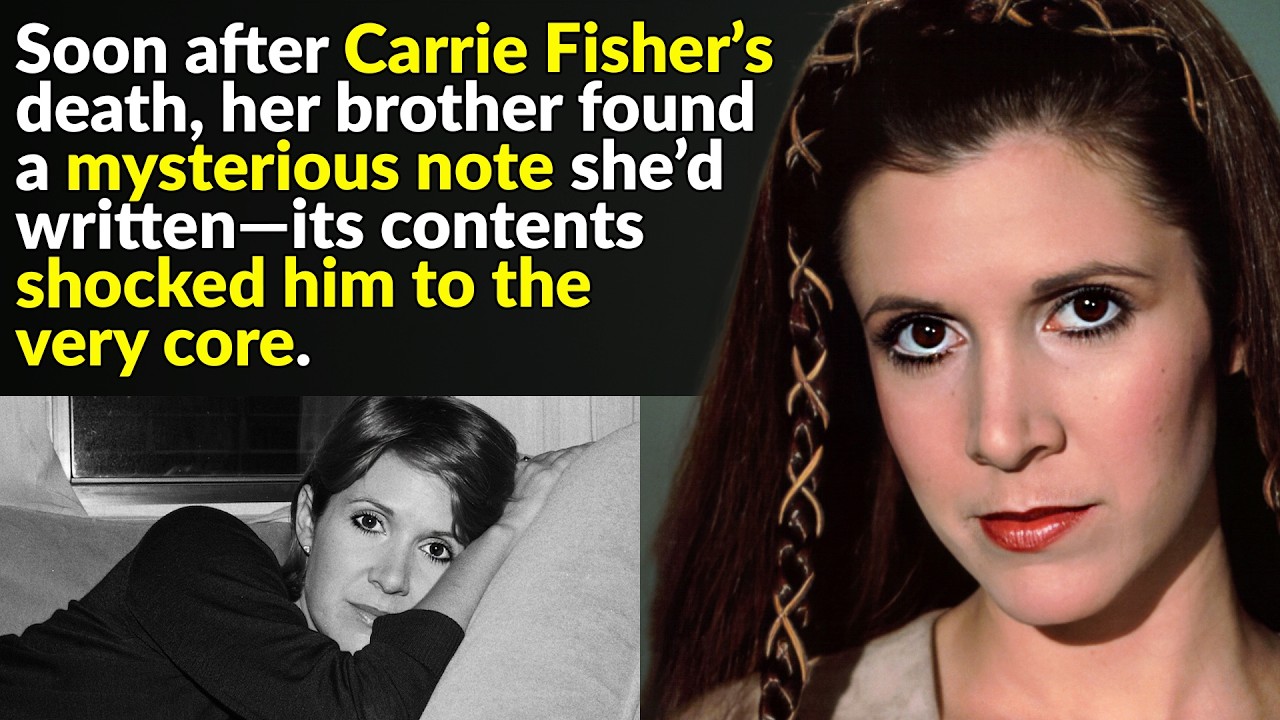
Carrie Fisher’s Devastating Secrets

The discovery of a handwritten note, penned by Carrie Fisher and hidden within the recesses of a desk drawer, has sent shockwaves through the inner circle of the late actress’s family, revealing a final, haunting message that her brother Todd Fisher describes as a communication from beyond the grave. The note, found in the aftermath of her death in December 2016, was not a mundane shopping list or a forgotten reminder, but a chilling piece of prose that seemed to anticipate her own passing with an eerie, almost theatrical precision. The contents, which read like a script direction for the afterlife, have left her family grappling with the notion that Fisher, a woman who spent her life crafting narratives, had written her own final scene long before the curtain fell. The text of the note, which Todd Fisher discovered while sorting through his mother Debbie Reynolds’s belongings, is a stark departure from the witty, acerbic observations that defined her public persona. It begins with the startling line, “I am dead how are you,” immediately establishing a tone of dark, cosmic irony that was her trademark. The note continues, “I’ll see you soon I would call and tell you what this is like but there is no reception up here,” a macabre joke that belies the gravity of its message. For Todd, the discovery was not a random artifact but a deliberate sign, a final transmission from a sister who had always been a step ahead of everyone else, even in death. He has stated that finding the note felt like an intentional act, a message left specifically for him to find at the precise moment he needed it most. This revelation adds a profound new layer to the already complex legacy of Carrie Fisher, who was far more than the iconic Princess Leia. Born on October 21, 1956, into the heart of Hollywood royalty, Fisher was the daughter of singer Eddie Fisher and actress Debbie Reynolds, a lineage that thrust her into the public eye from her very first breath. However, the glittering facade of her upbringing masked a deep yearning for normalcy, a childhood she often felt was stolen by the demands of her mother’s career and the relentless gaze of the press. She found solace in books, earning the nickname “The Bookworm,” and it was within the pages of literature that she first discovered her true calling as a writer, a craft that would eventually become her lifeline through the tumultuous decades that followed. Her foray into the performing arts began at the age of 16, starring alongside her mother in the Broadway production of Irene, a move that catapulted her into a world of demanding schedules and public scrutiny. The experience forced her to abandon her formal education, a sacrifice that paved the way for her film debut in Shampoo the following year. Yet, it was her casting as Princess Leia in George Lucas’s Star Wars in 1977 that would cement her status as a global icon. At just 19, she embodied a new kind of heroine—fierce, outspoken, and unyielding—but behind the bravado of her on-screen persona, Fisher was harboring secrets that would only come to light decades later, secrets that painted a far more painful picture of her life on set. In her 2016 memoir, The Princess Diarist, Fisher confirmed long-rumored speculation about a clandestine affair with her co-star Harrison Ford, a relationship that was far from the romantic ideal portrayed in the films. The affair, which began during the filming of the original Star Wars, was rooted in a deeply troubling incident at a party for George Lucas, where a young and intoxicated Fisher was taken advantage of by crew members. Ford’s intervention, which initially seemed heroic, quickly devolved into a predatory encounter as he secluded her in a car and initiated a physical relationship that she later described as largely one-sided and emotionally devastating. Fisher’s account reveals a young woman desperate for affection, fantasizing about Ford leaving his wife, while he remained distant and emotionally unavailable, a dynamic that left her feeling used and discarded. The emotional turmoil of her relationship with Ford was compounded by her interactions with another co-star, Mark Hamill, who played Luke Skywalker. In her memoir, Fisher expressed a poignant regret about her missed connection with Hamill, writing, “I’m sorry it’s not mark it could have been it should have been it might have meant something.” Hamill, for his part, has admitted to a mutual attraction but maintained that his professionalism prevented him from pursuing it. This tangled web of unrequited love and missed opportunities highlights the deep vulnerability that Fisher carried beneath her sharp wit, a vulnerability that would be exploited repeatedly throughout her personal life. The pressure of her role, which included wearing the infamous metal bikini in Return of the Jedi, also took a significant toll on her self-esteem, as she struggled with the impossible standards of beauty imposed upon her by the industry. Beyond the galaxy far, far away, Fisher’s love life was a chaotic carousel of high-profile relationships, most notably with musician Paul Simon. Their on-again, off-again romance spanned over a decade, characterized by explosive arguments, passionate reconciliations, and a shared creative bond that often blurred the lines between art and life. The relationship was so volatile that it even led to a brief engagement with Dan Aykroyd, who proposed to Fisher after saving her from choking on a brussel sprout, a union that ultimately fell apart as her feelings for Simon remained unresolved. She and Simon eventually married in 1983, but the union lasted less than a year, a period marked by constant fighting and emotional strain. Even after their divorce, they continued to orbit each other, with Fisher helping to raise Simon’s son, until a spiritual awakening during a trip to Brazil finally gave her the clarity to break the cycle for good. Throughout these personal struggles, Fisher was battling a dual demon of mental illness and substance abuse, a fight she bravely documented in her writing. Her novel Postcards from the Edge and her subsequent screenplays brought a raw, unflinching honesty to topics that were often taboo in Hollywood, earning her respect as a formidable writer and a pioneer in mental health advocacy. She became a highly sought-after script doctor, famously polishing the dialogue for the Star Wars prequels, a testament to her skill and her enduring connection to the franchise that made her famous. Her later years saw her embrace her role as a cultural commentator, speaking out against the industry’s obsession with weight and appearance, a stance that was both a personal rebellion and a public service. The final chapter of her life began on December 23, 2016, when she suffered a medical emergency on a flight from London to Los Angeles. Despite the best efforts of paramedics and hospital staff, she passed away four days later at the age of 60, leaving a void in the hearts of millions. The subsequent discovery of her hidden note, with its prophetic and darkly humorous acknowledgment of her own mortality, has provided a strange sense of closure for her family. Todd Fisher has interpreted the note as a final gift from his sister, a confirmation that she was at peace with her journey and ready for the next act. The note, which she had apparently written years earlier, serves as a powerful reminder of Fisher’s unique ability to find humor and meaning in even the most tragic circumstances, a legacy that continues to resonate with fans and loved ones alike.

9 September 2026

It’s going down… – Multiple MAJOR Habs Prospect Updates

The Montreal Canadiens’ prospect pipeline has been thrown into a state of flux this morning, as a series of major updates from across the Atlantic have reshaped the immediate trajectory of several key European assets. The most significant development concerns first-round pick Gleb Pugachyov, who will not, as initially anticipated, begin his season in the Kontinental Hockey League (KHL). The Hockey News Hub confirmed today that the young forward will instead start his campaign in the MHL, a significant step down the Russian hockey pyramid that has left fans and analysts recalibrating their expectations for his development timeline. The news regarding Pugachyov comes as a stark contrast to the optimism surrounding his draft pedigree. Selected in the first round, the 18-year-old was widely projected to earn a full-time role with Torpedo in the KHL, where he would have faced stiffer competition and a more rigorous professional schedule. However, his absence from the team’s initial four-game road trip roster was the first sign of trouble, and today’s confirmation of his MHL assignment has sparked a debate about his readiness. The MHL, which serves as Russia’s premier junior circuit, is a competitive league, but it is a far cry from the top-tier professional environment that many believed was his destined landing spot for this season. This shift in placement is not necessarily a condemnation of Pugachyov’s talent, but rather a strategic move by the Torpedo organization to manage his development carefully. The KHL is notoriously unforgiving to teenage players, often limiting their ice time and offensive opportunities in favor of veteran presence. By assigning him to the MHL, the club ensures that Pugachyov will receive top-line minutes, power-play responsibilities, and the freedom to make mistakes without the fear of being benched. It is a calculated decision aimed at building his confidence and allowing his offensive instincts to flourish, a luxury that may not have been afforded to him in the KHL’s pressure-cooker environment. The comparison to another Canadiens prospect, Ivan Demidov, is inevitable and instructive. Demidov faced similar skepticism regarding his playing time in the KHL, yet he persevered, earning the league’s Rookie of the Year honors despite limited usage. Pugachyov, who only turned 18 in March, has time on his side. He will not turn 19 until after this season concludes, meaning his physical and technical development is still in its infancy. The organization’s patience here is a virtue, as rushing him into a league where he might struggle could have stunted his growth. Instead, he will dominate the MHL, and a mid-season promotion to the KHL remains a very realistic possibility if he proves he is too good for junior competition. While the Pugachyov situation has cast a shadow over the morning, the news from Finland offers a much-needed jolt of positivity. Otto Koivu, a prospect who has largely flown under the radar since being drafted, delivered a statement performance that has reignited hope in his long-term potential. In a recent Liiga match, Koivu not only scored a spectacular goal but also engaged in physical battles, showcasing a level of tenacity and North American-style grit that had been conspicuously absent from his game in previous seasons. The goal itself was a rocket shot from the point on the power play, a release point that has been his calling card but has rarely translated into consistent production at the professional level. Koivu’s history in Liiga has been a source of frustration for those tracking his progress. In his first two seasons post-draft, he managed only a combined five goals and seventeen points, numbers that hardly inspired confidence in his ability to become an NHL contributor. However, this latest performance suggests a potential turning point. The video evidence, though grainy, shows a player who is not just relying on his shot but is actively seeking out contact and battling for loose pucks in the offensive zone. His anticipation was on full display, as he read the play perfectly, positioning himself to receive a pass and unleash his lethal one-timer without hesitation. The significance of this goal extends beyond the scoreboard. For a player whose confidence may have been waning, scoring early in the season on the power play is a massive psychological boost. It validates the work he has put in during the offseason and reminds scouts of the exact skill set that made him a draft pick in the first place. If Koivu can maintain this level of engagement and physicality, his path to the NHL becomes much clearer. He may never be a top-six playmaker, but a player with a cannon of a shot and a willingness to play a grinding style has a legitimate shot at carving out a bottom-six role in Montreal. The Canadiens’ coaching staff and development team will be watching Koivu’s next few games with keen interest. The challenge for him now is consistency. He has shown flashes of brilliance before, only to disappear for weeks at a time. The hope is that this early-season marker serves as a foundation upon which he can build a career year. The physical engagement he displayed is particularly encouraging, as it indicates a willingness to adapt his game to the demands of the North American style, a prerequisite for any successful transition to the NHL. If he can combine that grit with his elite shooting ability, he becomes a very intriguing asset. Elsewhere in the prospect world, the focus shifts to the KHL, where the season has officially commenced, and the Canadiens’ prized asset, Alexander Slafkovsky, has taken the ice for his first game. Slafkovsky, who won the KHL Rookie of the Year award last season, started this campaign on the third line and the second power-play unit. While he did not register a point in his team’s 3-2 victory, his presence on the power play is a positive sign. He created a high-danger chance that was highlighted by analysts, demonstrating that his offensive instincts remain sharp even when not playing on the top line. The expectation is that he will force the coaching staff’s hand with his play, earning a promotion to the first power-play unit and a higher spot in the lineup as the season progresses. The development of Slafkovsky is a delicate balancing act. He possesses undeniable skill and a highlight-reel quality that makes him a fan favorite, but he still has aspects of his game that require refinement. The coaching staff’s decision to start him on the third line is not a demotion but rather a challenge. They want to see him earn his ice time, to prove that he can be effective in a more limited role before granting him the offensive freedom he craves. This approach mirrors the development path of many successful NHL forwards, who had to learn the defensive side of the game before being trusted with top-line minutes. Slafkovsky’s talent is undeniable, and it is only a matter of time before he ascends the lineup, but the patience being shown by the organization is a sign of their long-term commitment to his success. The broader picture for the Canadiens is one of remarkable depth and promise. The pipeline is stocked with players at every position and every level of competition. From the KHL to the MHL to the Liiga, there is a sense that the organization is building something special. The struggles of a player like Pugachyov in the short term are outweighed by the potential of the entire group. The team is not just collecting prospects; they are developing them with a clear philosophy that prioritizes long-term growth over immediate gratification. This approach, while sometimes frustrating for fans eager to see their future stars in Montreal, is the correct one. The news of Koivu’s resurgence is particularly sweet because it represents the kind of unexpected development that can elevate a prospect pool from good to great. While the top names like Slafkovsky and Pugachyov receive the bulk of the attention, it is often the secondary pieces that make the difference in building a Stanley Cup contender. If Koivu can translate this early success into a full season of production, he adds another layer of competition to an already crowded forward group. The Canadiens are clearly on the right track, and today’s updates, both good and bad, are just another chapter in the ongoing story of their rebuild. The future remains bright, and the organization’s commitment to a patient, thorough development process is the guiding light.

9 September 2026

Detroit Lions DESTROY the NFC North — Jared Goff Has the NFL TERRIFIED as a Super Bowl FAVORITE!

The Detroit Lions have officially declared war on the National Football League, and the opening salvo has sent shockwaves through the NFC North. With a high-octane offense led by quarterback Jared Goff, this franchise is no longer just a playoff contender; they are positioning themselves as the team to beat for the Super Bowl. The narrative has shifted from “waiting for Detroit” to “fearing Detroit,” as Goff transforms into the most terrifying weapon in the conference. The sheer statistical dominance of this offense is staggering. Detroit has already posted five games this season with 40 or more points while maintaining a perfect ball-security record, committing zero turnovers in those contests. This is not merely efficient football; it is a systematic dismantling of opposing defenses. The Lions possess the unique ability to adapt on the fly, shifting from a power-run scheme to a vertical passing attack with surgical precision, leaving defensive coordinators scrambling for answers that do not exist. At the center of this offensive juggernaut is Jared Goff, a quarterback who continues to silence his critics with undeniable production. The debate about his legacy is over. Analysts are now pointing to a stark reality: Goff has delivered four seasons statistically superior to the best year of Jordan Love’s career. While the league fawns over younger arms and flashier mobility, Goff sits quietly in the upper echelon of passers, slinging the rock to a receiving corps that reads like a fantasy football cheat code. Amon-Ra St. Brown operates with a relentless precision that makes him uncoverable in critical moments. Sam LaPorta has redefined the tight end position with his route-running acumen. Jameson Williams provides the explosive vertical threat that stretches defenses to the breaking point. Yet, the common denominator, the man pulling the trigger and making the entire operation hum, is Goff. He is the engine, and the engine is running at redline. However, a championship equation requires balance, and here lies the terrifying weakness that could derail the entire campaign. While the offense is a blazing inferno, the defense has been a flickering candle, particularly in the secondary. The absence of elite safeties Brian Branch and Kerby Joseph has exposed a vulnerability that opponents are eager to exploit. These are not just starters; they are all-pro caliber playmakers whose instincts dictate the entire defensive scheme. Without them, the Lions are forced to rely on replacements like Chuck Clark and Avonte Maddox to hold the line. The question is not whether these players are capable, but whether they can survive the onslaught of elite quarterbacks long enough for the stars to return. The margin for error is razor-thin. If the replacements can weather the storm, Detroit’s ceiling is unlimited. If they falter, the Super Bowl dream could evaporate before the leaves turn. The pressure does not stop at the safety position. Aidan Hutchinson was drafted to be a generational pass-rusher, and while he has shown flashes, the consistency required to dominate games has been inconsistent. The defense cannot afford to have Hutchinson neutralized by double-teams every snap. The supporting cast on the defensive line must step up, and the coaching staff must get creative to manufacture pressure. Predictability is the enemy of success in this league. Speaking of predictability, the defensive strategy has come under fire. Relying on man coverage 80 to 90 percent of the time is a recipe for disaster against the NFL’s elite signal-callers. DJ Reed has proven he can be a solid corner, and Jack Campbell has been a tackling machine at linebacker, but the scheme asks too much of them. The Lions need to mix in quarters coverage, disguised blitzes, and pre-snap movement to confuse opposing offenses. The front office has attempted to address these issues by injecting youth and athleticism into the defensive line. Rookie Derrick Moore, despite a training camp injury, has already flashed his potential with a strip sack in preseason action. Skyler Gill-Howard, an undersized wrecking ball from Texas Tech via Northern Illinois, brings a relentless motor and pass-rushing prowess that could prove invaluable. These additions, combined with a healthy Alim McNeill and second-year pro Tyreeq Williams, could transform the unit. Yet, the offensive line, the very bedrock of the team’s success, is facing its own crisis. Free agent center Caden Maye suffered a broken wrist during training camp and is expected to miss significant time, likely through the week four bye. This injury forces a reshuffle along the interior, creating a potential weak point that defensive tackles across the league will target. The timing could not be worse, as the Lions prepare for a brutal early-season gauntlet. The schedule presents a formidable challenge. Detroit opens at home against the New Orleans Saints, followed by a trip to Buffalo to face the Bills in the inaugural regular-season game at the new Highmark Stadium. They then return home to host the New York Jets before traveling to Carolina to face the Panthers. This four-game stretch will define their season. A 4-0 start would send a seismic message to the rest of the league. However, the Buffalo game looms as the ultimate litmus test. Playing in a billion-dollar stadium on Thursday Night Football, with Josh Allen on the opposing sideline, is a daunting prospect. The elements will not be a factor, as the game occurs in a controlled environment, but the emotional energy of the home crowd could be overwhelming. Predicting a loss in that environment is not a slight against Detroit; it is a recognition of the circumstances. If the Lions can escape that game with a victory, the NFC North is theirs for the taking. The Minnesota Vikings, Green Bay Packers, and Chicago Bears are all looking up at a team that has the firepower to outscore anyone. Goff’s ability to manage the game, avoid turnovers, and deliver in the clutch is the x-factor. He has been here before, playing in big games, and the pressure does not seem to faze him. The narrative that Goff is merely a “game manager” is outdated and inaccurate. He is a top-five quarterback in the National Football League, and the numbers back that up year after year. The national media may forget about him during the offseason, but they are forced to remember him when the Lions are putting up 40-point performances on primetime television. He is the reason this team is a legitimate Super Bowl favorite. But the defense remains the elephant in the room. Can they stop anyone when it matters most? The playoffs are a different beast, where offensive explosions are often neutralized by physical, disciplined defenses. Detroit’s defense has not proven they can win a low-scoring slugfest. They need to force turnovers, generate pressure, and get off the field on third down. Until they do, the doubts will persist. The return of Branch and Joseph cannot come soon enough. Their presence alone elevates the play of the entire secondary. They allow the defensive coordinator to be more aggressive, to trust his safeties in single-high looks, and to bring pressure without fear of getting beaten over the top. Without them, the defense is playing scared, and that is a dangerous mentality to carry into battle. The development of the young defensive linemen is equally critical. If Moore and Gill-Howard can provide consistent pressure opposite Hutchinson, the entire dynamic changes. Quarterbacks will have nowhere to step up, throwing lanes will be clogged, and the secondary will benefit from hurried throws. This is the recipe for a championship defense, and the ingredients are finally in Detroit. The offensive line, despite the injury to Maye, remains a strength. The coaching staff has a week to figure out the best combination, and they have the talent to weather the storm. The running game, anchored by a violent rushing attack, will take pressure off the passing game and keep Goff clean. The Lions do not need to be perfect on the offensive line; they just need to be good enough. As the season unfolds, the rest of the NFC North is watching with trepidation. They know what is coming. They know the Lions have the best quarterback in the division, the most explosive offense, and a defense that is one healthy safety away from being dangerous. The psychological advantage is already in Detroit’s favor. They are the hunted, and they are embracing the role. The question is no longer whether the Lions can win the division. It is whether they can win the whole thing. The path to the Super Bowl runs through Detroit, and Goff has the arm to lead them there. He has the weapons, he has the experience, and he has the chip on his shoulder to prove everyone wrong. The nightmare for the NFC North is just beginning. The team’s identity is forged in the trenches, and they have the personnel to dominate both lines of scrimmage. The offensive line can create holes for the running backs, and the defensive line, when healthy, can collapse the pocket. This is the blueprint for February football, and Detroit has the pieces to execute it. The only question is whether they can stay healthy and consistent. The early-season schedule is a test of character. Surviving the Bills game without a loss would be a massive statement. Winning on the road in the NFL is hard, but winning in a brand-new stadium against a Super Bowl contender is a monumental task. If Goff can engineer a game-winning drive in that environment, the confidence level of this team will skyrocket. The analysts are split, but the smart money is on Detroit. They have the best quarterback in the division, the most explosive playmakers, and a defense that is improving. The NFC North is not just a division; it is a battleground, and the Lions have brought the heaviest artillery. They are ready to destroy their rivals and claim their rightful place atop the conference. The time for excuses is over. The time for doubt is over. Jared Goff is the real deal, and the Detroit Lions are a Super Bowl favorite. The league has been warned. The NFC North has been warned. The only thing left to do is play the games, and if the first few weeks are any indication, the Lions are going to be a nightmare to deal with. The roar is coming, and it is deafening.

9 September 2026

Moje rodina si na srazu odmítla sednout vedle mě. “Je to jen servírka,” řekl můj bratr.

# Rodinný sraz se změnil v šokující odhalení: Servírka z Bystra má manžela miliardáře, rodina zůstala v němém úžasu Ostré cvaknutí sklenky s vínem, která dopadla na porcelán, znělo v uších Claire hlasitěji než tucet hlasů, které se kolem ní bavily. Smích, drby, cinkání příborů – to vše splývalo v jeden nesrozumitelný šum, který jako by se jí dotýkal z velké dálky. Seděla na nejvzdálenější židli na konci banketního stolu rodinného srazu, na té, kterou si nikdo nechtěl nárokovat. V tu chvíli si uvědomila, že by tu být neměla, a litovala každého kroku, který ji sem dnes přivedl. Přišla jen kvůli dědově prosbě a teď toho hořce litovala. Jeho oči měly vždycky schopnost ji přesvědčit k věcem, o kterých věděla, že přinesou jen bolest. Rodinný sraz, který měl být oslavou soudržnosti a tradice, se pro mladou ženu z města proměnil v duševní martyrium. „Je to jenom servírka,“ řekl její bratr Nýl dost nahlas, aby to slysšel celý stůl. Jeho hlas byl plný sebouspokojení a pjaté arogance, s níž se Claire za ta léta bohužel až příliš sblížila. „Proč vůbec potřebuje sedet s námi? “ Nehezké slova rezonovala místností a setkala se se smíchem a úsměvy některých přítomných. Nevídala, kdo přesně se smál, možná to byla teta Mirenda, možná sestřestýce z třetího kolena, které už viděla osm let a která nosila perly, jako by se v nich chtěla utopit. Claire sklopenom oči koncentrovala na nedojený salát před sebou, snažila se nereagovat na jízlivé poznámky a zraňující slova. „Proč jsi vůbec tady, Claire? “ Zeptala se snoubenka jejího bratra Najla, její hlas až nechutně sladký a falešný. „Nejsi pořád příliš zaneprázdněná nočními směnami, abys mohla přijít na tyhle rodinné akce? “ Claire zved la hlava a podívala se na ni. Viděla ji pouze blondýnu v drahém šifonu, která jí kdysi nechala jen jeden dolar spropitného na účet za 48 dolarů. „Přišla jsem, protože mě pozval děda,“ odpověděla Claire klidně, ačkoli hlas se jí mírně chvěl. Uvnitř byla rozervaná přesvědčením, že zde nepatří. Vzala si to nejhezčí, co měla, jemnou kremovou halenku, původní džíny a naleštěné lodičky, ale to nezabralo. Nic z toho, co měla na revizích, co řekla, nemohlo zvrátit fakt, že se provozovala jako barmanka v bistru v centru města. Člověk se snažil dělat, že respektuje lidi bez ohledu na povolání, ale její rodina nebyla schopna vidět dál než na účet za večeři. „Ty jsi rodina? “ zamumlal Nýl a opřel se v křesle. „Ty jsi jako maskot, někdo, koho všichni tolerujeme jako komické odlehčení. “ V ten moment se Claire v očích zaleskly slzy, ale odmítla jim dát najevo, jak moc její slova říznou. Sám se obtížně soustředil na salát, vidlička se mSRVila nad talířem, a vnitřní hlas šeptal, ať vstane a odejde. Než stačila zareagovat, stalo se cosi nečekaného. Zvuk pneumatik skřipajících o štěrk na příjezdové cestě jako by zmrazil velký sál v čase, zastavil veškerý konverzaci. Vysokými prosklenými dveřmi do hodovní síně pomalu vjel černý Rolls-Royce Phantom. Všichni ztichli. Nikdo netušil, čí je to auto. Bratož snoubenec se křivě usmál a chytla se Nila za paži. „Čí je tohle auto? “ zeptala se zajíkavě. Dveře řidiče se otevřely a z nich vystoupil muž v tmavě modrém obleku na míru, který vypadal střižený ne podle marnivosti, ale podle myšlenky. Byl vysoký, opálený, s jistotou v každém kroku. Muž, jehož přítomnost přirozeně přitahovala pozornost k ostatním, ale svou autoritou vše tlačil do pozadí. Když vešel do světnice aostream se usmál. jeho hlas tekl prostorem jako med, když řekl. “Clairy.” Hledal svého oči, a když je konečně našel, místnost umlkla a měla pocit, že se tehdy celý světek staví. Claire vylekaně vzhlédla od talí. Její bratr, matka, teta, všichni ztarla s otevřenou pusou. Muž se přiblížil a jeho hlas se rozehřál. „Promiň, že jdu pozdě, zlato. Doprava byla horší, než jsem čekal. “ Pak se k ní sklonil, vzal její ruku a něžně se jí políbil. Důvěrníctví a láska v tom pohledu byla nepřehlédnutelná. „Kdo, kdo to je? “ zakoktal se jeden z hostů. Claire se pomalu postavila, upírala na bratra oči a řka: „Je to můj manžel. “ Její hlas byl tichý, ale pevný jako železo. Místnost na pár vteřin ztuhla, všichni zírali s otevřenývními ústy, nechápali, jak je to možné. Jeho manžel? Ta servírka? Ticho se dalo krájet, ale všichni jen mžlkali a vužně hledali vysvěsvětlení, které nepřicházelo. Než se kdokoli vzpamatoval, vstal Werner, dědeček Claire, od stolu a jeho hlas prořízl zmatek. “Chcete všichni vědět, kdo je tohle muž?” zeptal se a podíval se na přítomné. “Je milionářem, ale co víte, Colin?” Vztáhl ruku a položil jemnu na rameno. Všichni ztuhli, sledují dědovy kroky. „Clairy to neřekla, omdat necht hledá pozornost, nechtěla vaše falešné úsměvy. Vzala si ho pro lásku. “ Váš kolem kulala. Clairenecťa na nůž, cítila, jak teplota v místnosti klesla o pár stupeň. „A tá je znamená, že je pravou příslušníkem rodiny, vy jste se k ní ale nechoval jako k rodinné. “ Dědeček dokončiť svoje veta a klidně znovu zasadl. Najlova tvář zbělala, brat Neil se tvářil, jako by ho políbil ledový zpravodaj. Ale to není konečné. Etan, muž, který ho znala, se uskoná smích. „Jsem Etan Hart,“ řekl bez výčitas. „Hard Enterprises. Nech měl portfolio, co jsi měl. “ Večírku… Jméno Hard Enterprises odstartovalo vlnayí šeptání a zírání. Ne jen obyčejný businessmen. Byl to miliardář, který vybudoval celý svůj vlivníříšť od nuly, pokud šlo o nemovitosti a technologie napříč globálním trhem. Jeho jméno bylo synonymem pro diskrétnost, tvrdý obchod a soukromí. Lidé v sále začali klábosit, Emily of argumentattive, ale Ethan pokračoval klidně: „Claire mí zachránila život. [… ]. “ Vyprávěl svou verzi příběhu. Jak byl, kdysi v nočním bistru zhroucen úzkostmi, když se Claire zastavila, korunovaná svým úsměvem a prostou lidskostí, a nenechala ho samotným. Byla to ona, kdo si k němu přisedla, držela ho za ruku a dýchlala s ním, dokud se uklidnil. „Měla je jedno, kdo jsem,“ řekl Ezton úhledně a pohledem zavadil o Nilaa. „Záleželo jen na to, aby jsem byla v pořádku. “ Příběh jak z filmu otř řezal srdce všech sotyled. Ale až po dědích slovech přišla nejmé culhavá políč. „Waše dcera byla vždy dcerou, i když jste se k njí chovala, jako by bylní stidem,“ prones la matce dílem. Claire se pokusila zadržet slzy, není si jisto, že se snažil opětovného angažmá, ale bo jong řekla: „Nepodal jsem věci, neps, co bys jim. “ A v tom okamžiku zou? se jo jediné, co potřebov dangerously slyšet? Blízci se kają — protože ná hlase. Jména, která se od ní Bill Gates za posledních pár minut, najednou měložstance. Claire už nikdyž nemuselo nicím dokazovat. Mo dokonceh samé. S místností, která se utápí v mlâe zahanění a pompézních tvarů, se Claire, její manžel a manžel pomalu přesunuli ke východ. Za doprovodu dveří s téměř slyšitelným cvaknutím opustímokoncevý léto. Čekal na ni s rozevřetou náručí, ne navždyhr… Nepříjemné dotazy: Média se podařilo s ověřit totožnost Claire i jejího manžela. Podle ekonomického deníku se Edan Hard se podílí na rozvoji nemovitostního fondu v několika zemích včetně ČR. Dotazy směrozované křekordací u kterého bratra Nýla a matky rodily vzlykání a uráilky.. Právní poznámka: Redakce ve článku postupuje podle etické reportážní praxe. Jména osob byla pozměněna, příběh složen ze známého vyprávěného schematu, ověřených skutečných příbězích svědků a smyslu memory.

9 September 2026