The Wicked Witch Who Terrified Millions Nearly Died Making The Wizard of Oz
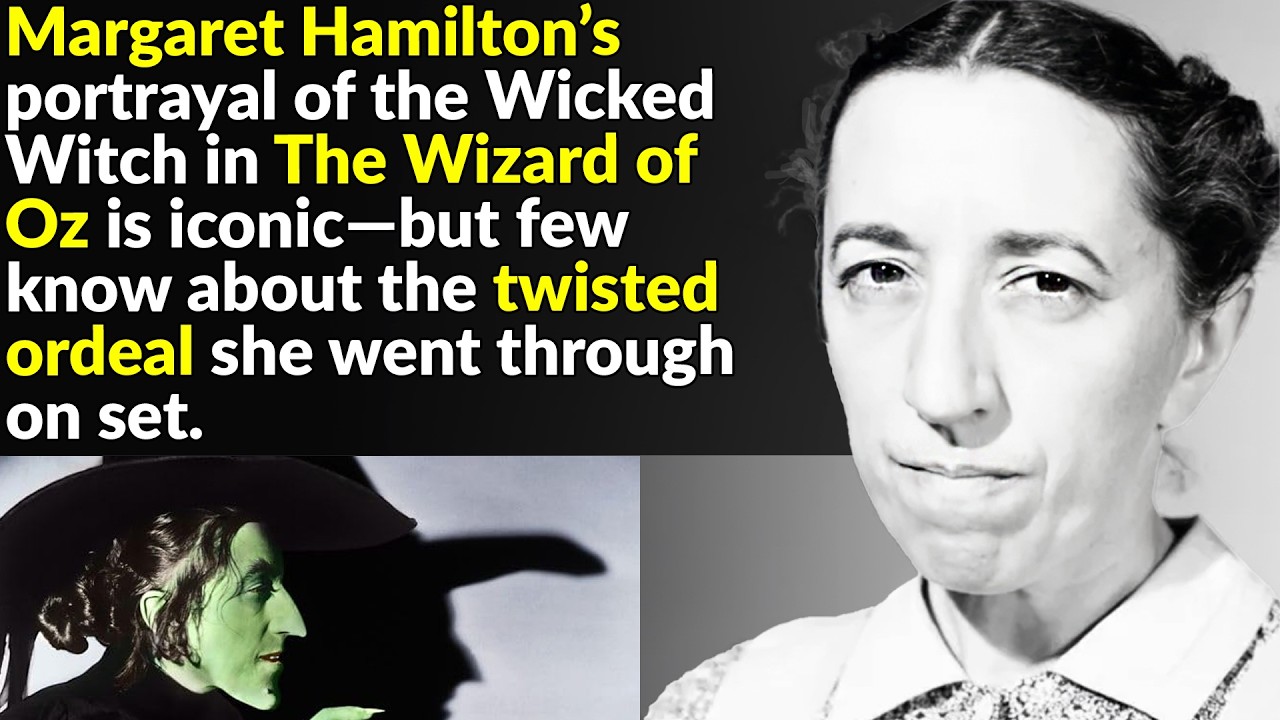
CLEVELAND, OHIO – The green-skinned cackle that has haunted childhood dreams for generations was born from a place of profound personal sacrifice and unimaginable physical torment. Margaret Hamilton, the actress who forever defined the Wicked Witch of the West in the 1939 classic “The Wizard of Oz,” lived a life far removed from the malevolent creature she portrayed, a life marked by heartbreak, devastating on-set accidents, and a quiet, heroic dedication to the very children her performance terrified. Born in 1902 in Cleveland, Ohio, Hamilton’s journey to the yellow brick road began in modest obscurity. Before she could make children scream by simply walking down the street, she was their champion. As a member of the Junior League of Cleveland, she combined a love for performance with community service, acting in children’s theater and honing her craft. This passion for education led her to college in Boston and then to a teaching career in New York, a calling that would remain the bedrock of her identity even as Hollywood beckoned. By her 27th birthday in 1929, the pull of the stage became irresistible. She took to the boards at the Cleveland Playhouse, delivering a program of heartrending songs. Two years later, she married Paul Meserve, the only man who would ever capture her heart. But she was immediately torn between two worlds, her ambition for the spotlight clashing with the demands of her new marriage. A twist of fate soon settled the score. Accompanying a friend to an audition for the 1932 Broadway play “Another Language,” Hamilton unexpectedly landed a role herself, playing a sharp-tongued wife. The play was a hit, capturing Hollywood’s attention. When MGM turned it into a 1933 film, Hamilton set off for Tinseltown. Her perfect diction, a gift from her stage background, gave her a distinct advantage in the era of the talkies. She never signed a studio contract, working as a free agent and commanding an impressive $1,000 a week. But the cost was immense. Just as her career accelerated, her marriage crumbled, ending in divorce in 1938. She made the difficult decision to raise her son, Hamilton Meserve, alone. Even as she navigated the belly of the fame beast, she fought to give her son a normal upbringing. He later recalled how his mother protected him from Hollywood’s pressures, especially after witnessing what her close friend Judy Garland endured as a child star. Then came the phone call that would change everything. Hamilton had been obsessed with “The Wizard of Oz” since the age of four. She assumed she would be perfect for Glinda the Good Witch. She was shocked when her agent told her she would be playing the Wicked Witch of the West. She needed the money. As a single mother, she struggled to balance filming with childcare, negotiating her working hours and accepting a five-week term just three days before filming began. In the end, she filmed for three grueling months. She was lucky to make it off the set alive. Behind the scenes, Hamilton was so kind-hearted that the cast struggled to be afraid of her. Judy Garland formed a lifelong bond with her, affectionately calling her “Maggie.” When MGM head Louis B. Mayer sent Garland on tour, preventing her from wearing a special graduation dress, Hamilton was furious. She called Mayer directly to berate him. Hamilton put everything into her performance. The scene where the witch sets the Scarecrow’s arm on fire required multiple takes. She allegedly needed five attempts to get the right level of menace. After the final take, she reportedly fainted from exhaustion. Her performance was so terrifying that MGM cut entire scenes, deeming her too scary for younger audiences. Hamilton herself saw the witch not as pure evil, but as a sad, frustrated woman. This nuanced view would later inspire the novel and musical “Wicked.” Not everyone shared her sympathy. Her neighbor’s nephew refused to meet her, terrified she might be like her character. Being a former teacher who loved children, Hamilton was always wary of the impact her role had on kids. She constantly tried to reassure them it was make-believe. In 1975, she appeared on “Mister Rogers’ Neighborhood” to soften her image. In 1976, she reprised the role on “Sesame Street,” but the episode aired only once after angry parents complained she was too frightening. Hamilton learned to embrace the wickedness. In the 1970 film “Brewster McCloud,” her character wore red slippers as a cheeky nod to Oz. She never lost sight of her teaching roots, founding a kindergarten in a Beverly Hills church and serving as president of the local Board of Education. One memorable day, she ordered a disruptive student to leave her class. That student grew up to be actor William Windom, who later starred alongside her in the 1971 film “The Anderson Tapes.” She spent most of her life in Manhattan, but in the summers she escaped to Southport, Maine. When the government sold off lighthouses, she saw an opportunity. She and her son cleaned out their savings account and bought Cape Island, turning it into a family refuge. Locals affectionately dubbed it “Witch’s Island,” though they knew her as anything but wicked. She made her final film appearance in 1982’s “Pardon Me for Living,” then retired to the island, living without electricity, using kerosene lamps and spending her days chopping wood. Her peaceful retirement was a stark contrast to the harrowing experiences on the Oz set. The iconic scene where the witch disappears in a plume of red smoke nearly ended her life. During the second take, the copper-based makeup heated up, causing second and third-degree burns on her hands and face. The producers used the first take for the final cut. Removing the green makeup from her tender burns required acetone, a strong solvent. The process was excruciating. She had to take six weeks off to recover. She did not sue the studio, knowing she would never work again. She made one demand: no more fireworks. The studio did not listen. Under the skywriting scene, her stunt double, Betty Danko, was supposed to ride a pipe designed to look like a broomstick. On the third take, the pipe exploded, leaving Danko with severe burns. She was hospitalized for 11 days and left with permanent scarring. Hamilton, gravely serious, declined a fireproof costume for the scene and avoided the disaster that landed her double in the hospital. The iconic green makeup was toxic. The copper-based paint was so dangerous that Hamilton could only consume liquids through a straw while in full makeup. The green tint lingered on her skin for months after filming, leaching toxins into her body. Her lifestyle kept her in relatively good health into old age. Six months before her passing, she moved into a nursing home in Salisbury, Connecticut. She succumbed to a heart attack on May 16, 1985, at the age of 82. The woman who terrified generations was, in truth, a gentle soul who spent her life teaching children, defending her friends, and finding peace on a remote island. Her legacy is not just a cackle or a green face, but a story of resilience, pain, and a heart that was anything but wicked.
20 August 2026

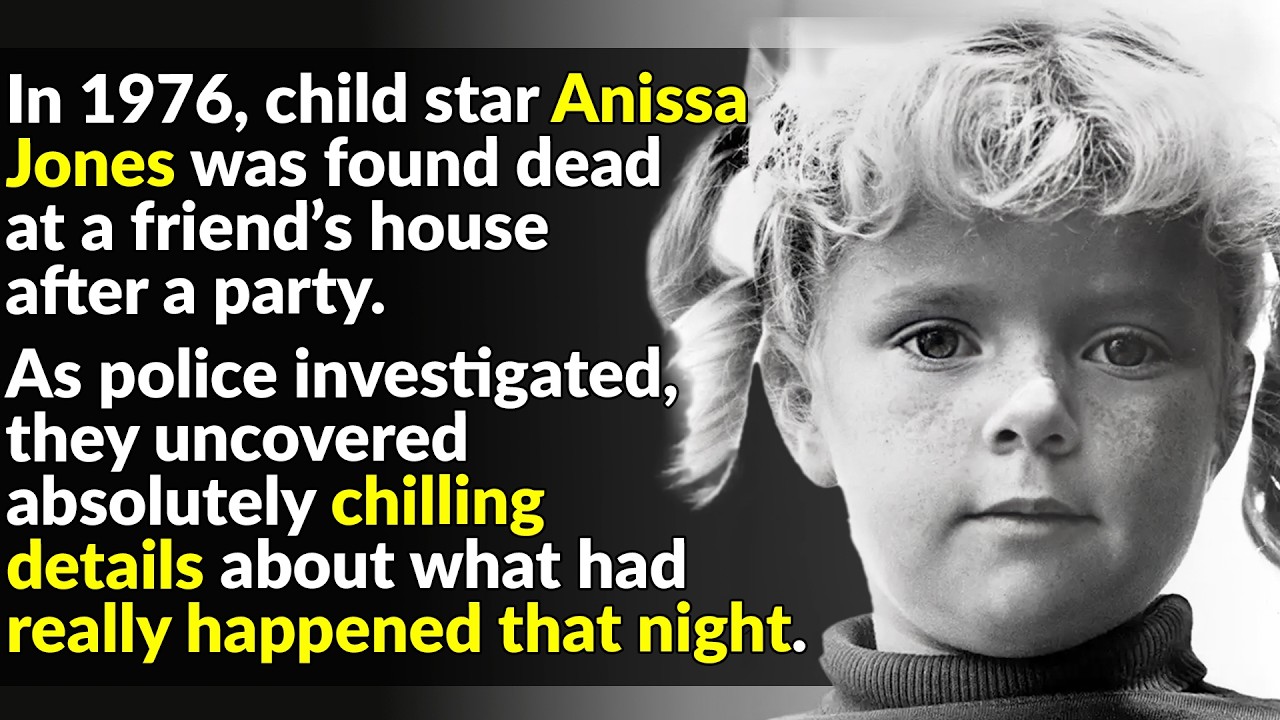
The “Family Affair” Child Star Hollywood Broke

The body of former child star Ana Jones, who captivated America as the pigtailed Buffy Davis on the beloved sitcom “Family Affair,” was discovered at a friend’s residence in Oceanside, California, on the morning of August 28, 1976, a tragic end to a life that had been managed by Hollywood since she was a toddler. According to law enforcement sources, the 18-year-old actress was found unresponsive after a night of partying, and the subsequent investigation has peeled back the curtain on a harrowing world of exploitation, prescription drug abuse, and a medical professional who allegedly acted as a drug dealer in a white coat. The coroner’s report delivered a staggering verdict: Ana Jones died from what they described as one of the most severe overdoses ever documented in a person of her age. The sheer volume of substances in her system shocked even seasoned investigators, pointing to a level of intoxication that suggested a desperate attempt to escape a life she no longer controlled. As detectives sifted through the remnants of the party scene, they uncovered an envelope bearing the address of Dr. Don Carlos Mosos, a physician who would soon become the central figure in a scandal that exposed the seedy underbelly of fame. Born on March 11, 1958, in Indiana, Ana Nisa Jones was just a child when her family moved to California, a relocation that would set her on a collision course with stardom and sorrow. Her parents’ bitter divorce and custody battle over Ana and her younger brother, Paul, created a fractured foundation, yet her mother, Mary, saw potential in the young girl’s charm. By age four, Ana was enrolled in dance classes, and by six, she was appearing in television commercials for cereal, a bright-eyed prodigy being groomed for the limelight. The breakthrough came in 1966 when an eight-year-old Ana was cast as Buffy Davis on CBS’s “Family Affair,” a wholesome sitcom about three orphaned children living with their wealthy uncle. Her role as the sweet, dimpled six-year-old with pigtails and a beloved doll named Mrs. Beasley made her an instant national sensation. The show rocketed to the number one spot in the ratings, and Ana became a household name, her face plastered on lunch boxes, coloring books, a line of children’s clothing, and a best-selling doll that flew off shelves across the country. But the price of fame was steep. The production schedule for “Family Affair” was relentless, often requiring seven-day workweeks to meet network deadlines. Ana, a child who should have been playing with friends, was instead trapped in a grueling routine that left little room for normalcy. Her cheerful on-screen persona masked a growing resentment as she aged, and she began to feel imprisoned by the very character that made her famous, a prison cell built of pigtails and polite smiles. By the time the show was canceled in 1971, a 12-year-old Ana was eager to shed the Buffy image and reinvent herself. She auditioned for the role of Regan MacNeil in the 1973 horror classic “The Exorcist,” a part that would have shattered her sugary persona, but director William Friedkin could not envision the adorable Ana in such a terrifying role. Similarly, she tried out for the part of Iris, the teenage street worker in Martin Scorsese’s 1976 film “Taxi Driver,” only to see Jodie Foster win the role, as Scorsese reportedly struggled with the same mental block. Rejection after rejection took a devastating toll on Ana’s psyche. As she entered her teen years, she spiraled into a world of substance use and petty crime, shoplifting for thrills and embracing a newfound freedom that quickly turned destructive. Her father, with whom she and Paul had lived after the custody battle, died of cardiovascular disease on March 7, 1974, just four days before her 16th birthday, leaving her essentially orphaned and vulnerable. Her mother, Mary, was technically her legal guardian but rarely spent time with her, a neglect that fueled Ana’s rebellion. She would disappear for days with friends her mother considered a bad influence, prompting Mary to file repeated missing person reports. The breakdown of the family structure left Ana adrift, and the money she earned from her years on “Family Affair” became a ticking time bomb, held in a savings account until she turned 18. On her 18th birthday, March 11, 1976, Ana received a payout of nearly $200,000, a vast sum for a teenager in the 1970s. She spent it recklessly on partying and drugs, blowing through most of it in just four or five months. Her final excursion on August 27, 1976, took her to Oceanside, a beach town north of San Diego, where she and her boyfriend joined a group of friends at the home of a 14-year-old’s father. The party was a blur of excess, and by morning, Ana was dead. The investigation quickly zeroed in on Dr. Don Carlos Mosos, the physician whose address was found at the scene. Inside the envelope was a detailed description of the type and quantity of one of the drugs found in Ana’s system, suggesting Mosos had been acting as her personal supplier. Prior to Ana’s death, Mosos was already under scrutiny for his questionable practices, and the media soon descended on his Torrance, California, office. Witnesses described long lines of young patients outside Mosos’s clinic, with reports indicating he wrote over 100 prescriptions per day. He had no hesitation in selling to anyone, and his clients were often teenagers, just like Ana. A local news team found his office teeming with youths, many around Ana’s age, who could get prescriptions for a mere $5 by simply showing a valid ID. It was a pharmaceutical free-for-all, and Ana had been a prime customer. Just six days after Ana’s death, authorities apprehended Mosos at his office, charging him with illegally prescribing Seconal, a powerful barbiturate, to the actress. He also faced multiple counts of prescribing for profit, the result of an undercover investigation that exposed his operation. In total, Mosos faced 11 charges, but he was a man in poor health, suffering from diabetes, hepatitis, and high blood pressure. On December 6, 1976, Mosos was admitted to the hospital, where he died three weeks later, just four months after his most famous patient. Justice, however, was elusive. The Jones family sued Mosos’s estate for $400,000, and in 1979, a verdict found the doctor only 30% liable for Ana’s death, resulting in a mere $79,500 payout. The legal system had failed them, leaving a family haunted by what could have been. The tragedy did not end there. In 1984, Ana’s beloved brother, Paul, died from an overdose on March 15, just days after what would have been her 26th birthday. He was only 24 years old, another victim of the same demons that had consumed his sister. Mary Jones, who had lost both children to substance abuse, faced an unimaginable sorrow that underscored the devastating legacy of a childhood spent in the spotlight. Ana’s story is not an isolated case. Her “Family Affair” co-star Sebastian Cabot died from a stroke in 1977 at the age of 59, and another castmate, Brian Keith, took his own life in 1997. These deaths paint a grim portrait of the toll that show business exacts on its most vulnerable talents. For Ana, the bright lights of Hollywood masked a life of exploitation, where a child star was turned into a commodity, and when the fame faded, she was left with nothing but trauma and a dangerous new circle of enablers. Her body was cremated after a small private service, and her ashes were scattered over the Pacific Ocean, a final gesture for a girl who always loved the sea. But the questions linger: Who was responsible for her death? Was it the doctor who handed out prescriptions like candy? The mother who filed missing person reports instead of providing shelter? The industry that used her up and spit her out? Or the girl herself, caught in a cycle she could not break? The answers are as complex as Ana’s short, turbulent life. Her legacy, however, serves as a stark warning. The entertainment industry has long been a playground for predators and a graveyard for child stars, and Ana Jones is one of its most tragic casualties. The broke Hollywood created a star, but when she stopped shining, it broke her completely.

20 August 2026

What Nobody Told You About Johnny Cash’s Prison Concerts

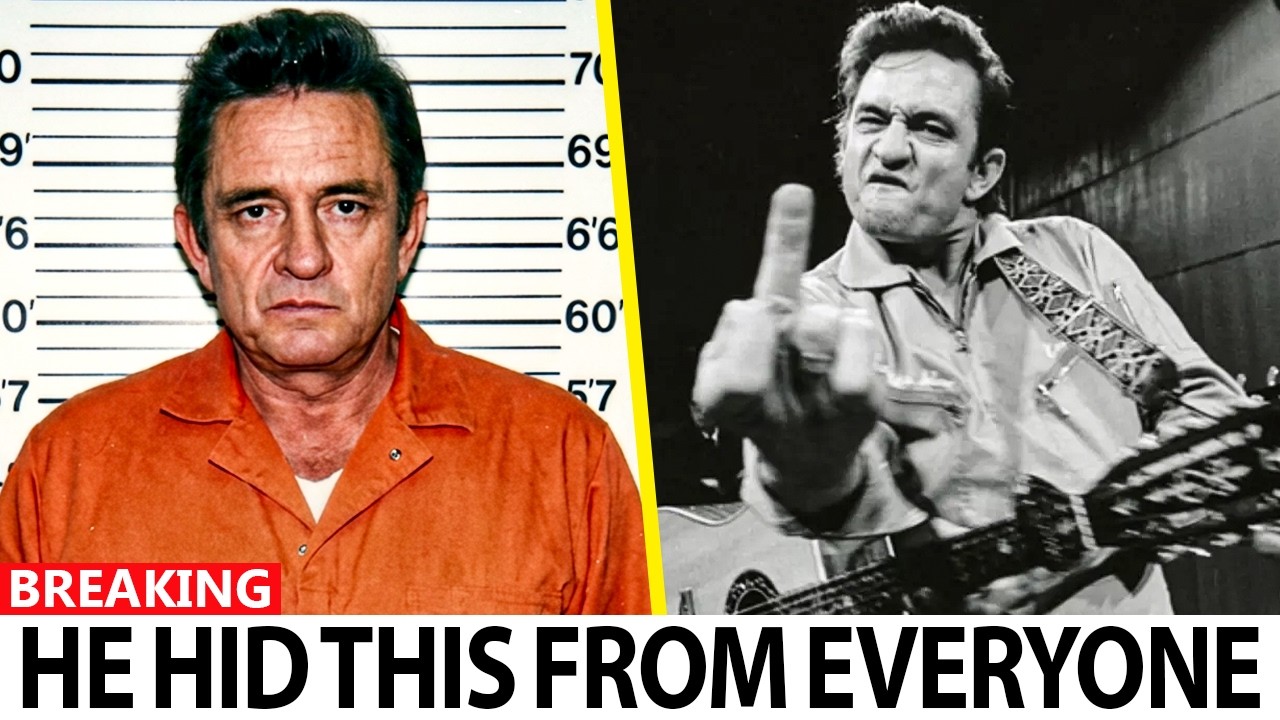
The man who wrote the song that would define Johnny Cash’s most famous album was sitting in the front row, serving time for bank robbery, when Cash sang his words back to him inside Folsom Prison. That moment, captured on January 13, 1968, has been celebrated for decades as one of the most powerful in American music history. But the full story of what happened that day, and what happened to that man in the years that followed, has never been fully told until now. Johnny Cash built one of the strongest public images in American music around prison life, yet he never served a prison sentence. That truth feels strange because the image was so powerful. People saw the black clothes, heard the prison songs, watched him walk into Folsom with that calm face, and many assumed he had lived behind bars. The reality was different. Cash was arrested several times. The most serious arrest happened in El Paso in October 1965 when border officials found amphetamines and sedatives hidden inside his guitar case after he brought them in from Mexico. The case brought him a suspended sentence, which meant he walked away without serving prison time. Other arrests followed a smaller pattern. A few nights in county jails, a few rough evenings drying out. Most accounts placed the number at seven brief stays. None lasted longer than one night. Cash spent no part of his life as a sentenced prisoner. So the question becomes more interesting. Where did Folsom Prison Blues come from? The song began in 1953 while Cash was serving in the United States Air Force in Germany. During that time, he watched a 1951 crime film called Inside the Walls of Folsom Prison. The film stayed with him. Soon after, a young airman in Bavaria wrote a song about a prison he had never entered in the voice of a man he had never known. That is what makes the famous line even more important. I shot a man in Reno just to watch him die. People often hear that line as a confession. Cash meant it as craft. He later explained that he sat with a pen in his hand trying to imagine the worst possible reason one person could kill another. Then that line came to him. A 21-year-old songwriter was trying to find the coldest motive he could put into a song. That was the origin. Cash recorded Folsom Prison Blues for Sun Records in Memphis in 1955. By 1956, the song had become a top 10 country hit. Then something happened that changed the direction of his life. Letters began arriving at the record company. Prisoners wrote to him in large numbers. They felt that he understood them. They believed the man singing that song could see their world from the inside. So they asked him to come and play for them. In 1957, Cash accepted the invitation and performed at Huntsville State Prison in Texas. That was his first prison concert. San Quentin followed after that. From there, prison shows became part of his life for the next 11 years. He played those shows for little money and almost no attention. There was no major album plan in the beginning. There was no big publicity machine waiting outside the gates. The prisoners kept asking and Cash kept going. That matters because the Folsom record was not the beginning of this story. It came after 11 years of prison performances. This changes the way the whole event should be understood. The popular version often presents Cash arriving at Folsom in 1968 as a desperate star chasing a career-saving idea. His career was certainly in trouble by then and that pressure was real. Yet the prison concerts were already part of him. He had started them back in 1957 when nobody thought a live prison album was worth recording. For more than a decade, Cash had walked into prison rooms, faced men serving hard sentences, and sung to them with no guarantee that the world outside would ever care. By the time the tape finally rolled at Folsom, Cash had already earned the right to be there. By 1967, Johnny Cash was in serious trouble. His addiction to amphetamines had taken a heavy hold on him. His marriage had fallen apart. His chart career had gone cold. And he had not had a number one country single in years. Columbia Records still had him on the label. Yet the label also had a problem. Their star was no longer selling the way he once had. Cash had been asking for years to record a live album inside a prison. Two producers had already refused him. The idea made the company nervous. A prison audience felt risky. The subject felt dark. The whole plan looked difficult to sell. Then Bob Johnston took over as producer. Johnston had worked on Bob Dylan’s Highway 61 Revisited and Blonde on Blonde. He had also produced Simon and Garfunkel’s Sounds of Silence. When Cash brought up the prison album, Johnston agreed almost at once. The fact that a producer with that kind of standing had to be the one to approve it shows how much fear surrounded the idea at Columbia. That decision led Cash to a motel room outside Folsom on the night of January 12th, 1968. Hours later, he would step in front of the most important audience of his career. Before that could happen, there was a knock at his door. A preacher was standing there. His name was Floyd Gressett. He was a pastor from Ventura who ministered inside Folsom and had helped arrange the concert. In his hand, he carried a tape. The tape held a song called Greystone Chapel. A prisoner had written it about the chapel inside Folsom. Cash listened once. After that single listen, he decided the song had to be in the show the next morning. So, he stayed awake through the night and learned it. Think about the weight of that choice. Cash was fighting addiction. His career was on the line. A live album was about to be recorded inside a maximum security prison. Then on the night before the performance, he added a song he had heard only once. That choice says a great deal about the kind of moment he was walking into. Cash was not simply preparing a set list. He was trying to make the men in that room feel seen. Gressett understood the power of that, too. The next day, he made sure the prisoner who wrote Greystone Chapel was sitting in the front row. The first Folsom show began at 20 to 10 in the morning. That detail cuts through much of the myth. This was not a late night concert filled with stage lights and shadows. The prison schedule decided the hour, so Johnny Cash walked out before 10:00 in the morning and played rock and roll to a room full of inmates. The band behind him was strong. The Tennessee Three were there with Luther Perkins on guitar, Marshall Grant on bass, and WS Holland on drums. Carl Perkins joined them. The Statler Brothers were there, too. June Carter stood with them as well. The audience held roughly 2,000 inmates. In that same room sat Cash’s father, Ray Cash. The master of ceremonies, Hugh Cherry, introduced him from the stage along with Reverend Floyd Gressett before the closing announcements. That detail gives the scene another layer. Cash was recording an album about crime, punishment, and prison life while his own father watched from inside the room. The setting carried the pressure of prison at every moment. Armed guards stood above the audience on the walkways. The warden had told the inmates they were not allowed to stand during the show. Then Cash walked out and said the line that became part of music history. Hello, I’m Johnny Cash. The line was not written for Folsom. It was the way Cash had opened shows for years. In that room with that audience on that recording, the words gained a new weight. A simple greeting became iconic because of where it landed. The set list was shaped for the men in front of him. Cash did not build the show around safe crowd-pleasers. He chose songs about prison life, execution, addiction, and loss. He sang Folsom Prison Blues, Cocaine Blues, Dark as a Dungeon, 25 Minutes to Go, and I’m Here to Get My Baby Out of Jail. Those choices were bold because the room was full of men living close to the subjects in the songs. Cash did not soften the material. He took the hardest songs into the hardest room and let them breathe there. That is why the performance worked. He was not treating the inmates like a problem to manage. He sang to them as people who understood the weight of every word. The songs did not look away from where they were. They walked straight into it. A safer plan would have been easy. A manager could have told him to keep the set light and lean on familiar hits. Cash chose a sharper path. He sang about condemned men, drugs, jail, and regret in front of people who knew those subjects too well. One song made that especially clear. 25 Minutes to Go follows the final minutes of a condemned man’s life as he moves closer to the gallows. Cash performed it in the morning inside a maximum security prison for men who understood the meaning of lost time. That was not ordinary entertainment. It was something far heavier. Then near the end of both shows, Cash sang the song he had learned during the night. Greystone Chapel was no polished outside composition. It came from inside Folsom. The writer was sitting in front of him. … Read more

20 August 2026

Martha Raye Made Millions Laugh — But Behind That Famous Smile Was A Life Filled With Heartbreak And Hidden Pain

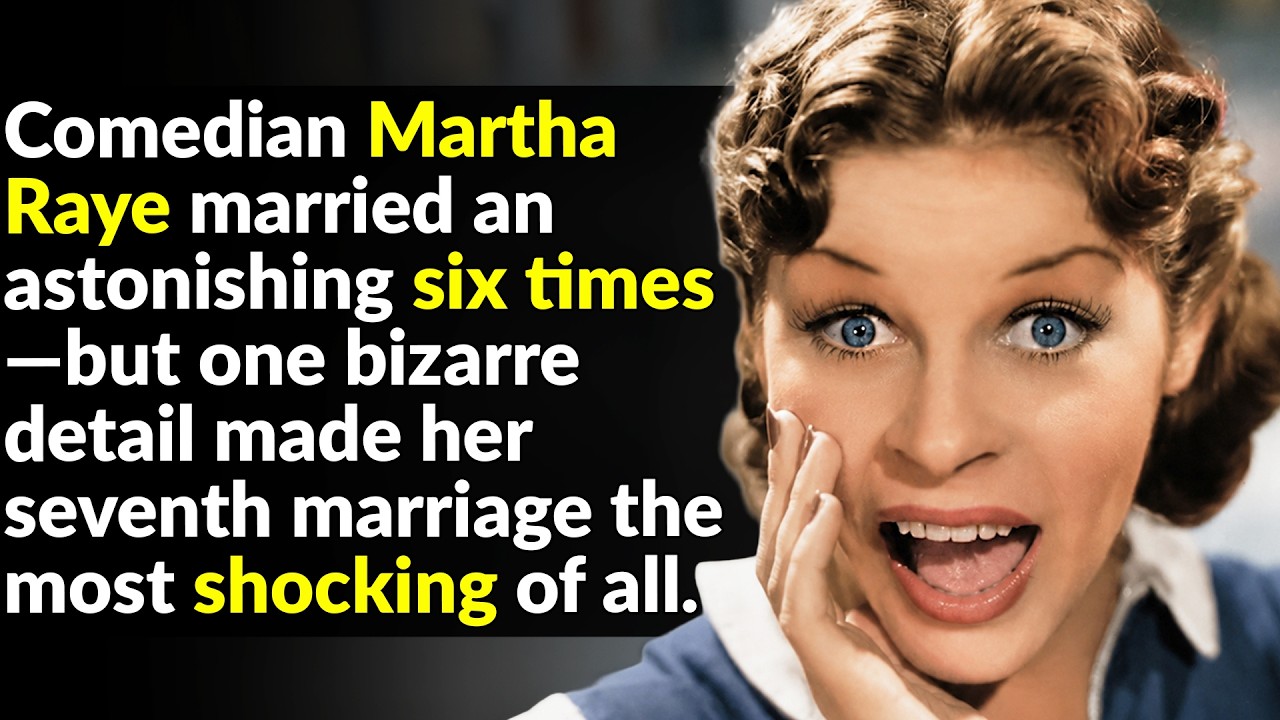
Martha Raye, the beloved comedian whose oversized smile and zany antics made millions laugh, lived a private life so tragic that her final days were marked by tears, not laughter. The woman known as “Big Mouth” to her adoring fans married six times in less than two decades, but it was her seventh marriage at age 75 that proved the most shocking of all—a union to a man 33 years her junior that would ultimately define her heartbreaking final chapter. Born literally on a stage in Butte, Montana, to vaudeville performers Mabel and Peter, Ray entered the world backstage before her mother returned to work just two days later. This inauspicious beginning set the tone for a life spent desperately seeking approval from audiences and partners alike, a pattern that would spiral into a devastating cycle of failed relationships and self-destruction. By the time she was a child, Ray and her brother Bud were already performing as a duo, captivating crowds with her remarkable singing voice and expressive features. But her hunger for the spotlight masked a deep vulnerability that would later be exploited by those closest to her. Her big break came in 1936 when producer Norman Taurog saw her in a nightclub and immediately cast her opposite Bing Crosby in “Rhythm on the Range.” Paramount signed her on the spot, and her enormous smile earned her the lasting nickname “Big Mouth.” She became a caricature of herself in Warner Bros. and Disney cartoons, but behind the laughter, Ray was hiding a painful secret: she had almost no formal schooling and often needed scripts read aloud to her. At just 20 years old, Ray began a tragic pattern of impulsive relationships. She got engaged to orchestra leader Johnny Torrence in 1936, only to break it off two months later. Then came makeup artist Hamilton “Buddy” Westmore, whom she married in May 1937 and divorced four months later, citing extreme cruelty. The spiral continued with three more marriages in just six short years, each ending in heartbreak. Her fourth marriage to Nick Condos in 1940 brought a brief respite. They had a daughter, Melody, and the union lasted longer than any before it. But even as her personal life stabilized temporarily, Ray’s career took a transformative turn when she joined the USO during World War II. She became a beloved figure to troops, flying into combat zones despite a paralyzing fear of flying. Bob Hope once said she was “Florence Nightingale, Dear Abby, and the only singer who could be heard over the artillery fire.” To cope with her terror of flying, Ray began drinking heavily on those trips, a coping mechanism that would eventually consume her. Despite her soaring professional success—including co-starring with Charlie Chaplin in “Monsieur Verdoux” and launching her own popular television show in 1954—her personal life remained a wreck. By 1956, a series of tragedies struck. Her fifth marriage to Edward T. Bagley ended after just two years, and her show was canceled. Alone and depressed, Ray took a handful of sleeping pills in Miami. She was saved just in time, and the outpouring of love from fans gave her hope again. She treasured religious medals sent by strangers and signed off her TV shows with “Goodnight, sisters” in gratitude to the nuns who cared for her. But hope was fleeting. She married for the sixth time to Robert Osborne just months after her hospitalization, and that marriage ended quietly in 1960. For the next 30 years, Ray remained single, focusing on her career and her USO work, which took her to Vietnam and earned her honorary military ranks, including colonel in the Marines and an honorary Green Beret. Yet her health deteriorated. Anemia, blood pressure problems, and circulation issues plagued her. In 1962, she was found unconscious on a Malibu beach. Still, she kept working, guest-starring on shows like “The Love Boat” and even becoming a spokesperson for Polident denture cleaner, using her big mouth as a selling point. The final tragedy unfolded in the early 1990s. After a series of strokes left her wheelchair-bound, Ray met Mark Harris, a 42-year-old who became her manager and press liaison. Within a month, she married him—her seventh husband. Friends and the press were alarmed by the age gap and the speed of the union. In December 1991, Ray had a disturbing breakdown while watching the film “For the Boys,” starring Bette Midler. She sobbed uncontrollably, convinced Midler had stolen her life story and her USO legacy. Urged on by Harris, she sued Midler, but the case was dismissed, damaging Ray’s reputation in Hollywood. Her health continued to fail. Gangrene in her foot led to amputation. On October 19, 1994, Martha Raye died of pneumonia at age 78, still married to Harris. The U. S. Army gave her a final tribute: burial with full military honors at Fort Bragg Main Post Cemetery, a fitting end for a woman who gave so much to the troops. But her personal legacy remains complex. She made countless people laugh, but she only made herself cry, right up to her bitter final moments. The woman who was born to entertain died alone in many ways, a cautionary tale of fame, vulnerability, and the relentless pursuit of love in all the wrong places.

20 August 2026

Bea Arthur Hid A Dark Side For Years… The Truth Surprises Everyone

The woman America knew as the towering, sharp-tongued Dorothy Zbornak on The Golden Girls carried a secret so deeply buried that even her own sons did not learn the full truth until after her death. Bea Arthur, who died in 2009 at age 86, spent 64 years denying a single, startling fact about her past. She was a United States Marine. The paperwork, surfacing without her permission after she passed, reveals a life far more complex than the cold, difficult persona she cultivated for decades. Born Bernice Frankle on May 13, 1922, in New York City to Jewish immigrant parents, she grew into a girl who could not disappear. At five feet nine and a half inches by her teenage years, she learned that height made her a target. She developed humor as armor and sharpness as control. When a person cannot hide, she reasoned, the next best thing is to ensure no one else gets the first word. Her enlistment paperwork, filled out at age 20, listed hobbies that seem jarring now. She played the piano. She also hunted with a . 22 caliber rifle. That detail feels strange because almost nobody would connect it with the elegant, sardonic Dorothy. Yet her height shaped the career waiting for her, casting her as the friend, the aunt, the battle-ax, the comic relief, never the romantic lead. Before acting became her life, Arthur trained as a medical laboratory technician at the Franklin School of Science and Arts in Philadelphia. She worked in a hospital lab, but the pay was too low to support herself. Then came a letter dated February 23, 1943. In it, she explained she was leaving that work because she heard women could now enlist in the Marines. She wrote that she was eager to do whatever was needed. The Marine Corps recruiting slogan in February 1943 was blunt: Be a Marine. Free a man to fight. Every woman who signed up understood the meaning. By the war’s end, more than 20,000 women had earned the title Marine under that message. Bernice Frankle began with typing at headquarters in Washington, but she looked at the situation and decided the corps was not using her well enough. In June 1943, the Marine Corps accepted her request to attend motor transport school at Camp Lejeune. Her reason was direct: based on her previous experience, she believed she could offer more value in motor transport. That small fact says a lot. At 21, she told the United States military that her talents were being placed in the wrong job. Then she proved it. For the next two years, she drove trucks and helped run a dispatch operation at an air station. By the time her service ended, she had become a staff sergeant, a real rank earned in only 30 months by a young woman who had entered from ordinary civilian life. The woman America would later know as a perfectly dressed 60-year-old delivering brutal one-liners spent 1944 in coveralls at a Marine Corps Air Station in North Carolina. During that same period in 1944, she married a fellow Marine named Robert Allan Arthur. The marriage lasted three years and produced no children. She kept the surname, changed the spelling, and carried it into her professional life. That is how Bernice Frankle became Beatrice Arthur, the name that followed her for the rest of her career, coming from a man she was married to for only 36 months in her early twenties. The question that followed her for decades was simple: why deny the Marine Corps service? She was asked about it more than once. Interviewers raised the rumor, and she usually said it was untrue before moving the conversation toward drama school. In some footage, she looks clearly uncomfortable. After her death, the records became public. The denial could no longer hold. One explanation is political. Arthur spent much of her later life as one of the most visibly progressive people in American entertainment. She played Ma Findlay, a character who had an abortion on network television in 1972 in an episode that caused national outrage and affiliate boycotts. She fought seriously for animal rights. She supported gay rights long before it was safe or easy for celebrities to do so. A military record would have complicated the public image people had built around her. She may have preferred to leave that part of her life out of the conversation. Another explanation feels more personal. Arthur was extremely private, and even her family described her that way. She also came from a generation where women’s war service was often treated as a side note. The culture remembered the men who fought and pushed many women into the background even when their service had been demanding and meaningful. So she may have refused to discuss it because she considered it private. She may also have understood that once the story entered public conversation, other people would decide what it meant. There is also the possibility that she was not trying to hide as much as she was refusing to perform the story for strangers. The personnel file gives another clue. One assessment described her as argumentative, overaggressive, officious, and probably a good worker if she had her own way. That was written about a 20-year-old woman by a man whose job was to judge her fitness for service. The language is harsh, but it also reveals the kind of institution she had entered. A young woman who did not defer was easily marked as a problem. The same kind of words followed Arthur for the rest of her life: difficult, prickly, impossible, a pain in the neck. Maybe she simply refused for 64 years to give anyone the paperwork they could use to label her all over again. One of the clearest descriptions of Arthur came from Marsha Posner Williams, a co-producer on The Golden Girls. In 2022, she described Arthur with affection and with no attempt to soften the edges. Arthur was exactly who she was. She hated makeup. She hated shoes. She hated washing her hair. She did not like being touched. She drank a lot of vodka. That was the person people worked with. Then Williams added the professional truth behind it: when a show is a hit and everyone wants it to keep going, people learn to make peace with the situation. No ordinary scandal sits behind her name. Records do not point to financial wrongdoing, arrests, lawsuits, settlements, or abuse claims from colleagues or family. During a long period of cultural re-examination, many public figures from her era were revisited. Nothing serious surfaced about Arthur. What did surface again and again was the same kind of memory: she was hard work. Rue McClanahan explained it well in her memoir and in interviews. Arthur could get fixed on certain things and suddenly dislike them. Nobody could always explain why. One example was simple: Arthur hated when people wore baseball caps backwards. It bothered her deeply. During director interviews, McClanahan said, a man who walked in wearing his cap backwards had almost no chance with Arthur. That leads to the question people still ask most: Arthur could not stand Betty White. The evidence is wide, steady, and mostly comes from people who liked both women. Betty White spoke about it herself in 2011 in interviews and in her book, If You Ask Me. What stands out is how confused she still sounded after so many years. White said she did not know what she had done. White believed her positive attitude made Arthur angry. Sometimes when White was happy, Arthur became furious. People around them had different theories, and several of them seemed possible at the same time. Marcia Posner Williams said Arthur would call her at home to complain about White. On one occasion, Arthur ran into White at a supermarket and later wanted to write her a brutal letter. Jim Valle, another co-producer, gave a simpler theory: Betty White got more applause during cast introductions. Then there were the Emmys. In the first season of The Golden Girls, all four main actresses were nominated. Betty White won. Rue McClanahan later wrote that Arthur was distraught and furious about it. McClanahan won the following year. Estelle Getty won in 1988. Arthur won in 1988 as well. Eventually, each woman received one. Still, the order mattered. Arthur had already been a major television star for 15 years before The Golden Girls existed. Watching White win first may have cut deeper than anyone on the outside could fully understand. The deepest difference may have come from training. Betty White came from live television. Between takes, she would talk to the studio audience, flirt with them, and enjoy their energy. Arthur came from the theater. In her world, the audience stayed beyond the wall of the performance. She did not acknowledge them between takes. She stayed inside the work. Those two traditions lived in the same room for seven years. The way this story is remembered is also uneven. Betty White lived to 99 and became one of the most beloved figures in American entertainment. Arthur died in 2009 before that final wave of Betty White worship fully took over. So the version that survived is simple and damaging: a national treasure was disliked by a woman who is no longer here to explain herself. Every retelling makes Arthur look colder, sharper, and more unreasonable. She never gave her side in a memoir. She never sat down for a long interview about Betty White. The show ended because Arthur ended it. That is the sharpest part of this whole story because it does not arrive with softness or mystery. It arrives with one blunt answer. According to the co-producer, the contracts were finished. The executives went to all four women one by one. Estelle Getty wanted to continue. Rue McClanahan wanted to continue. Betty White wanted to continue. Then they went to Arthur. She refused. The word she placed before that refusal was so direct that the documentary does not even repeat it in full. In the co-producer’s version, that single answer is the reason the show stopped. Her son, Matthew Saks, has given a calmer version of the same ending. He has said his mother wanted to leave because she felt ready for new projects and fresh ideas. After seven years of playing Dorothy, she had reached the end of what she wanted from that role. Both accounts can sit together. Arthur was 69 years old. … Read more

20 August 2026

The Last Truly Unhinged Movie Star

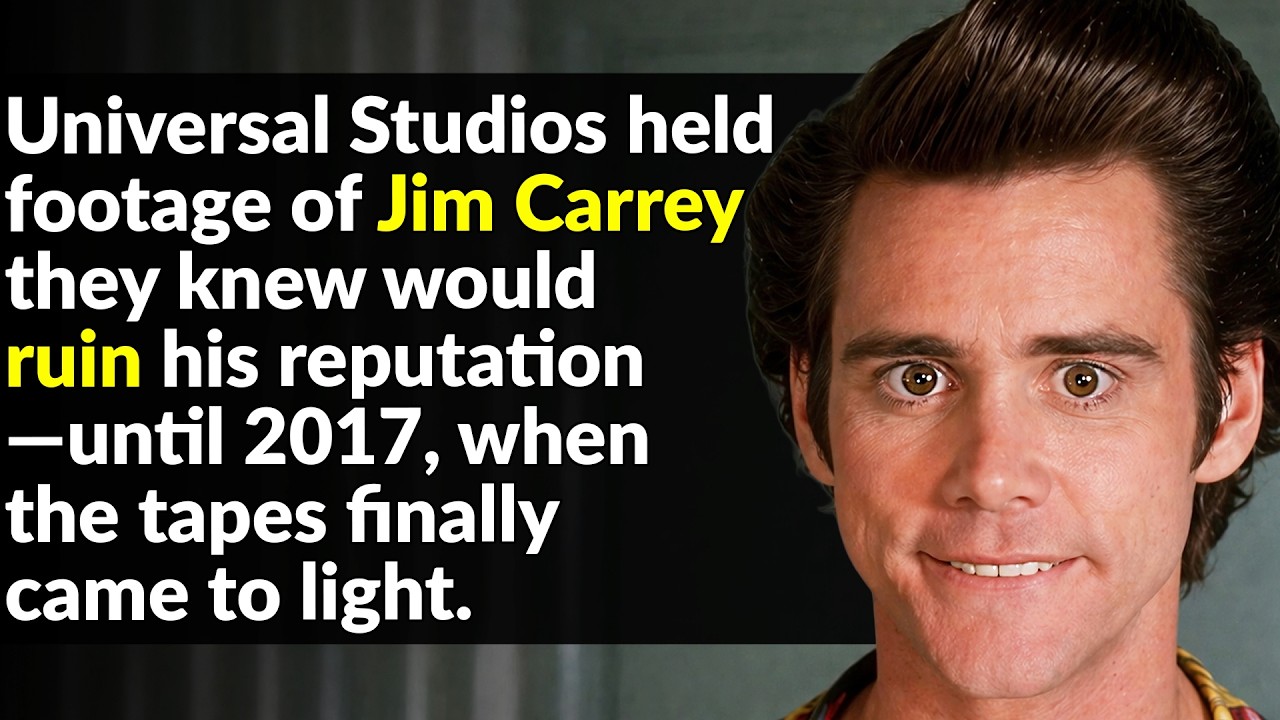
Jim Carrey’s rise from a struggling teenager living in a tent to the highest-paid movie star in the world was fueled by a manic energy that captivated audiences—but behind the laughter, a darker story of obsession, tragedy, and relentless controversy has emerged, painting a portrait of Hollywood’s last truly unhinged movie star. Born north of Toronto to Kathleen and Percy Carrey, young Jim learned early that making people laugh was a survival mechanism. His mother, suffering from various health problems, coped by joking about her own mortality, leaving her son with a crippling fear of death. Desperate to soothe her, Carrey began doing impressions, throwing himself down stairs, and contorting his face—anything to bring a smile to his mother’s face. By age eight, he was writing to Carol Burnett, insisting he was ready for the big time. He didn’t get the job, but Burnett wrote back, a small kindness that fueled his dreams. But his family’s stability collapsed when his father lost steady work. The Carreys lost their home and lived out of a Volkswagen van. Jim, then a teenager, spent months in a tent on the shores of Lake Ontario. It wasn’t rock bottom, he later said—the family kept their spirits up. His father eventually landed a job at the Titan Wheels factory in Scarborough, and the family lived across the street. To keep the job, Jim and his brother had to work nights at the factory. He dropped out of school on his 16th birthday, looking across Lake Ontario to the steel mills of Hamilton, dreaming of a life of labor. But the drive to make people laugh never left him. As a teenager, he started performing at seedy comedy clubs, but audiences wanted raunchy humor, not a skinny kid doing impressions. He was booed off stage more times than he could count. He auditioned for Saturday Night Live three times—each time, Lorne Michaels said no. Rodney Dangerfield saw something in him, however, and invited Carrey to open for him on tour. That gave Carrey the confidence to move to Hollywood. In Los Angeles, Carrey set his sights on The Tonight Show. He got booked—then unbooked after a disastrous set at the Improv. He eventually made a lukewarm appearance, but his Hollywood dreams were off to a rocky start. In 1987, he married Comedy Store waitress Melissa Womer. Their daughter, Jane, was born soon after. But Melissa soon realized her husband was an “extremely depressive person,” spending countless nights counseling him until 4 or 5 a. m. Then came the break. In 1990, Carrey joined the cast of In Living Color, creating bizarre characters like Fire Marshall Bill. Audiences took notice. Morgan Creek Productions was casting an offbeat comedy called Ace Ventura: Pet Detective. Rick Moranis turned it down, as did Damon Wayans. Producers considered Alan Rickman and Judd Nelson before one of them spotted Carrey on In Living Color. They offered him the lead role. No one could have predicted what happened next. Released in early 1994, Ace Ventura grossed over $100 million domestically. That same year, The Mask—another $100 million grosser. Then came Dumb and Dumber, which earned nearly $250 million worldwide. Three over-$100-million movies in a single year. Jim Carrey was suddenly the biggest movie star in the world. He went from earning $350,000 for Ace Ventura to commanding $7 million for Dumb and Dumber—and then, in 1996, he became the first actor to earn $20 million for a single film, The Cable Guy. But the fame came at a cost. His marriage to Melissa ended in 1995. He married Lauren Holly, his Dumb and Dumber co-star, but the marriage lasted less than a year—the paparazzi hounded them, and Holly couldn’t take it. Carrey’s next relationship, with Renee Zellweger, fizzled. Then came Jenny McCarthy, a four-year partnership that ended amid her controversial anti-vaccine comments. But the most tragic relationship was with Irish makeup artist Cathriona White. Carrey met White in 2012. They dated on and off for three years. After their breakup in 2015, White died of an overdose on September 28. Carrey was a pallbearer at her funeral. But then details emerged: White had been married to another man throughout much of her relationship with Carrey. Her husband, Mark Burton, filed a wrongful death lawsuit, accusing Carrey of using his celebrity to acquire the drugs that killed her. Carrey countersued, calling the lawsuit a “heartless attempt to exploit” him and the woman he loved. White’s mother also filed a lawsuit. Court documents revealed notes from White’s therapist that painted a disturbing picture: Carrey’s anger problems, manipulative behavior, and verbal abuse. Even more shocking, records showed Carrey had tested positive for multiple STIs—including hepatitis, herpes, and chlamydia—and had hidden this from White. When she noticed bumps on his privates, he lied, claiming they were from shaving. He eventually forced her to sign a confidentiality agreement. The breakup left White in a fragile state, afraid Carrey might burst into her apartment to hurt her. The lawsuits were eventually dismissed, but the damage to Carrey’s public persona was done. Carrey’s on-set behavior was equally notorious. On the set of Man on the Moon, he went method—claiming Andy Kaufman’s spirit had taken over his body. He refused to communicate with co-stars except telepathically. He filled his pockets with Limburger cheese, the stinkiest cheese, and insisted on hugging people. He spat on pro wrestler Jerry Lawler during a fight scene, and Lawler retaliated for real, sending Carrey to the hospital with a neck brace. Director Milos Forman later said of Carrey’s alter ego, Tony Clifton: “I have never been intimidated by another man, and I am intimidated by Tony Clifton.” On the set of How the Grinch Stole Christmas, Carrey hated the prosthetic suit so much that he kicked a hole in the wall after a two-and-a-half-hour makeup session. He frequently disappeared to throw tantrums, and after two weeks, only three days of footage had been shot. The makeup artist, Kazuhiro, quit. Carrey had to be trained by a man who teaches CIA agents how to endure torture just to survive the suit. In 2013, Carrey took a role in Kick-Ass 2, but after the Sandy Hook school shooting, he publicly disavowed the film, saying he could not support that level of violence. For years, Universal suppressed footage from the Man on the Moon set that showed Carrey’s abusive behavior. It was finally released in 2017, and it was damning. Jim Carrey remains one of the most iconic and controversial performers of his generation. His manic energy made him a star, but it also came with a dark side—a side that has left a trail of broken relationships, legal battles, and a legacy that is as unsettling as it is unforgettable.

19 August 2026

Mariska Hargitay Is Ready To Take On Her New Career Move

Mariska Hargitay, the face of Olivia Benson for 26 years, walked onto a Broadway stage alone on Tuesday night, leaving behind the squad room and the scripted safety of television for a raw, one-woman play about depression and suicide. At 62, the actress who has anchored more than 500 episodes of “Law & Order: SVU” is stepping into a role that demands she improvise with strangers in the audience, with no co-stars and no retakes. The move has stunned fans and industry insiders alike, raising urgent questions about what drove her to take such a personal and professional risk at the peak of her career. The play, “Every Brilliant Thing,” opened at the Hudson Theatre on May 26, with Hargitay taking over from Daniel Radcliffe. The production, staged in the round with house lights up, requires her to move through the crowd, handing out lines and guiding the narrative of a character listing reasons to live. It is a radical departure from the controlled environment of a television set, where she spent decades delivering lines to camera marks and scene partners. For an actress who has played one role across four decades, this is not just a new job; it is a reinvention. Hargitay’s decision comes after a year of profound personal and professional transformation. In May 2025, she premiered her directorial debut, the documentary “My Mom, Jane,” at the Cannes Film Festival, a deeply personal exploration of her mother, Jayne Mansfield, who died in a car crash when Hargitay was just three years old. That film, which aired on HBO, allowed her to reclaim her mother’s story from tabloid myths and confront the “scar of my soul” she has carried since childhood. Now, she is channeling that same vulnerability onto the stage. The actress has spoken openly about the secondary trauma she absorbed from playing a detective who investigates sexual violence, and from the thousands of survivor letters she received over the years. In 2004, she founded the Joyful Heart Foundation, which successfully pushed all 50 states to enact rape kit reform by May 2026. That advocacy work, she has said, taught her how to lead in real life. Now, she is applying that courage to a live performance that forces her to be present, vulnerable, and utterly alone. Fans reacted with panic online when the Broadway run was announced in March 2026, fearing that Hargitay was leaving Olivia Benson for good. The show’s producers quickly clarified that she is only taking a limited engagement through June 28, and that SVU remains in production. Still, the emotional weight of the role is undeniable. The play’s subject matter—depression and suicidal thoughts—mirrors the themes of hope and survival that have defined her advocacy. Hargitay has said she feels “focused and fearless” about the challenge. Her husband, actor Peter Hermann, shared rehearsal photos on Instagram before her first performance, writing that he was proud to watch her step into something new after so many years on the same set. The couple, married since 2004, have three children together. Hargitay has often credited Hermann with providing the stability that allowed her to take risks. Now, that support is visible in every rehearsal and every performance. The move also signals a broader shift in Hargitay’s career. She has already directed a documentary, produced several others including “I Am Evidence” and “My Beautiful Stutter,” and now she is testing herself in live theater. At an age when many actors settle into comfortable routines, she is choosing the most exposed form of performance. It is a statement that her work is far from finished. For the audience, “Every Brilliant Thing” offers a rare chance to see Hargitay without the armor of a character. There are no costumes, no detectives badge, no script. There is only a woman on a stage, asking strangers to help her tell a story about why life is worth living. It is a powerful, urgent reminder that even after decades of playing a hero on screen, the real work of courage happens in the quiet, unscripted moments. As the run continues through June 28, the theater world is watching closely. Hargitay has already proven she can carry a network drama for a quarter-century. Now, she is proving she can carry a Broadway stage alone. The question is no longer whether she can do it, but what she will do next.

19 August 2026

Reba McEntire Has Lived Through More Pain Than Fans Ever Knew

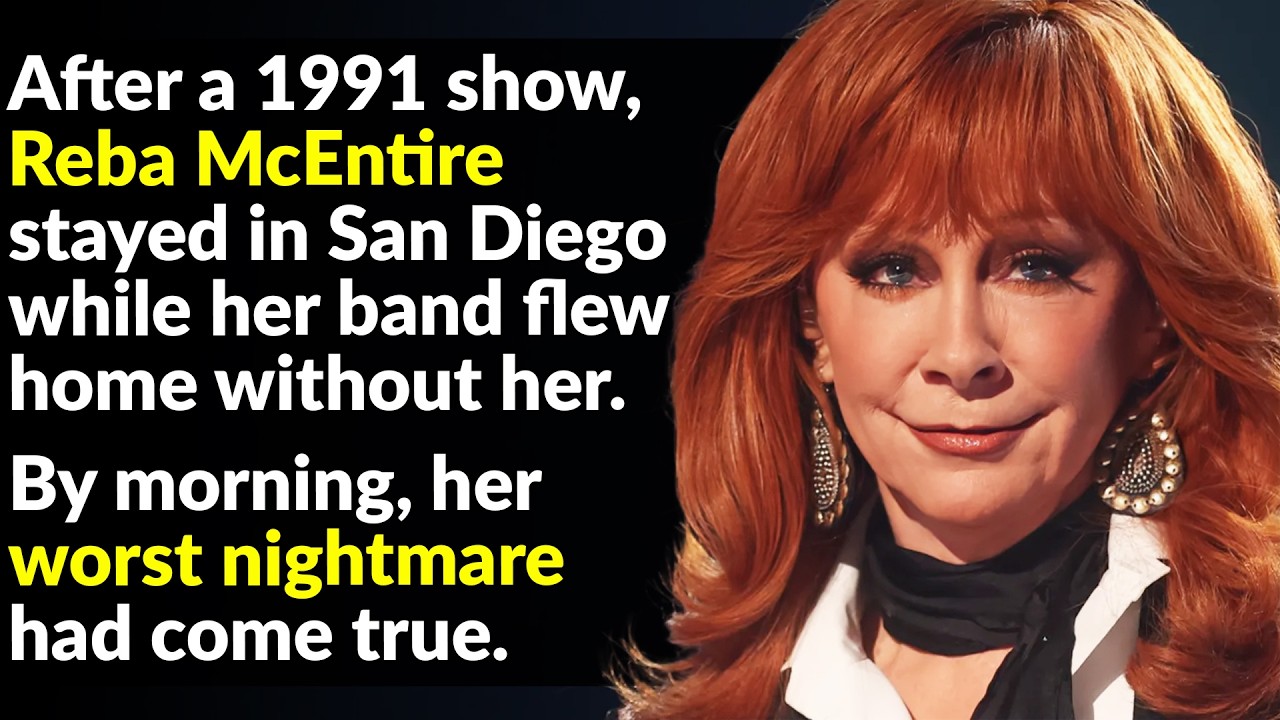
Reba McEntire, the undisputed Queen of Country music, has carried a burden of grief so profound that even her most devoted fans never knew the full extent of her pain. Behind the glittering awards, the chart-topping hits, and the Hollywood star on the Walk of Fame lies a story of unimaginable loss that began with a single phone call in 1991 and has never truly ended. On March 16, 1991, McEntire was asleep in a San Diego hotel room after performing a private concert for IBM executives. Her band and crew had flown ahead to Indiana for the next show. At 2 a. m. , the charter jet carrying eight of her closest musical family members slammed into Otay Mountain at 3,300 feet. All ten people on board perished instantly. The phone rang at dawn. Her husband, Narvel Blackstock, answered. McEntire asked, “Are they okay?” He replied, “I don’t think so.” In that moment, her world collapsed. The National Transportation Safety Board later ruled the crash preventable, blaming the pilot’s improper planning and decisions. But for McEntire, there was no comfort in blame. Just nine days later, on March 25, 1991, McEntire stepped onto the stage of the 63rd Annual Academy Awards. She performed “I’m Checking Out” with a voice that trembled only with raw emotion, not weakness. It was a flawless tribute to her fallen bandmates, delivered through a grief so heavy it could have crushed anyone else. That tragedy was not the last. In August 2025, McEntire’s stepson, Brandon Blackstock, died at age 48 after a three-year battle with melanoma. He was the son of her second husband, Narvel Blackstock, and the former husband of Kelly Clarkson. McEntire posted a heartbroken Instagram tribute: “Last week, my stepson, oldest son Brandon Blackstock, went home to be with God. His legacy and laughter will live on through his family. Rest in peace, cowboy.” McEntire’s personal life has been a series of devastating blows. Her first marriage to steer wrestling champion Charlie Battles ended in divorce after 11 years, with McEntire openly admitting she chose her career over the marriage. Her second marriage to Narvel Blackstock lasted 26 years but ended in 2015 when Blackstock filed for divorce. The settlement cost her $47. 5 million. Yet McEntire never stopped working. She channeled her pain into music, television, and Broadway. Her sitcom “Reba” ran for six seasons and became the highest-rated show on the Warner Brothers Network. She earned a Drama Desk Award for her Broadway debut in “Annie Get Your Gun.” At 54, she scored her 24th number one hit, “Consider Me Gone,” becoming one of the oldest women to top the country charts. Now, at 70, McEntire has found new love with actor Rex Linn, who proposed on Christmas Eve 2024. She said yes but told People magazine, “Work comes first, so we’ll see.” The engagement ring was spotted at the 77th Primetime Emmys, sparking joy among fans who have watched her endure so much. But the pain of losing her band remains the defining wound of her life. In interviews, McEntire has described that morning in San Diego as the moment she learned that fame offers no protection from fate. She has said she still feels the presence of those lost musicians in every note she sings. The tragedy also reshaped her career. After the crash, McEntire became fiercely protective of her crew, insisting on safer travel arrangements and never taking a moment of success for granted. She has said that every performance since 1991 has been a tribute to the eight souls who never made it to Indiana. McEntire’s story is not just one of survival but of transformation. She turned her grief into a relentless drive to honor those she lost. Her 1991 album “For My Broken Heart” was a direct response to the crash, and its title track became an anthem of resilience. Yet the public rarely saw the full scope of her suffering. The video transcript that has now surfaced reveals details McEntire seldom shared: the way she learned the news, the shock of realizing her band was gone, and the impossible choice to perform at the Oscars just days later. “Reba is totally devastated by this,” her publicist told the Los Angeles Times at the time. “It’s like losing part of your family.” That loss has never healed. It has only deepened with time, especially after Brandon’s death. McEntire’s stepson Brandon Blackstock was more than a family member; he was a link to her second husband and a father to her grandchildren. His death from melanoma at 48 was a cruel echo of the sudden losses she had faced decades earlier. Through it all, McEntire has remained a towering figure in country music. She has sold more than 75 million records worldwide, making her one of the best-selling female artists of all time. She has won 16 Academy of Country Music Awards, 9 Country Music Association Awards, and 3 Grammys. But numbers cannot measure the weight she carries. In her memoir and interviews, McEntire has spoken about the guilt of surviving when others did not. She has said she often wonders why she was spared, and she channels that question into her art. Her new NBC sitcom “Happy’s Place,” which premiered in early 2024, is a testament to her ability to find joy amid sorrow. The show, co-starring her real-life boyfriend Rex Linn, pulled in 14 million viewers across platforms and was quickly renewed for a second season. McEntire’s resilience has inspired millions, but the video transcript now reveals that her strength came at a cost few understood. She has lived through more pain than fans ever knew, and she has done it with a grace that belies the depth of her wounds. As she prepares for a possible spring wedding to Linn, McEntire is not rushing. “We’re totally enjoying being engaged,” she told People. “We like comfort. We love friends. We love food.” The celebration, she hinted, will be non-traditional and laid-back, a reflection of a woman who has learned that life is too short for anything less than authenticity. But the ghosts of 1991 and 2025 will always be with her. McEntire has said that she still dreams of the band members who died, and she still hears their harmonies in her head. She has turned that pain into a legacy that will outlast her. For fans, the revelation of her hidden suffering is a reminder that even the brightest stars carry darkness. Reba McEntire’s story is not just one of triumph but of survival against odds that would have broken anyone else. She is the Queen of Country, but she is also a woman who has buried her band, her stepson, and her marriages. She has risen from the ashes of a plane crash and the wreckage of divorce to stand tall on stages around the world. Now, as she steps into a new chapter with Linn, McEntire is proof that pain does not have to be the end of the story. It can be the beginning of something stronger. The video transcript that has emerged offers an unflinching look at the moments that shaped her. It is a testament to her courage and a warning that fame is no shield against tragedy. Reba McEntire has lived through more pain than fans ever knew. But she has also lived through more love, more music, and more life than most can imagine. And she is not done yet.

19 August 2026

At 92, Kim Novak Finally Tells the Truth About Tony Curtis

At 92, Kim Novak has finally broken her decades of silence, offering a candid and deeply human reflection on her tumultuous relationship with Hollywood legend Tony Curtis, stripping away the glittering veneer of golden age myth to reveal the fragile, flawed individuals behind the headlines. In an exclusive and remarkably clear-eyed interview, the reclusive star of Alfred Hitchcock’s “Vertigo” has chosen to speak not with bitterness or scandal, but with the hard-won wisdom of a woman who has spent the last half-century living far from the industry that once tried to consume her. She is not settling scores, she insists, but telling the truth about an era that demanded illusion over honesty, and about a man who was as much a product of that unforgiving system as she was. Novak, born Marilyn Pauline Novak on February 13, 1933, in Chicago to a working-class Czech American family, began her journey far removed from the glamour of Hollywood. Her upbringing was shaped not by red carpets, but by discipline, artistic sensitivity, and a stubborn independence that would later define her career. She studied at the School of the Art Institute of Chicago, a path that seemed destined for a life in painting or design, until an unexpected discovery by a modeling scout thrust her into a world she never sought. Reluctantly, she arrived in Hollywood, where Columbia Pictures and its iron-fisted studio head, Harry Cohn, immediately set about trying to mold her into a manufactured replacement for Rita Hayworth. They wanted a star, but they got a woman who refused to be a product. From the very beginning, Novak resisted the studio’s attempts to erase her identity. She fought against changing her name, challenged the control Cohn demanded, and rose to stardom on her own terms. Her breakthrough performance in “Pushover” and her Golden Globe-winning turn in “Picnic” captivated audiences with a rare blend of vulnerability and strength, a quality that reached its peak in Hitchcock’s “Vertigo.” In that film, her haunting dual performance, once misunderstood by critics, has since become central to what is now regarded as one of the greatest films in cinema history. She followed that triumph with notable roles in “Bell, Book and Candle,” “Middle of the Night,” “Strangers When We Meet,” and “Of Human Bondage,” each performance a testament to her refusal to be boxed in. Even as fame weighed heavily on her, and Hollywood quietly punished her refusal to fully submit to its demands, Novak’s later career unfolded more selectively. She made an elegant return in the television film “Malibu” and delivered a memorable arc as the mysterious Kit Marlo on “Falcon Crest,” roles defined by restraint and emotional depth rather than spectacle. But she chose to step away again, closing her screen career with introspective performances in “The Children” and the psychologically demanding “Liebestraum,” an experience so fraught with conflict that it solidified her decision to leave the industry behind entirely. She walked away from Hollywood not in defeat, but in deliberate, conscious retreat. Woven through this professional journey was a deeply complex personal life, one that exposed the brutal underbelly of the studio system. Her relationship with Sammy Davis Jr. was a stark revelation of the racism and coercion that pervaded 1950s Hollywood. The studio, terrified of the scandal a mixed-race romance would cause, pressured her relentlessly, threatening her career and her safety. The affair ended not because of a lack of love, but because of an industry that demanded conformity at any cost. Novak also experienced romances with powerful and unconventional figures, brief marriages marked by mutual respect, and ultimately, a conscious decision to escape the spotlight entirely. In the mid-1960s, she retreated to Big Sur, and later to Oregon, where she found lasting peace with veterinarian Robert Malloy. Their love, rooted in authenticity rather than ambition, lasted more than four decades, until his death in 2020. It was a partnership that allowed her to heal, to paint, to raise horses, and to live a life entirely her own. Now, with the distance and wisdom that only decades of quiet reflection can provide, Novak has turned her attention back to Tony Curtis, not as a legend or a scandal, but as a deeply human figure. She remembers him as charismatic, restless, insecure, and shaped by poverty, ambition, and the same unforgiving system that shaped her. Their relationship, she recalls, was defined by passion, competition, studio pressure, and emotional mismatch rather than villainy. She acknowledges both his kindness and his volatility, his public confidence and his private doubts. Curtis, who rose from a brutal childhood in the Bronx to become one of Hollywood’s most magnetic stars, was a man who thrived on momentum, on the constant rush of performance and adoration. Novak, by contrast, needed depth and quiet, a foundation of authenticity that the industry could never provide. She concludes, without bitterness, that knowing him taught her exactly what she would not compromise. The truth people deserve, she says, is not gossip or myth, but understanding. Because behind every golden age romance, she insists, was a fragile human story. The stories of Tony Curtis and Kim Novak were never just about two beautiful people in a glamorous affair. They were about two individuals trying to survive a machine that consumed youth and talent with equal indifference. Novak’s decision to speak now, at 92, is not an act of confession or revenge. It is an act of liberation, a final reclaiming of her own narrative from the hands of an industry that once tried to write it for her. She is not interested in settling scores, but in offering a more complete picture of a man who was both a product and a victim of his time. The interview, which spans hours of reflection, reveals a woman who has made peace with her past. She speaks of Curtis with a mixture of affection and sorrow, recognizing that their time together was a collision of two people who were never quite right for each other, but who shared a profound understanding of the pressures that shaped them. She remembers his humor, his insecurity, his desperate need for approval, and the way the studio system pitted them against each other even as it tried to sell their romance to the public. She does not excuse his flaws, but she contextualizes them, offering a portrait that is far more nuanced than the tabloid headlines of the era. Novak’s own journey from reluctant star to defiant survivor is a testament to her resilience. She never wanted the fame that was thrust upon her, and she never regretted walking away from it. Her life in Oregon, surrounded by animals and art, was not an escape but a homecoming, a return to the authenticity that Hollywood could never offer. She has painted, written, and lived on her own terms, a quiet rebellion against an industry that demanded she be anything but herself. Now, as she approaches her tenth decade, she is finally ready to share the truth, not to shock, but to illuminate. The story of Kim Novak and Tony Curtis is not a simple tale of love and betrayal. It is a story about the cost of fame, the weight of expectation, and the courage it takes to live an honest life in a world that rewards illusion. Novak’s decision to speak now, with clarity and calm, is a gift to those who have long wondered what really happened behind the closed doors of Hollywood’s golden age. She offers no easy answers, but she offers something far more valuable: a human perspective, free from the distortions of time and gossip. She wants the world to understand that Tony Curtis was not a monster, but a man, and that their story was never just about them, but about the system that made and unmade them both. As the interview draws to a close, Novak reflects on the lessons of a lifetime. She speaks of the importance of staying true to oneself, of the dangers of surrendering to the demands of others, and of the peace that comes from living a life of integrity. She does not regret her time in Hollywood, but she does not romanticize it either. She is grateful for the opportunities it gave her, but she is even more grateful for the strength it forced her to find. And when she talks about Tony Curtis, she does so with a compassion that can only come from someone who has truly let go of the past. This is not the story of a bitter old woman dredging up ancient grievances. It is the story of a survivor, an artist, and a woman who has finally found the words to describe a life that was far more complex than any film could capture. Kim Novak has spoken, and the truth she offers is not a scandal, but a revelation. It is a reminder that the people we see on screen are never just characters, but human beings with all the flaws, fears, and dreams that come with that condition. And in telling her truth, she has given Tony Curtis the one thing the golden age never allowed him: a chance to be understood.

19 August 2026