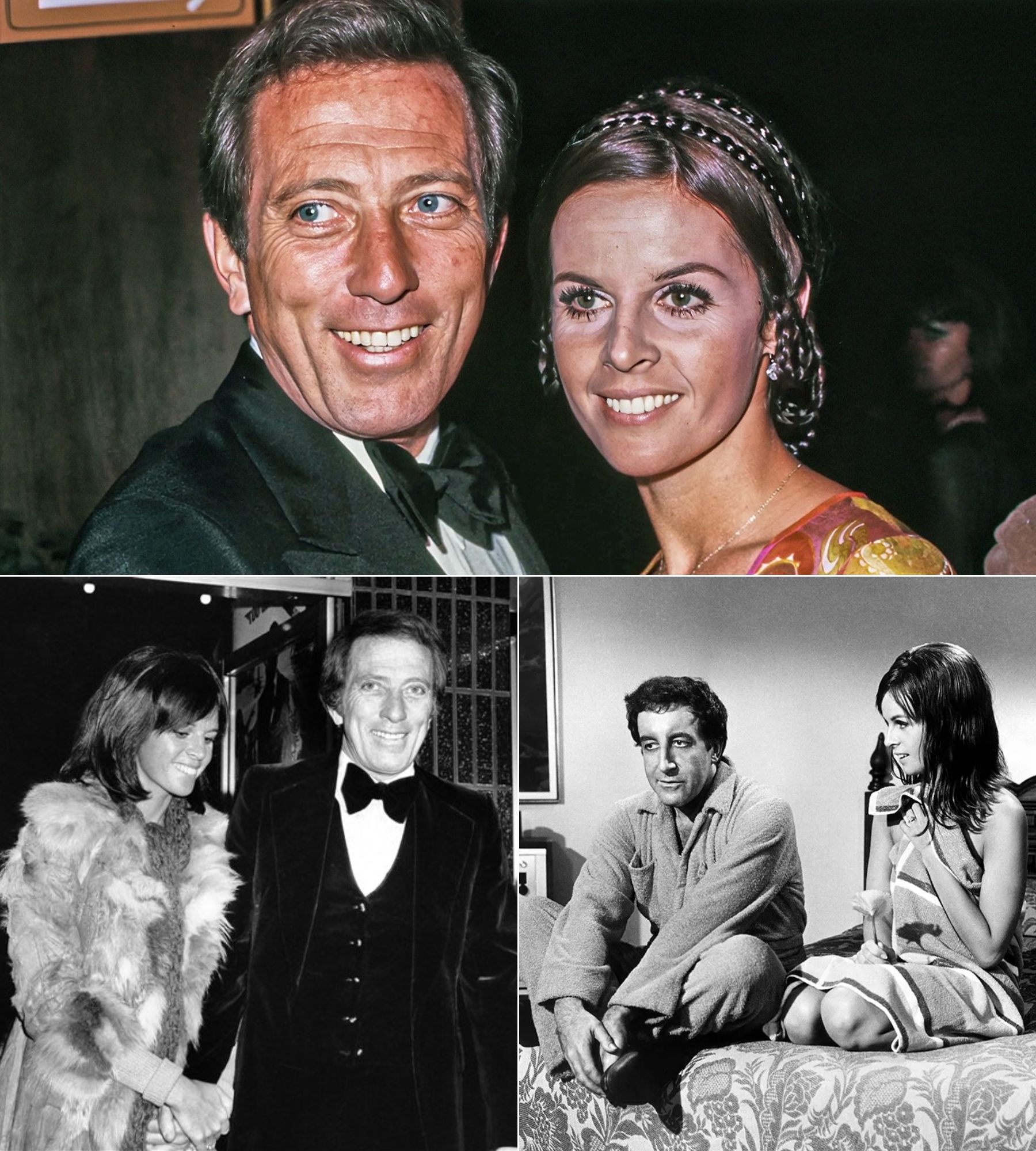
Hollywood’s Most Disturbed Rebel

Peter Fonda, the iconic actor who rode a motorcycle into Hollywood history and shattered the image of the American hero, died on August 16, 2019, at the age of 79, leaving behind a legacy of rebellion, heartbreak, and a devastating family secret that haunted him for decades. The star of “Easy Rider” passed away at … Read more

22 August 2026

At 62, Μelissa Gilbert Reveals Everything About Her Husband… It’s Worse Than We Thought

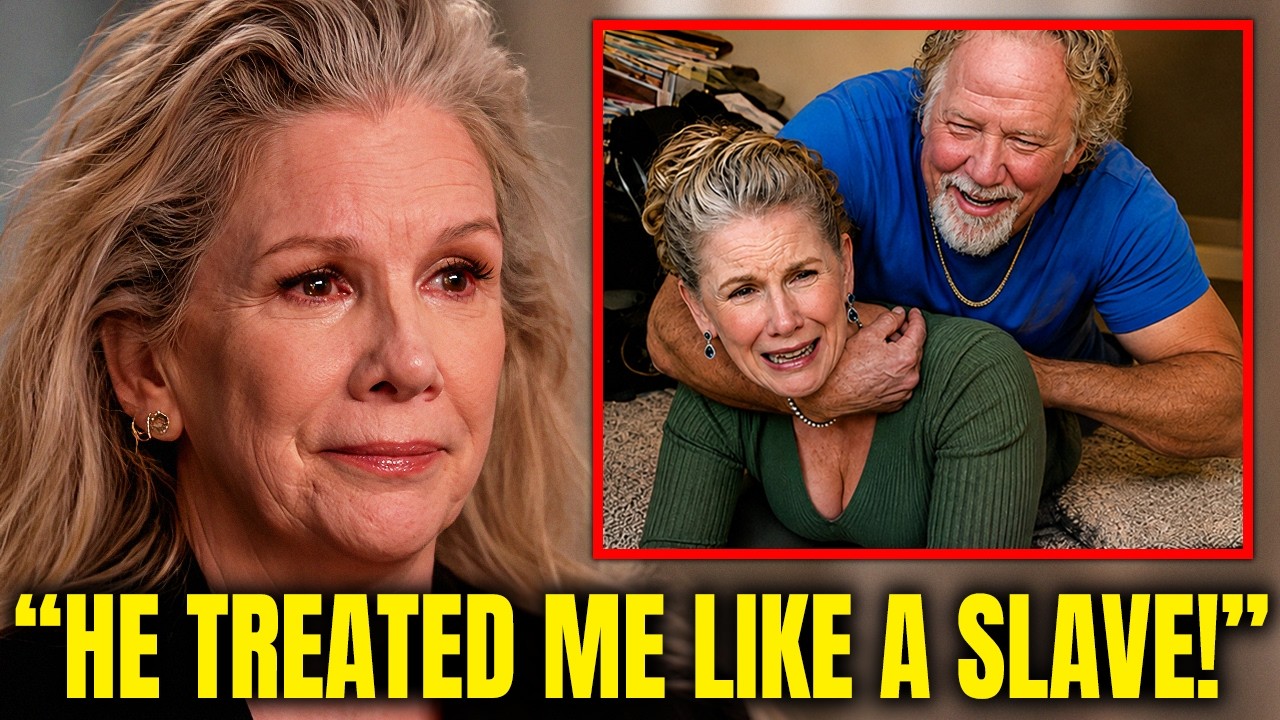
Melissa Gilbert, the beloved former child star of Little House on the Prairie, has broken her silence in a devastating interview, revealing the full, harrowing extent of the crisis engulfing her marriage to actor Timothy Busfield. In an exclusive and emotional conversation with George Stephanopoulos on Good Morning America, the 62-year-old actress described the past year as the most traumatizing of their lives, a nightmare that has destroyed their future. Her revelations come as Busfield faces four felony counts of criminal sexual contact involving minor children, charges he vehemently denies. The allegations against Busfield, which surfaced in early 2026, have sent shockwaves through Hollywood and shattered the carefully constructed image of a grounded, loving partnership. Gilbert, who married Busfield in 2013 after a whirlwind romance, admitted that their life as they knew it is over. Even if he is exonerated, she confessed, he will always be that guy, a label that will follow him forever. The weight of the scandal has forced the couple to grieve the loss of all their plans, dreams, and ideas for the future. The crisis traces back to Busfield’s work on the Fox drama The Cleaning Lady in Albuquerque, New Mexico. Two 11-year-old twin brothers, who were child actors on the set, alleged that Busfield cultivated an Uncle Tim persona to gain their trust before engaging in inappropriate physical contact. The boys claimed the abuse began when one was just seven years old, but they stayed silent out of fear that speaking out would jeopardize their acting careers. The allegations were only reported after the twins became increasingly distressed. Busfield was arrested on January 13, 2026, and spent a week in custody before a judge granted him pretrial release. The grand jury handed down a strict indictment on February 6, charging him with four felony counts. Each count carries a possible six-year prison sentence. Busfield has pleaded not guilty, and his legal team has filed a motion to quash the indictment, alleging prosecutorial misconduct. The trial is tentatively scheduled for May 2027. Gilbert, however, has stood firmly by her husband, insisting that she knows him in her bones. In her letter to the court, she described Busfield as her rock and the beating heart of their family, with the strongest moral compass of any human she has ever known. She revealed that she was aware of past allegations against Busfield from 1994 and 2012, which she interrogated him about before they married. She said she heard his side and believed his truth, warning that if she thought for a second he had hurt someone, he would have a lot more to worry about than prison. The defense has centered on claims that the accusations are a malicious fabrication driven by revenge and financial gain. Busfield’s attorneys allege that the twins’ mother, angry after her children were recast from the show, coached her sons to provide false testimony. An independent investigation by Warner Brothers Television found no evidence to support the allegations, a point Busfield’s team has emphasized. However, prosecutors argue that the investigator failed to talk to key witnesses, creating a discrepancy that will be central to the trial. The scandal has decimated Busfield’s career. He has been dropped by his talent agency, digitally removed from an upcoming romantic comedy film, and effectively blacklisted from directing. His agency fired him, and he told the grand jury that his career is effectively over. Gilbert, who had already been struggling with her own financial and medical challenges, has deleted her social media accounts to escape the public backlash. The couple, who once escaped Hollywood for a rustic life in the Catskills, now find themselves at the center of a media firestorm. Gilbert’s own life has been marked by immense personal struggle. She faced over $360,000 in federal tax liens and $112,000 in state taxes, forcing the couple to move to a modest log house in Michigan. She underwent multiple spinal fusion surgeries after a balcony collapse and a fall on Dancing with the Stars left her with debilitating nerve damage. Her campaign for the US House of Representatives collapsed in 2016 due to her chronic pain. Now, she is shouldering the financial burden of Busfield’s legal expenses, which have drained his personal accounts. The couple’s blended family has also been deeply affected. Gilbert’s son, Michael Boxleitner, submitted a character letter to the court, describing Busfield as his hero and stating that Busfield showed up for him as a father more than his biological father ever did. More than 70 high-profile character references were submitted on Busfield’s behalf, including one from his Thirtysomething co-star Peter Horton, who validated him as an inherently good man. The flood of support underscores the deep divide in public opinion. Gilbert’s interview was a raw and tearful defense of her husband, but it has drawn sharp criticism from advocates who argue she is turning a blind eye to the allegations. She acknowledged the destruction of their former life, saying that even if Busfield is exonerated, the stigma will never fade. The couple is grieving the loss of everything they built together, from their home to their careers. Gilbert’s words painted a picture of a family in ruins, clinging to hope in the face of overwhelming odds. The legal stakes could not be higher. Busfield faces up to 24 years in prison if convicted on all four counts. His attorneys have filed a motion to quash the indictment, alleging that the prosecutor misstated the law and blocked grand jurors from hearing exculpatory witnesses. If the motion succeeds, the case could be dismissed entirely. For now, Busfield remains free, but the cloud of suspicion hangs over every aspect of his life. The case has also reignited broader conversations about the entertainment industry’s handling of allegations involving minors. The twins’ parents have maintained that their sons were traumatized by the experience, and prosecutors have pointed to what they describe as a documented pattern of misconduct spanning two decades. The defense counters that the accusers are con artists motivated by money and revenge. The truth, as always, lies somewhere in the middle, waiting to be uncovered in a courtroom. Gilbert’s revelation that she knew about past allegations before marrying Busfield has raised uncomfortable questions. She admitted she interrogated him about the 1994 and 2012 incidents, which reportedly involved adult women and resulted in a private financial settlement. She said she believed his truth, but critics argue that her willingness to dismiss the claims reflects a troubling pattern of enabling. Gilbert has insisted she is neither naive nor complicit, but the scrutiny has been relentless. The couple’s future remains uncertain. They have retreated from public life, with Gilbert deleting her social media accounts to cut off the wave of backlash. Busfield’s career is in ruins, and the financial strain of legal fees has taken a toll on their savings. The trial, if it proceeds, will be a media spectacle, drawing attention from around the world. For now, the couple waits, their lives hanging in the balance as the legal system prepares to decide their fate. Gilbert’s interview was a plea for understanding, but it also served as a stark warning. She said that if she thought for a second Busfield had hurt someone, he would have a lot more to worry about than prison. The statement was both a declaration of faith and a challenge to the public to trust her judgment. Whether that trust will be rewarded remains to be seen, but the stakes could not be higher for a family already shattered by scandal. The case has also exposed the fragility of the couple’s carefully constructed public image. They had presented themselves as a grounded, loving pair who escaped the superficiality of Hollywood. They advocated for natural aging and rejected cosmetic enhancements, building a life in a rustic cottage in Michigan and later a 14-acre home in the Catskills. Now, that image lies in ruins, replaced by a narrative of legal battles, financial ruin, and public humiliation. As the trial countdown continues, the world watches to see what will happen next. Gilbert has vowed to stand by her husband, but the emotional toll is evident. She described the experience as a nightmare that has turned their world upside down. The couple is grieving the loss of their former life, but they are also fighting to clear Busfield’s name. Whether they will succeed is uncertain, but one thing is clear: their story is far from over. The allegations against Busfield have also raised questions about the entertainment industry’s responsibility to protect child actors. The twins’ case highlights the power dynamics at play on set, where young performers often feel pressured to maintain good relationships with adults in authority. The fear of losing opportunities kept the boys silent for years, a pattern that advocates say is all too common. The case could set a precedent for how such allegations are handled in the future. For Gilbert, the ordeal has been a test of her resilience. She has spent her entire life in the spotlight, from her childhood on Little House on the Prairie to her tenure as president of the Screen Actors Guild. She has weathered financial crises, medical emergencies, and career setbacks. Now, she faces the most devastating challenge of her life: defending her husband against allegations that threaten to destroy everything they have built together. The couple’s supporters have rallied around them, with more than 70 character references submitted to the court. But the public backlash has been fierce, with social media erupting in condemnation. Gilbert’s decision to delete her accounts was a strategic retreat, but it also underscored the depth of the hostility she faces. The court of public opinion has already rendered its verdict, but the legal system will have the final say. As the case moves forward, the defense will continue to challenge the credibility of the accusers and the integrity of the investigation. The prosecution will seek to hold Busfield accountable for the alleged crimes. The trial, if it proceeds, will be a battle of narratives, with each side presenting its version of the truth. For Gilbert and Busfield, the outcome will determine not just their legal fate, but the rest of their lives. Gilbert’s interview was a moment of raw honesty, but it also left many questions unanswered. How did the couple’s relationship survive the initial allegations? What evidence does the prosecution have that the defense cannot refute? And what will happen to the family if Busfield is convicted? These questions hang in the air, unresolved, as the world waits for the next chapter in this unfolding drama. The story of Melissa Gilbert and Timothy Busfield is a cautionary tale about the fragility of fame and the power of scandal. It is a story of love tested by unimaginable circumstances, of a family fighting to survive in the face of overwhelming odds. Whether they will emerge intact is uncertain, but their journey has already captivated the nation. The trial countdown continues, and the world watches, holding its breath.

22 August 2026

Katharine Hepburn’s Twisted Double Life

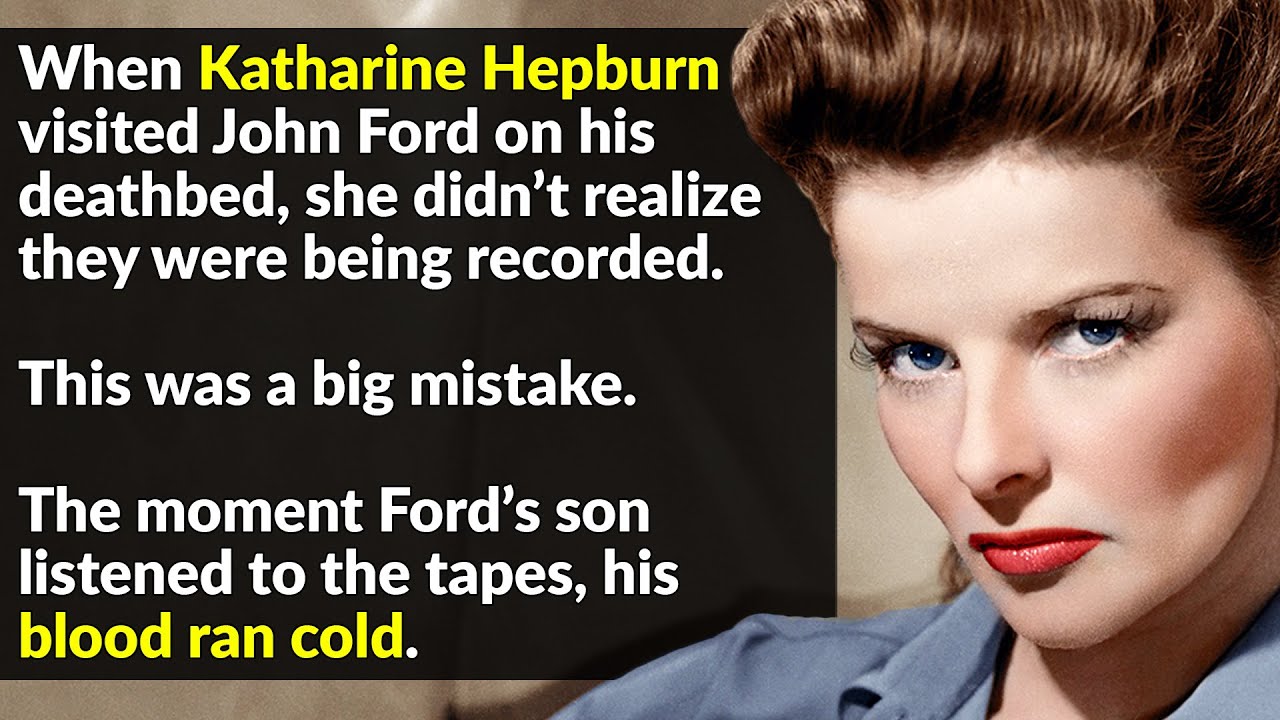
A secret recording, a scandalous love affair, and a lifetime of carefully guarded secrets have shattered the pristine image of Hollywood legend Katharine Hepburn, exposing a double life of forbidden romance, hidden grief, and a shocking revelation about her brother’s death. Newly uncovered details, including a deathbed confession from director John Ford, reveal a relationship that has sparked more controversy than any other in the actress’s storied past, painting a portrait of a woman who was far more complex and tormented than the public ever knew. The bombshell comes from a recording made during a private meeting between Hepburn and Ford in 1973, just months before the director’s death. According to sources close to the Ford family, the conversation was initially part of a planned interview for a book about the director, but when Ford’s grandson stepped out of the room, he left the tape recorder running, unwittingly capturing a raw and heartbreaking exchange between the two stars. In the recording, Ford, who was married at the time, confesses his undying love for Hepburn, and the actress reciprocates in a moment of vulnerability that the public was never meant to hear. The transcript reveals a whispered conversation, with Ford saying, “I love you,” and Hepburn replying, “It’s mutual,” before the two made plans for her to visit him the following morning. This admission has ignited a firestorm among historians and fans, as Ford had long been rumored to be one of Hepburn’s most controversial lovers. The pair worked together on the 1936 film “Mary of Scotland,” and their bond deepened rapidly, with Ford reportedly planning to leave his wife, Mary, for the actress. That plan collapsed when Mary threatened to take their daughter away, leading Ford to stay in his marriage. Hepburn, according to Ford’s niece, even attempted to bribe Mary with $15,000 to free her husband and child, but the effort failed, leaving Hepburn to carry a torch for a man she could never fully have. Yet, this is only one layer of a life riddled with contradictions and concealed truths. Hepburn’s childhood was marked by a tragedy that would define her for decades. At age 13, she discovered her 15-year-old brother, Tom, dead from an apparent suicide during an Easter trip to New York. Her family, plagued by denial, refused to acknowledge the suicide, insisting it was a botched experiment. This trauma left Hepburn deeply anxious and distrustful, a shadow she carried into her adult life. She would later alter her birth date to match Tom’s, a secret she kept until her autobiography was published, making herself two years older in a desperate attempt to keep his memory alive. Growing up in the early 20th century, Hepburn was raised by fiercely progressive parents. Her mother was a member of the Connecticut Women’s Suffrage Association, and she often took young Katharine to demonstrations. This environment encouraged Hepburn to embrace her tomboy nature, even cutting her hair short and insisting everyone call her “Jimmy.” But while her family celebrated her authenticity, the world outside was less forgiving. As she entered adulthood, she despised being a girl, identifying more with boys, a sentiment that would later fuel rumors about her sexuality that followed her throughout her career. Hepburn’s rise to fame was anything but smooth. She struggled in early theater roles, earning harsh criticism for her piercing voice and awkward stage presence. She was fired multiple times, once after completely dropping the ball on opening night, missing her lines and tripping over herself. After a series of humiliations, she married socialite Ludo Ogden Smith, but the union was doomed from the start. Smith was a doting husband, supporting her emotionally and financially, but Hepburn never fully reciprocated his affections. Their marriage ended shortly after she moved to Hollywood, where she embarked on a scandalous affair with married agent Leland Hayward. The affair with Hayward was just the beginning of a pattern of entanglement with powerful men. She later moved on to Howard Hughes, the eccentric billionaire aviator, who proposed to her during a trip to visit her family in Fenwick, Connecticut. But Hughes failed Hepburn’s ultimate test: he showed no interest in her family or hometown, coming across as arrogant and discourteous. Hepburn ended the relationship, sending Hughes back to the West Coast alone. Yet, her heart remained with Ford, even as she waited in vain for him to leave his wife. By 1936, Hepburn’s career was in freefall. She starred in four consecutive flops, and her abrasive personality turned the press against her. She earned the nickname “Katharine of Arrogance” for refusing interviews and autographs. After a devastating rejection for the role of Scarlett O’Hara in “Gone With the Wind,” where producer David O. Selznick told her she lacked sex appeal, Hepburn fled Hollywood for the stage. But her comeback was as fierce as her fall. She starred in “The Philadelphia Story,” a show that became a massive success, and she shrewdly secured the film rights through her ex-boyfriend Hughes. When MGM produced the film adaptation, Hepburn called all the shots, picking her co-stars, Cary Grant and Jimmy Stewart, and using the movie to restore her reputation. The Philadelphia Story was a triumph, and it led to her next project, “Woman of the Year,” where she met Spencer Tracy. Many believe Tracy was the love of Hepburn’s life, but their relationship was shrouded in secrecy. Tracy was a married man, and his Catholic guilt tortured him. He blamed himself when his son was born deaf, seeing it as God’s punishment for his sins. Hepburn devoted herself to Tracy, helping him battle insomnia, depression, and addiction. Their affair was a secret known to almost everyone in Hollywood but never publicly acknowledged. When Tracy died in 1967, just 17 days after they wrapped “Guess Who’s Coming to Dinner,” Hepburn was at his side, but she did not attend his funeral, respecting the sanctity of their secret until Tracy’s wife died in 1983. The rumors about Hepburn’s sexuality have only intensified with time. Some believe her relationship with Tracy was a cover for a lesbian identity, while others speculate Tracy himself was gay. Hepburn’s lack of interest in marriage and children, along with her boyish looks and masculine attitude, fueled endless speculation. She famously called herself a “selfish” person who never wanted children, but her devotion to Tracy and her family told a different story. After Tracy’s death, she threw herself into her work, winning her third Oscar for “The Lion in Winter” in 1968. She remained a force in Hollywood well into her 80s, playing tennis daily and taking up painting, but her health declined in the 1990s after a battle with pneumonia and dementia. She died of cardiac arrest in 2003 at her family home in Fenwick, Connecticut, at the age of 96. The recording with Ford, however, has reopened old wounds and raised new questions. Ford died in August 1973, just months after their meeting, and Hepburn carried the weight of their secret until her own death. The recording has been described as a “heartbreaking glimpse into their darker history,” with Ford at his most vulnerable, admitting his love while on his deathbed. For Hepburn, who had a reputation for being tough and unapproachable, this moment reveals a woman who was deeply in love but profoundly alone. The legacy of Katharine Hepburn is now more complicated than ever. She was a trailblazer who defied conventions, a woman who refused to wear dresses, who fought for her independence, and who loved fiercely in secret. But her double life, filled with lies about her brother’s death, her affairs with married men, and her hidden love for John Ford, suggests that the icon was human after all. As historians dig deeper into the tapes and documents left behind, the world is left to wonder: how many more secrets did she take to her grave?

22 August 2026

Bea Arthur Lived A Double Life As A Marine… Now We Know Why She Hid it

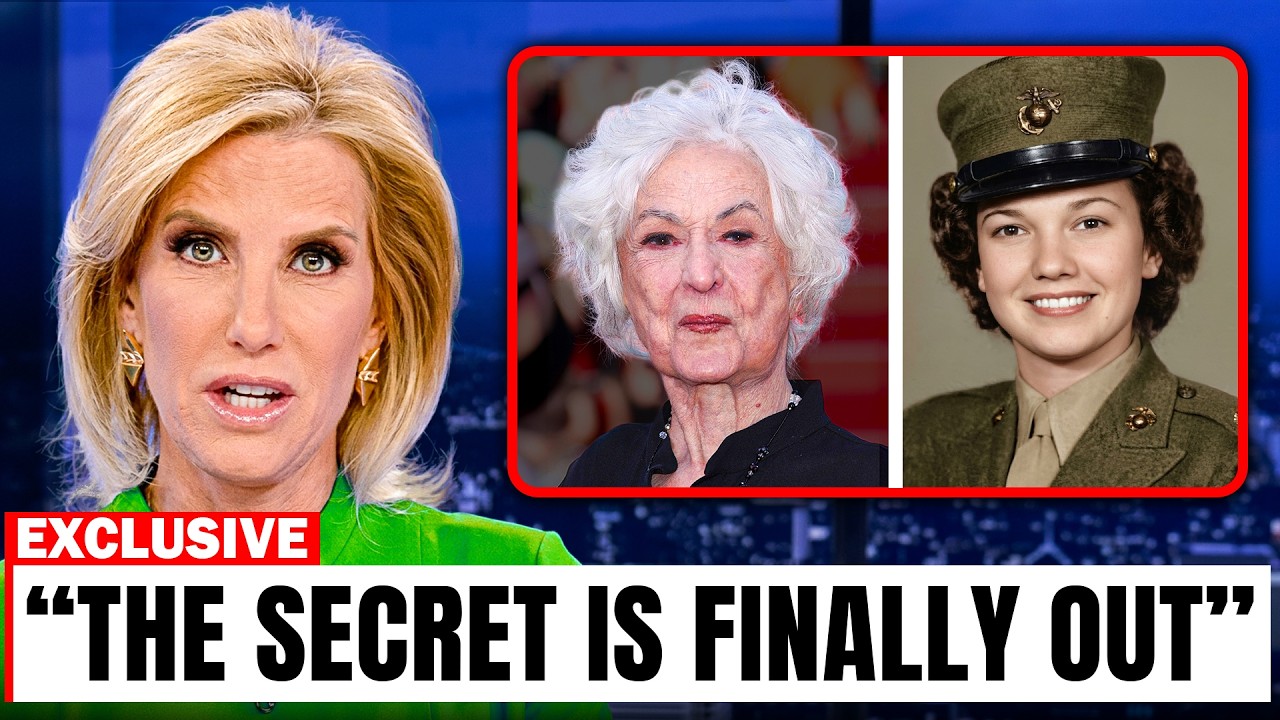
She was one of the most recognizable voices in television history, a towering figure with a razor-sharp wit who commanded every room she entered. But for decades, Bea Arthur, the beloved star of Maude and The Golden Girls, lived with a secret so carefully guarded that she took it to her grave: before she ever stepped onto a soundstage, she was a United States Marine. The revelation, confirmed by official military records held at the National Personnel Records Center in St. Louis, Missouri, shatters the long-held public narrative of Arthur’s life. The woman born Bernice Frankel in Brooklyn, New York, on May 13, 1922, did not merely dabble in military service. She enlisted in the newly formed Marine Corps Women’s Reserve in February 1943, just days after the recruiting campaign launched. She trained as a typist, then transferred to Motor Transport School at Camp Lejeune, North Carolina, where she completed a grueling four-week course in motor mechanics. She drove trucks, dispatched convoys, and served as a staff sergeant at the Marine Corps Air Station at Cherry Point, North Carolina, through 1944 and most of 1945. Yet, throughout her entire public life, Arthur flatly denied any of this had happened. She looked people in the eye and insisted it was not true. The denial was so absolute that researchers and historians, digging through her personnel file decades later, were stunned by the contradiction. The file includes her original enlistment paperwork, a handwritten letter dated February 23, 1943, in which she explained her reasoning for joining, and personality appraisals from her superiors that one historian noted read almost exactly like the sharp, quick-witted personality of the television character she would later become famous for playing. The evidence is irrefutable. So why did a woman who broke barriers as one of the first women in the Marine Corps spend the rest of her life hiding that very fact? The answer, buried in her own military file and the context of her era, is a complex tapestry of personal choice, professional strategy, and the painful weight of a divided America. Arthur’s service was not a footnote. Congress authorized the Marine Corps Women’s Reserve on July 30, 1942, but the Corps itself resisted the idea. Commandant Major General Thomas Holcomb did not want women in his ranks. He delayed the program for months. What changed his mind was the brutal math of war. The fighting on Guadalcanal in 1942 had cost enormous casualties, and the Corps needed every able-bodied man on the front lines. Women were needed to fill desk jobs, motor pools, and supply depots. Arthur was among the earliest to answer that call. She signed her enlistment paperwork on February 18, 1943, five days after the program officially began. She was 20 years old. Her file reveals a young woman of remarkable capability. She listed her hobbies as hunting with a . 22 caliber rifle and playing the piano. Other records describe her as someone who also played the organ and enjoyed archery. This was not a reluctant recruit. This was a capable young woman comfortable with firearms and machinery, walking straight into one of the most demanding branches of the U. S. military by choice. She married a fellow Marine, Robert Allen Arthur, in 1944. The marriage ended in divorce three years later, but she kept a version of his last name, adjusting the spelling from Arthur to Arthur, for the rest of her life. The name that would eventually appear in television history books was born not in a studio publicist’s office, but in a wartime marriage between two Marines. By the time her active duty was winding down, she had climbed the ranks to staff sergeant, earning an honorable discharge in 1945 after 31 months of service. Her discharge paperwork captured a small but telling detail: she wanted to attend dramatic school. Even before she took off her uniform for the last time, the performer inside her was already looking toward the next chapter. But that next chapter came with a price. Arthur left the Marine Corps and spent years building a career from the ground up in New York theater. Her breakthrough came in 1954 with the off-Broadway premiere of The Threepenny Opera. She worked alongside comedy legend Sid Caesar on Caesar’s Hour, and in 1964, she landed the role of Yente the Matchmaker in the original Broadway production of Fiddler on the Roof. Two years later, she won a Tony Award for playing Vera Charles in the Broadway musical Mame. By the time she became a household name as Maude Findlay in 1972 and Dorothy Zbornak in 1985, she had built an entirely new identity for herself in show business, one built purely on talent, without a single mention of the uniform she once wore. The denial, researchers believe, was deliberate and strategic. Arthur became a national star in the early 1970s playing an outspoken political character during the Vietnam War era, a time when military service was an emotionally charged, divisive topic in American culture. It is possible she worried that being publicly tied to the military could complicate the image she had built as a progressive, outspoken feminist icon. Others suggest it may have simply been about privacy and control, a performer deciding, deliberately, which parts of her life belonged to the public and which parts did not. Whatever her private reasons, the silence was absolute. Bea Arthur passed away on April 25, 2009, at her home in Los Angeles, following a battle with cancer that she had also kept largely private. She was 86 years old. Days later, Broadway theaters across New York City dimmed their marquee lights for one minute in her memory. Today, she is remembered through two very different legacies, both entirely real. To television audiences, she remains Maude Findlay and Dorothy Zbornak, one of the sharpest comedic voices American television ever produced. To military historians, she is now recognized as one of the earliest women to serve in the Marine Corps Women’s Reserve, a staff sergeant who helped prove, at a moment when the Marine Corps did not want to believe it, that women belonged in uniform. The mystery here was never really about whether Bea Arthur served her country. The paperwork settles that question completely. The real mystery is why a woman with absolutely nothing to be ashamed of spent her entire adult life insisting otherwise. Perhaps the most striking part of this entire story is that Bea Arthur never needed her Marine Corps record to prove she was tough. She built her entire identity in show business on raw talent alone, without ever mentioning that she had already proven her grit years earlier, behind the wheel of a military truck on an active air station in North Carolina. Whatever her private reasons for the silence, the record now speaks clearly on her behalf. Bea Arthur was, by every official measure, one hell of a Marine.

22 August 2026

Anthony Bourdain Had The World At His Feet — But His Final Chapter Revealed A Painful Truth Few Saw Coming

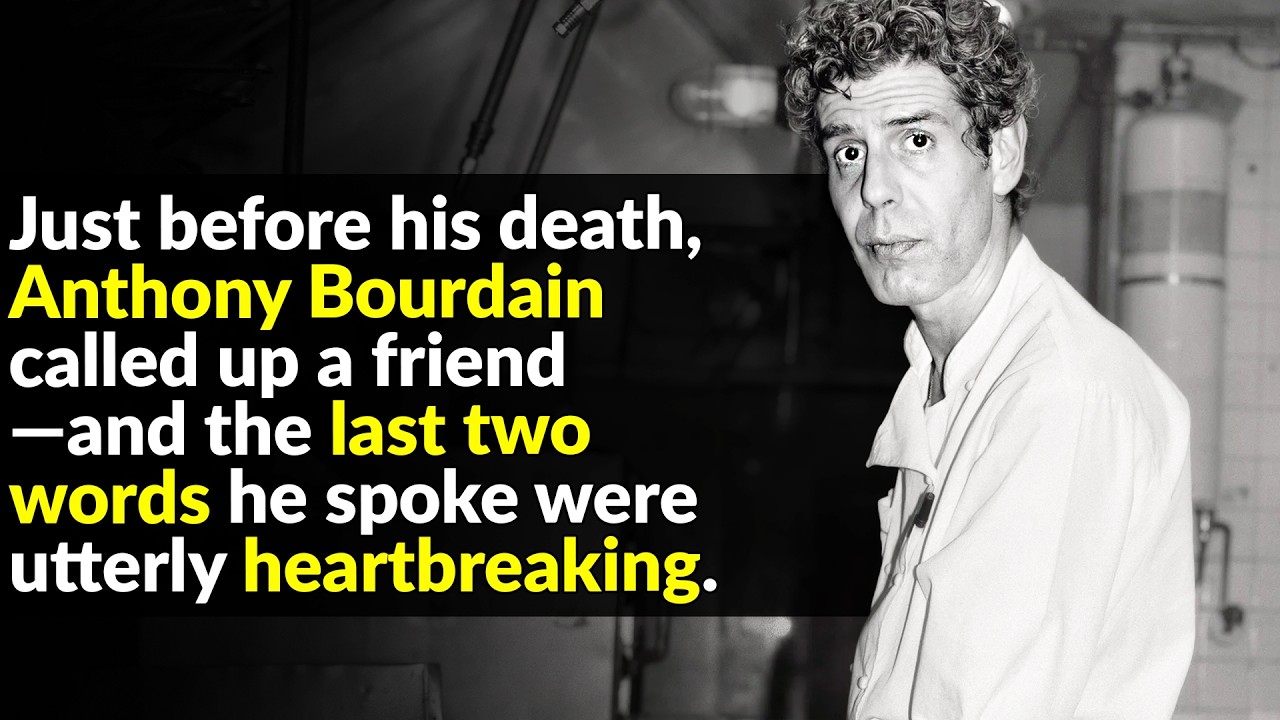
The final words spoken by Anthony Bourdain to a close friend just before his death were not a cry for help, not a confession of despair, but a simple, devastating affirmation of love. “Love abounds,” the celebrated chef, author, and television host told author Michael Ryman in their last phone conversation. Those two words, so full of hope and connection, stand in stark contrast to the tragic end that would come just hours later, leaving the world to grapple with the profound disconnect between the man the public saw and the private battles he fought in the shadows. Bourdain was found dead in his hotel room in France on June 8, 2018, at the age of 61. The official cause of death was suicide by hanging. The news sent shockwaves across the globe, a brutal punctuation mark to a life that seemed to be a testament to the power of reinvention, curiosity, and raw, unfiltered passion. But the story of his final days, his final relationships, and the decades of trauma that preceded them reveals a far more complex and heartbreaking narrative than the one told by his on-screen persona. The man who would become a global icon was born in New York City in 1956 into a family that was rapidly ascending the social ladder. His father, a record company executive, and his mother, an editor at the New York Times, provided a comfortable home life that Bourdain would later come to resent. He felt a deep sense of alienation from his own privilege, a feeling that drove him toward a darker path. Even before his teenage years, he was consumed by a dangerous obsession with drugs, a fascination that would nearly destroy him. Bourdain claimed he took his first hit of acid at just 12 years old. It was the beginning of a nightmarish, decades-long battle with substance abuse that included heroin and crack cocaine. His rebellion was fueled by a deep, consuming love for a girl named Nancy Povski, an older woman who partied hard and who he followed to Vassar College. But the hypocrisy he saw among his fellow students repulsed him, and he dropped out after two years to enroll at the Culinary Institute of America, a decision his parents treated as a life of crime. After graduating, Bourdain and Povski moved to New York, where their hard-partying lifestyle continued. Bourdain’s addiction spiraled, leading to harrowing moments of desperation. He once sold his beloved record collection on a blanket on Broadway to get a fix. He was driving with 200 hits of acid when police pulled him over. He was at the post office when he noticed DEA agents watching him. It was a destructive path that seemed to have no end. The turning point came when he looked around a cab full of friends going to score drugs and jokingly quoted the statistic that only one in four addicts gets clean. There were four of them in the car. He decided he wanted to be the one to survive. He entered a methadone clinic, but the battle was far from over. He relapsed, working in a restaurant empire run by mobsters where the line cooks were the boss’s coke dealers. The proximity to the drug trade pulled him back to square one. Amidst the chaos, Bourdain received devastating news. His father, a man he deeply admired for his intellectual curiosity, had suffered a heart attack and died suddenly at age 57. The loss was profound, but Bourdain had to keep moving. By the late 1990s, he found stability as the executive chef at Brasserie Les Halles in New York City. For the first time in nearly two decades, he was running a kitchen the way he wanted, cooking food he was proud of. But it was a side hobby that would change everything. Bourdain had been writing in his spare time for years. He wrote an essay about the inner workings of a professional kitchen, a cautionary tale for restaurant patrons. His mother, still an editor at the New York Times, read it and knew it was special. She passed it to a friend who knew an editor at the New Yorker. The essay was published, and within a week, Bourdain had a book deal for what would become “Kitchen Confidential.” The book was a phenomenon, but it came at a cost. Bourdain was in terrible debt, had no insurance, and was behind on taxes and rent. The success of the book changed his financial fortunes, but it also destroyed his marriage. Nancy Povski, who had stood by him through two decades of addiction and struggle, had a bad feeling when TV producers began approaching him. The fame that followed tore them apart, and they divorced in 2005 after 20 years of marriage. Bourdain was devastated. The end of his marriage nearly killed him. While visiting St. Martin, a place he had vacationed with his wife, he was drinking and driving when he decided to drive off the edge of a cliff. At the last moment, a song he liked came on the radio. He took it as a sign and turned the wheel. He survived, but the dark price of fame had been made terrifyingly clear. In 2006, while filming his hit show “No Reservations” in Beirut, Lebanon, Israel launched a series of missiles at the city. Bourdain and his crew retreated to their hilltop hotel and watched the city burn. They were eventually evacuated by a marine ship, but the experience left him shaken. It was among the most harrowing moments of his career, a stark reminder of the fragility of life. After his divorce, Bourdain’s friend, renowned French chef Eric Ripert, set him up with Ottavia Busia, a hostess from one of his restaurants. On their second date, they got matching tattoos. It was the beginning of an intense and beautiful relationship. When Bourdain returned from Beirut, he was ready for a drastic change. He and Busia decided to have a child, and their daughter, Ariane, was born in 2007. Eleven days later, they were married. Family life gave Bourdain a newfound lease on life, but the demands of fame were relentless. He was traveling more than 250 days a year for filming, book tours, and other commitments. When his daughter started elementary school, his family could no longer join him on the road. The distance and time apart took their toll, and the couple separated in 2016. The timing was brutal, as he was about to promote a cookbook titled “Appetites,” which featured recipes he made for his family. After a trip to Vietnam where he ate with President Barack Obama, Bourdain went to France to work on a book. He was plagued by a nasty skin infection and was prescribed medication. After three painful days, he took too many pills on an empty stomach and blacked out, waking up in the doorway of a restaurant with a frantic waiter trying to revive him. The incident reminded him of his father’s sudden death, and he sat down that night to write a long email to his first wife, apologizing for all the ways he had wronged her. In 2017, Bourdain began dating Italian actress and director Asia Argento. He poured all his efforts into making the relationship work. They were a striking couple, clearly in love, but there was much about their relationship that was hidden. At the height of the #MeToo movement, Bourdain stood by Argento’s side as she came forward with her harrowing story of assault at the hands of Harvey Weinstein. He became a fierce supporter of the movement, naming and shaming Mario Batali for his alleged sexual misconduct. But the pressures of balancing his TV shows, writing, relationships, and his role as a father began to wear on him. His behavior became more erratic and prone to darkness. His ex-wife, Busia, was worried, but was comforted by the fact that he was seeing a therapist. Still, the pressures did not let up. Bourdain was dedicated to making his latest relationship work, and he took drastic measures to ensure he had time for Argento. When the director of “Parts Unknown” fell ill before a planned episode in Hong Kong, Bourdain suggested bringing on Argento as the director. But the situation quickly spun out of control. After Argento argued with the show’s longtime cinematographer, Bourdain fired him. While the situation was uncomfortable, other crew members recalled how happy Bourdain was to work with her, and many of his friends shared stories of how in love he was. In early June 2018, tabloids published paparazzi photos of Argento in the arms of another man. Bourdain was filming in France with Eric Ripert when the photos came out. The episode they were working on would never air. On June 8th, Bourdain missed dinner and breakfast. Ripert went to his hotel room and found that Bourdain had taken his own life. The heartbreak was immediate, and so were the questions. Many were quick to point fingers at Argento. She spent months grieving before finally breaking her silence, claiming that the pair had an open relationship and that she had cheated on Bourdain, but that he had cheated on her too. In August 2018, the New York Times published a story claiming that Argento had sexually assaulted a former co-star, Jimmy Bennett, when he was 17 years old. She denied the contact but admitted that Bourdain had paid Bennett off to avoid negative publicity. In the wake of the tragedy, one of Bourdain’s close friends, Michael Ryman, spoke about their final phone conversation. He said that Bourdain seemed happy and in love. The last thing Bourdain told him was both simple and poignant: “Love abounds.” Those two words, spoken in a moment of apparent contentment, now serve as a haunting reminder of the invisible battles that so many people fight, even when they seem to have everything. The world lost a brilliant storyteller, a fierce advocate, and a man who, in his final moments, was still trying to find the light.

21 August 2026

Pattie Boyd Finally Reveals The Pain Behind Rock’s Greatest Love Stories — The Truth Changes Everything

The rock and roll fairy tale that captivated the world for decades has shattered, as Pattie Boyd, the iconic model and muse who inspired some of the most legendary songs in music history, has finally named the man she says abused her, igniting a firestorm of fury among fans who feel betrayed by the romanticized narrative they grew up believing. In a series of explosive new interviews and a forthcoming documentary, Boyd, now 80, has broken her silence on the dark undercurrents of her life with two of rock’s most celebrated guitarists, George Harrison and Eric Clapton, and the revelation has sent shockwaves through the music industry and beyond. For years, the public has been fed a story of a love triangle that produced timeless anthems like “Something” and “Layla,” but Boyd’s account paints a picture of manipulation, addiction, and emotional torment that has left fans reeling and demanding answers. The bombshell comes as Boyd prepares to release a deeply personal memoir that revisits her childhood, her rise to fame as a 1960s fashion icon, and her tumultuous relationships with the Beatles and the blues-rock legend. But it is the specific accusation that has turned the music world upside down. Boyd has alleged that one of the men who professed undying love for her was, in fact, an abuser who subjected her to years of psychological and emotional cruelty. While she has not named the individual in every public statement, sources close to the project confirm that the target of her accusation is Eric Clapton, the man who famously wrote “Layla” as a desperate plea to win her away from George Harrison. The claim has sparked a furious backlash from fans who have long idolized Clapton as a guitar god and a romantic hero, with many taking to social media to express their anger and disbelief. The video transcript of Boyd’s recent interview, which has gone viral, reveals the raw emotion behind her decision to speak out. In it, she describes a life that was far from the glamorous rock and roll fantasy portrayed in magazines and documentaries. “It was a natural situation to start posing for some inanimate object, a camera,” she says, reflecting on her early modeling days, but the tone quickly darkens as she recounts the years of turmoil. She details how her marriage to George Harrison, the “quiet Beatle,” began to unravel as his devotion to spirituality and Hare Krishna created distance, and how Eric Clapton’s obsessive pursuit of her, which she once saw as romantic, now feels like a predatory campaign. “He wrote letters, he called, he threatened to kill himself if I didn’t leave George,” Boyd says in the transcript. “It wasn’t love. It was possession.” Fans are furious because the narrative they have cherished for decades—the story of a beautiful woman caught between two geniuses who poured their hearts into music for her—has been exposed as a lie. Many are now reevaluating the songs they once held dear, unable to listen to “Layla” or “Wonderful Tonight” without hearing the echoes of abuse. The backlash has been particularly intense on platforms like Twitter and Reddit, where users are calling for a boycott of Clapton’s music and demanding that the Rock and Roll Hall of Fame reconsider his legacy. “I grew up thinking Eric Clapton was a hero, but now I see him for what he was: a manipulative abuser who used his fame to get what he wanted,” one fan wrote in a viral post. Another added, “Pattie Boyd deserved so much better. We all failed her by romanticizing this story.” Boyd’s account is supported by decades of evidence that has been hiding in plain sight. The transcript details how Clapton’s letters to her, once seen as passionate declarations, were actually filled with desperation and control. She recalls the night he played “Layla” for her in a South Kensington flat, expecting her to be flattered, but instead she felt embarrassed and trapped. “I worried everyone would know it was about me,” she says. “It wasn’t a gift. It was a burden.” The song, which has been hailed as one of the greatest rock love songs of all time, now takes on a sinister tone, as Boyd reveals that Clapton’s obsession only intensified after she rejected him, leading to a series of incidents that included him showing up at her home with a stash of drugs and threatening to overdose if she did not leave with him. The fury among fans is also directed at the media and the music industry for perpetuating the myth of the “ultimate rock and roll romance.” For years, the love triangle between Boyd, Harrison, and Clapton was treated as a titillating soap opera, with magazines and documentaries glossing over the darker aspects. Boyd’s own autobiography, “Wonderful Tonight,” which was published in 2007, hinted at the pain but stopped short of naming Clapton as an abuser. Now, she says she is ready to tell the full truth, and the timing could not be more explosive. The documentary, which is set to air later this year, includes never-before-seen footage and photographs from Boyd’s personal archive, as well as interviews with friends and family who corroborate her claims. The reaction from the music community has been mixed. Some artists have come forward to express support for Boyd, while others have remained silent, perhaps fearing the fallout. Clapton, now 79, has not publicly responded to the allegations, but his representatives have issued a statement denying any wrongdoing, calling Boyd’s claims “a distortion of the past.” However, the statement has done little to quell the anger. Fans are pointing to Clapton’s history of controversial behavior, including his racist and anti-vaccine remarks, as evidence of a pattern of toxic behavior. “This is not a surprise,” one music critic wrote. “Clapton has always had a dark side. We just chose to ignore it because his music was so good.” Boyd’s story is not just about Clapton, however. She also sheds light on her marriage to George Harrison, revealing that the Beatle was not the saintly figure he is often portrayed as. While she does not accuse Harrison of abuse, she describes a relationship that was emotionally distant and marked by infidelity. She recalls the moment she discovered Harrison with Maureen Starkey, the wife of his bandmate Ringo Starr, in a bedroom at their home, Friar Park. “That was the end,” she says in the transcript. “I tore down his Ohm flag and put up a skull and crossbones. I was done.” The incident, which has been documented in various biographies, is now seen through a new lens, as Boyd explains how it contributed to her sense of worthlessness and her eventual decision to leave. The fallout from Boyd’s revelation is likely to have lasting consequences for the music industry. Record labels are already facing pressure to remove Clapton’s songs from playlists, and streaming services are being flooded with requests to add trigger warnings to tracks like “Layla” and “Wonderful Tonight.” The debate has also reignited conversations about the treatment of women in rock history, with many arguing that Boyd’s story is just one example of a broader pattern of abuse that has been overlooked for decades. “Pattie Boyd was a muse, but she was also a victim,” one feminist writer noted. “We need to stop romanticizing the men who hurt these women and start listening to their stories.” For Boyd, the decision to speak out has been both liberating and painful. In the interview, she admits that she has struggled with her identity for years, feeling like she was defined by the men she was with. “I used to call a friend and say, ‘This is Pattie Boyd, the one who used to be Pattie Boyd,’” she says. “I didn’t know who I was without them.” Now, she is reclaiming her narrative, and the response from fans has been overwhelmingly supportive, even as they express their fury at the system that allowed her suffering to be ignored. “I am not a victim,” she insists. “I am a survivor. And I want other women to know that they can speak out too.” The breaking news has dominated headlines around the world, with major outlets like the BBC, CNN, and The Guardian dedicating extensive coverage to the story. Social media is ablaze with hashtags like #JusticeForPattie and #BoycottClapton, and petitions are circulating to have Clapton’s music removed from public spaces. The controversy has also sparked a broader cultural reckoning, as fans grapple with the realization that the songs they have loved for decades were born from pain and manipulation. “I can’t listen to ‘Layla’ the same way anymore,” one fan tweeted. “It feels like a threat now.” As the story continues to unfold, one thing is clear: the fairy tale is over. Pattie Boyd has finally named her abuser, and the world is listening. The question now is whether the music industry and its fans will hold the perpetrators accountable or continue to let the music speak louder than the truth. For Boyd, the answer is simple. “I have been silent for too long,” she says. “It is time for the truth to come out.” And with that, the legend of the ultimate rock and roll romance has been rewritten, leaving a legacy of fury, heartbreak, and a long-overdue reckoning.

21 August 2026

Lenny Bruce Changed Comedy Forever — But His Final Days Revealed A Tragedy No One Could Laugh Away

The body of Lenny Bruce, the most controversial and influential comedian of his generation, was discovered on the bathroom floor of his Hollywood Hills home, a needle still dangling from his arm and a final, grotesque punchline written in the silence of his death. The 40-year-old satirist, who had been sentenced just days earlier to four months in a workhouse for obscenity, was found unclothed, surrounded by the narcotics paraphernalia that had become his tragic co-star. The discovery, made by police who had come to serve his warrant, has sent shockwaves through the entertainment world, closing the book on a life that was as reckless as it was revolutionary. The scene, described by law enforcement sources as a tableau of despair, has left investigators and fans alike grappling with the brutal finality of a man who once joked, “I’ll die young, but it’s like kissing God.” Those words, spoken during a rare moment of introspection about his addiction, have proven devastatingly prophetic. The coroner’s office has yet to release an official cause of death, but the presence of multiple syringes and a small cache of heroin and morphine nearby paints a grim picture of a life consumed by the very demons Bruce so often mocked on stage. Bruce’s journey to this tragic end began in a fractured childhood that seemed to foretell his turbulent path. Born Leonard Alfred Schneider in 1925, he was raised by a mother, Sally Marr, who was an aspiring comedian, and an absent father, Myron Schneider, a shoe clerk rarely seen at home. The divorce of his parents when he was just five years old set the stage for a life of instability, bouncing between relatives and receiving what he later described as a “spotty education.” In one of his stand-up bits, he quipped, “I won’t say ours was a tough school, but we had our own corner. We used to write songs like, ‘What am I going to do if I grow up?’” The humor masked a deep-seated pain that would only intensify with time. His mother’s influence, however, was undeniable. Sally Marr, who found moderate success as a comedian and later worked as a talent scout, instilled in Bruce a love for the stage. In a 1989 interview, she would boast, “People are always saying that everything in comedy stems from Lenny. That everything touches him. What can I tell you? He took after me.” But Bruce’s road to stardom was anything but direct. At 16, he joined the United States Navy in 1942, a decision that would lead to one of the most bizarre and controversial episodes of his early life. In May 1945, Bruce, then a sailor, performed a drag show for his shipmates that had them rolling with laughter, but his commanding officers were not amused. The performance was followed by a shocking written confession to his superiors, in which Bruce claimed he was “normal in all aspects except for one” and admitted to being “attracted physically to a few of the fellow shipmates,” one of whom he said he kissed. The Navy medical officer testified that Bruce had admitted to “suppressing gay tendencies” and that the desire was becoming stronger. After a neuropsychiatric consultation, the Navy dishonorably discharged him, citing his orientation as a liability. Decades later, in his memoir, Bruce would claim the entire incident was a practical joke, a ruse to get out of the Navy and pursue a career in comedy. “I think no one would accuse me of having behaved like a sissy,” he argued in his appeal for an upgraded discharge, but the damage was done. The episode, whether real or fabricated, foreshadowed a life of pushing boundaries and challenging authority, a pattern that would define his career and ultimately seal his fate. After the Navy, Bruce settled in New York City, where he struggled to stand out in the crowded comedy clubs of the late 1940s. His first paid gig in 1947 earned him a paltry $12 and a spaghetti dinner, but he refused to give up. Over the next few years, he honed his craft alongside legends like Joe Ancis, Joe Maini, and Lord Buckley, slowly building a following with his ribald ad-libs and scathing political satire. In 1951, he met and married Honey Harlow, a burlesque dancer from Manila, Arkansas, and the two became a volatile duo, their romance fueled by passion and narcotics. Bruce was determined to make enough money to retire Harlow from her exotic dancing career, and he pursued a series of ill-conceived get-rich-quick schemes. In one of the most audacious, he posed as a priest, borrowing a clerical collar and clergy shirts to impersonate a clergyman in Florida. Dressed in his borrowed vestments, Bruce claimed to be collecting donations for a leper colony in British Guiana, setting up a real charity called the Brother Matthias Foundation. In just three weeks, he collected $8,000, but in his autobiography, “How to Talk Dirty and Influence People,” he confessed to keeping most of the money for himself, with only $2,500 actually reaching the colony. The courts struggled to determine if the scheme was authentic or an elaborate hoax, and Bruce escaped serious repercussions, even as church officials failed to prove he was an impostor. The incident was a testament to his skewed morality and his willingness to bend the rules for a laugh or a buck. In 1953, he and Harlow moved to Los Angeles, where he wrote and starred in the mafia-themed film “Dance Hall Racket,” a critical and commercial flop that only deepened his resolve to make it in stand-up. Bruce found his true voice in the seedy burlesque clubs of Los Angeles, where he worked as a master of ceremonies, introducing dancers and testing his material on eager crowds. His biographer noted that it was “precisely at the moment when he sank to the bottom of the barrel and started working the places that were the lowest of the low, that he broke free and became himself.” There, Bruce developed his unique style, blending jazz-influenced spontaneity with a raw, unflinching honesty that would make him a legend. But his personal life was unraveling. In 1955, Harlow gave birth to their daughter, Kitty, but the marriage was far from stable. The following year, the couple separated briefly before reuniting for a working honeymoon in Honolulu, bringing their baby along. While in Hawaii, Harlow was arrested on drug possession charges, and Bruce, seeing an opportunity, abandoned her and returned to the mainland with their daughter. Harlow was sentenced to two years in federal prison, and decades later, she revealed that Bruce had turned her in to the authorities in the first place. Bruce’s betrayal was compounded by an affair with jazz singer Annie Ross, whom he courted with bizarre gestures like writing “I love you” on airplane sick bags. The relationship was a reflection of his twisted approach to love, a pattern that would continue as his career soared. By the late 1950s, Bruce had become a sensation, his recordings selling millions and his influence spreading to the nascent world of television. He appeared on the Patrice Munsel Show alongside Buddy Hackett, dubbing their sketches “Not Ready for Primetime Players,” a name that would later be borrowed by Saturday Night Live. But his success came at a cost. In 1957, he was fired from a prestigious gig at the Slate Brothers nightclub for what Variety called “blue material,” a pattern that would repeat itself as authorities cracked down on his obscene humor. Bruce remained unapologetic, arguing, “If God made the body and the body is dirty, then the fault lies with the manufacturer.” His defiance only made him more popular, but it also made him a target. Between 1961 and 1964, Bruce faced multiple obscenity charges, most of which were dismissed by juries packed with fans. But in 1964, a New York jury found him guilty of obscenity, a verdict that stunned the entertainment world. Despite a public petition and glowing testimony from celebrities like Woody Allen, Bob Dylan, and James Baldwin, the judge sentenced him to four months in a workhouse. Bruce was in no shape to serve the sentence, his health ravaged by years of addiction to heroin, morphine, and other substances. The end came before he could serve a single day. On the morning of his death, police arrived at his home to serve the warrant, only to find his lifeless body on the bathroom floor. The needle in his arm and the drugs beside him were the final, tragic punchline to a life that had been a relentless battle against authority, convention, and his own demons. In his eulogy, the Reverend William Glenn Esk said, “He was in a sense an evangelist on a street corner. He was a man uptight against an artificial world who shattered its facades and its hypocrisy. And, if you will pardon the phrase, which seems to become a cliché, he saw life as it is, albeit with an odd sense of humor.” Bruce’s legacy is one of contradictions: a man who mocked religion yet seemed to believe in God, who joked about killing Christ yet was deeply Jewish, who fought for free speech yet was silenced by his own addictions. His influence on comedy is immeasurable, paving the way for generations of comedians who would push the boundaries of what is acceptable. But his death is a stark reminder of the cost of that rebellion, a final, tragic act in a life that was always destined for a dark curtain call. As the investigation into his death continues, the world is left to wonder what might have been, and to mourn the loss of a voice that was silenced far too soon.

21 August 2026

Naomi Judd’s Final Interview Before Her Death — The Heartbreaking Truth Behind Her Smile

The woman standing on the red carpet in Las Vegas on April 11, 2022, was radiant, a vision in a royal blue jewel-encrusted pantsuit, her smile wide as she spoke about a dream she had carried for 31 years. Naomi Judd, then 76, was about to perform with her daughter Wynonna for the first time in over two decades, a moment she described as a miracle. Nineteen days later, she was dead by suicide, leaving a family shattered and a world struggling to reconcile the glittering image with the devastating reality of a mind at war with itself. This is the story of Naomi Judd’s final weeks, the interview that turned out to be her last, and the decades of brutal honesty about her own mental health that made her death resonate so differently than most public tragedies. It is a tale of triumph and torment, of a woman who spent years teaching the world that depression is a disease, not a flaw, only to lose her own battle on the eve of her greatest professional honor. Long before anyone called it her final interview, Judd had already done something most stars of her stature never risk: telling the truth about what was happening behind the glamour. In a 2016 interview with Robin Roberts on Good Morning America, promoting her memoir River of Time, she described a gap between the woman fans saw and the woman who existed at home. People met her expecting the rhinestones and glitter in her hair, she explained, and that persona was genuinely part of who she was. But there was another side entirely, one where she would disappear into her house for three weeks at a stretch, unable to get out of her pajamas or maintain basic hygiene, sunk into what she called life-threatening depression. She traced the onset back to 2011 during a Judds reunion tour and the filming of a reality series, a period when the pressure of being watched constantly collided with a mind already struggling. She didn’t stop at describing symptoms. Judd used those same interviews to talk about where the depression had come from, tracing it back to childhood trauma, including an incident of abuse at the age of three that she said had gone unaddressed for decades. In a 2017 essay for NBC News, she went further, explaining that she had never properly dealt with what had happened to her, so it had come out sideways instead, manifesting as depression and anxiety. She said the illness ran on both sides of her family, part genetic inheritance and part the accumulated weight of trauma that nobody had ever been given the tools to process. Confronting that history became part of her treatment, alongside years of intensive therapy that eventually got her, in her words, to a place of radical acceptance. By 2017, in that same interview with NBC News, she was describing what it actually felt like to live with what she called a dysfunctional brain, making the distinction that would come to define how her family talked about her illness for the rest of her life. This wasn’t a character flaw or a mood to be willed away. It was a disease, living in the exact organ she needed to fight it with. Judd’s openness wasn’t incidental to her fame. It became a second calling, one she pursued as deliberately as she had once pursued a music career. In 2016, she published River of Time: My Descent into Depression and How I Emerged with Hope, co-written with Marcia Wilkie, laying out in unflinching detail what she called hitting rock bottom and rising again just to be thankful for her next breath. Ashley Judd wrote the forward, describing watching her mother and stepfather wade through what she called the sucking mire of depression and expressing gratitude that help had existed for the family members watching from the outside too. The book became one of three Judd would eventually publish, and she went on to build a genuine second career as a keynote speaker on mental health, community activism, and humanitarian issues, appearing at conferences and events well beyond the world of country music. She media-trained other public figures on how to discuss their own struggles honestly, rather than hiding behind vague, careful language. The physical toll of both the depression and its treatment was severe enough that Judd spoke about it openly rather than hiding it. During her worst stretch, her muscles atrophied from prolonged inactivity, immobilized by the illness to the point that her family installed an elevator in their home just so she could move between floors. Medication trials left her face swollen and caused her hair to fall out, changes she discussed candidly during interviews promoting her book rather than letting anyone assume her struggle had been anything less than total. She told interviewers her doctors had tried her on every treatment available to them and that even then nothing fully worked, which was precisely why she insisted on using the phrase treatment-resistant whenever she described her own condition. For a public used to seeing celebrities discuss mental health in careful, sanitized sound bites, the specificity of what Judd was willing to share—the swelling, the hair loss, the elevator installed in her own home—went further than almost anyone in her position had gone before her. She told interviewers directly that she wanted people struggling the way she struggled to see that survival was possible, and she wanted the people around them to understand depression as a legitimate illness rather than a personal failing. For a woman who had built a career on rhinestone glamour and radio-friendly harmonies, spending her later years describing her own bipolar disorder and PTSD in granular public detail was its own kind of courage, one that would only be fully understood in hindsight. Naomi Judd was born Diana Ellen Judd on January 11, 1946, in Ashland, Kentucky, a small town tucked into the coal country of the Appalachian foothills. Her father, Charles Glen Judd, ran a local gas station. Her mother, Pauline, known to everyone as Polly, worked at times as a riverboat cook. By most accounts, Naomi’s early years were unremarkable in the best sense. She was an honor roll student, a regular piano player at her family’s Baptist church, and the oldest of four children in a household that for a while looked entirely ordinary. That changed when her younger brother Brian was diagnosed with cancer as a teenager. He died in 1965 at 17, a loss that reshaped the entire family and that Naomi later cited directly as the reason she pursued nursing, wanting to spend her working life caring for people the way she hadn’t been able to save her brother. Watching a sibling die young while she herself was still a teenager left a mark that outlasted the grief itself, becoming one of the formative experiences she would later point back to when trying to explain where her lifelong vigilance around illness and mortality came from. By then, her own life had already taken an unplanned turn. She became pregnant at 17, married Michael Ciminella shortly afterward, and gave birth to her first daughter, Christina Claire Ciminella, later known to the world as Wynonna, just two weeks before Naomi received her own high school diploma in the mail. A second daughter, Ashley, followed in 1968 after the family had relocated to California. For a few years, the Ciminellas lived what looked from the outside like a fairly conventional young family’s life on the West Coast, with Wynonna later describing her early childhood there as fairly typical for the era, eating packaged snacks and watching television like any other kid in the neighborhood. The marriage ended in divorce in 1972, and Naomi found herself raising two young daughters largely on her own, at times relying on welfare and going without basic comforts like reliable heat or even a working telephone. She eventually enrolled at the College of Marin to study nursing, working her way toward the ICU career that would occupy much of her 20s and 30s, all while raising Wynonna and Ashley in what both daughters have since described as a chaotic, creative, financially precarious, but deeply close household. Both girls would later talk about those years as formative in ways that went beyond simple hardship, crediting their mother’s resourcefulness and refusal to give up during that stretch as the model for how they would eventually handle their own careers and setbacks. Long before rhinestones or record deals, in other words, Naomi Judd had already survived a version of the hardship her music would later find its emotional core in. Music wasn’t a childhood dream chased in a straight line. It happened almost by accident, born out of singing together with Wynonna at home in Kentucky and then in California, where the two eventually landed a spot performing on Nashville’s WSM-TV. RCA label head Joe Galante caught that appearance in 1983 and signed them on the spot, launching a career that moved unusually fast, even by Nashville standards. Over six studio albums released between 1983 and 1991, The Judds became one of the most successful mother-daughter acts in the history of American music, landing 14 number one singles on Billboard’s Hot Country Songs chart and selling more than 20 million records worldwide. They won five Grammy awards and eight Country Music Association awards along the way. Naomi wrote or co-wrote a significant portion of their catalog herself, insisting on creative control at a time when that wasn’t always extended easily to women in Nashville, let alone a nurse from Kentucky with no formal music industry background at all. That first run ended abruptly in 1991 when Naomi was diagnosed with hepatitis C, a disease she had likely contracted years earlier through a workplace needle stick during her nursing career, long before reliable testing for the virus even existed. Doctors initially gave her a limited window to live, and for a woman who had spent her career on stages in front of tens of thousands of people, the diagnosis meant retreating from the exact life she had fought so hard to build. She underwent grueling interferon treatment, comparable in its side effects to chemotherapy, and supplemented it with what she called integrated approaches: biofeedback, aromatherapy, and meditation among them, crediting the combination with helping her survive an illness that was at the time still poorly understood by most of the medical establishment. She beat it. The Judds’ farewell tour that year became one of the most successful in country music history up to that point, a bittersweet victory lap for a duo few people expected to see perform together again, closing out what everyone assumed at the time would be the final chapter of Naomi Judd’s career on a stage. The reunion that made the CMT Music Awards possible didn’t happen in a vacuum. For years, Naomi’s very openness about her illness had put real strain on her relationship with Wynonna. During the promotion of River of Time in 2016, Naomi acknowledged publicly that she and her daughter were on a break, admitting that Wynonna had borne the brunt of mistakes made during the depths of her depression. Naomi said the two had been through a considerable amount of therapy together, trying to work through it, therapy that, by her own account, didn’t resolve everything overnight. Wynonna later described that period in blunter terms, calling closeness with her mother both a blessing and a burden, an admission that captured just how tangled affection and old wounds had become inside their relationship by that point. What brought them back together wasn’t a grand reconciliation so much as a crisis that demanded it. In 2021, Ashley Judd suffered a severe leg injury after a fall while working in the Democratic Republic of Congo, breaking the bone in multiple places and requiring an extended recovery. Naomi and Wynonna both stepped in to help care for her, and by most accounts, the shared responsibility of looking after Ashley did something that years of individual effort hadn’t quite managed: it pulled mother and daughter back into each other’s daily lives. By the time The Judds’ reunion was announced in early 2022, the closeness between Naomi and Wynonna looked to outside observers more solid than it had in years. That context matters for understanding what the CMT performance actually meant. It wasn’t simply two famous relatives getting back on a stage together for a paycheck. It was two women who had spent years navigating one of their family’s hardest chapters, drawn back together first by a shared crisis and then by the promise of a reunion tour, finally standing face to face and singing about a bridge built out of love. Wynonna’s unscripted words in the middle of that performance, telling her mother this was really happening, carried the weight of everything it had taken to get both of them back to that exact spot. By early 2022, there was real reason to believe Naomi Judd was heading into a good stretch. A 10-date arena tour was set to kick off that September, with Martina McBride joining as a special guest on select dates. Naomi told fans she was chomping at the bit to get back to the people she called her family of choice. Then came an honor that had been decades in the making: The Judds were selected for induction into the Country Music Hall of Fame, the genre’s highest tribute, official recognition of a catalog built on 14 number one hits, five Grammy awards, and eight Country Music Association awards, anchored by songs like Mama He’s Crazy, Why Not Me, and Love Can Build a Bridge. The induction ceremony was scheduled for May 1st, and everyone around Naomi described her as looking forward to it alongside the upcoming tour with genuine excitement. The CMT Music Awards set for April 11th in Las Vegas became the first public step in that comeback. It would be Naomi and Wynonna’s first performance together in years, and nobody watching that night had any reason to think it would also be close to the last time most of the world would see Naomi Judd alive. The performance itself has since taken on a different weight than anyone in that arena could have known at the time. Naomi and Wynonna sang Love Can Build a Bridge face to face, a pre-taped segment built around the emotional core of their catalog, joined partway through by a gospel choir. It marked the first time the two had appeared together on a major televised broadcast in over 20 years, a fact that made the moment feel significant to longtime fans, even before anyone knew how much more significant it would become. When Wynonna, overcome in the moment, said aloud to her mother on camera that this was really happening, the wind picked up around them as they sang, and Naomi raised a hand toward the sky. Everyone who was there that night has described the same thing since: it felt like magic, the kind of moment a family waits years to get back. A few days later, Naomi appeared in what a reporter working the red carpet that week would later realize was likely her final formal interview. She was luminous, talking about a reunion she said she had dreamed about every night for 31 years, both hopeful and visibly a little nervous about what came next. There was no hint in that conversation of what was coming. By every outward account, Naomi Judd was a woman looking forward to her future, not someone bracing for the end of it. Roughly two weeks after that interview, on April 30th, 2022, Naomi Judd died at her home near Franklin, Tennessee. She was 76 years old. Her daughters confirmed her death by suicide, and the family made clear from the very first statement how they wanted the world to understand what had happened. “Today we sisters experienced a tragedy,” Ashley and Wynonna wrote. “We lost our beautiful mother to the disease of mental illness.” It was a description chosen deliberately, an extension of the exact language Naomi herself had spent years asking the public to use. The Country Music Hall of Fame ceremony went ahead as scheduled the very next day, May 1st, transformed overnight from a celebration into something closer to a memorial. Wynonna and Ashley stood on stage to accept the honor on their mother’s behalf, both of them still in the earliest, rawest hours of their grief. Ashley, in tears, told the crowd how much Naomi had loved and appreciated the audience’s love for her in return, apologizing almost impossibly that her mother couldn’t hang on until that day. Wynonna kept her own remarks brief, saying only that her heart was broken and that she needed to move quickly through what she had to say, promising the audience that despite everything, she would continue to sing, because that was simply what the family did. In interviews afterward, Ashley Judd tried to help the public understand what had actually happened inside her mother’s mind at the end, drawing a hard line between the woman and the illness that killed her. “The disease lies,” she said. “It’s savage.” Even surrounded by the kind of professional adulation most performers spend a lifetime chasing, on the very eve of the biggest honor of her career, the version of reality her illness was showing her was apparently more convincing than any of it. Ashley has spoken about knowing for years that her mother was fragile, and about trying to stay fully present in every embrace they shared because she understood a day might come when she couldn’t anymore. News of her death spread through the country music community within hours, and tributes poured in from artists across generations. Dolly Parton, a longtime friend who described the two of them as being like sisters, posted a heartfelt note expressing her shock and grief, adding a sorrowful line about wishing she could have been at the induction ceremony in person. The Oak Ridge Boys, Carrie Underwood, Reba McEntire, Maren Morris, Tim McGraw, and dozens of others shared their own tributes within the same news cycle, many of them expressing a similar disbelief that a woman who had seemed in her public appearances just weeks earlier so full of life and anticipation could already be gone. The scale of the response reflected not just Naomi’s musical legacy, but the personal warmth she was known for throughout the industry, the same quality her family had spent decades insisting was every bit as real as the glamour. Two weeks later, on May 15th, Nashville’s Ryman Auditorium hosted a public memorial called Naomi Judd: A River of Time Celebration, broadcast live on CMT and hosted by Robin Roberts, the same interviewer Naomi had confided in back in 2016. Ashley Judd delivered a eulogy that traced her mother’s path from a working-class childhood in Kentucky to the height of American stardom, describing her in a line that captured why so many fans felt they had genuinely known her: as every woman, a nurse, a single mother who had relied on public assistance, someone who had survived early trauma and gone on to build one of the most beloved careers in country music. The eulogy didn’t soften the harder parts of that history either, naming the abuse and hardship as plainly as Ashley named the eventual success, insisting that both halves of the story belonged together if anyone was going to actually understand who her mother had been. Wynonna performed The Rose alongside Brandi Carlile, pausing partway through to restart a section she wasn’t satisfied with, unwilling to let the moment be anything less than what her mother deserved. Naomi’s husband of over three decades, gospel singer Larry Strickland, sat in attendance as the audience joined together for a final rendition of Love Can Build a Bridge, the same song that had closed out Naomi’s very last performance five weeks earlier. Brandi Carlile, Emmylou Harris, Allison Russell, Little Big Town, and Ashley McBryde also performed that night. Oprah Winfrey, Morgan Freeman, Bono, and Salma Hayek were among the friends in attendance. At the close of the service, Wynonna made an announcement to the crowd: after a great deal of thought, she had decided to go forward with the tour her mother had been looking forward to, alone. In the years since, both daughters have continued talking publicly about their mother, not to dwell on the details of her death, but to keep pushing the same message Naomi had spent the better part of a decade trying to get across while she was alive. Wynonna went forward with the tour that fall, performing many of the same songs she and her mother had planned to sing together, often bringing out guest artists to fill the space her mother would have occupied, and describing the experience afterward as something closer to a form of grieving in public than a traditional concert run. Ashley has continued to speak at mental health events and in interviews, drawing the same distinction her mother spent years trying to teach the public: that depression is an illness, not a choice, and that it can end up looking nothing like what people expect it to look like from the outside, including in a woman who by every external measure had every reason left to stay. That’s the part of Naomi Judd’s story that makes her final interview land so differently than it otherwise would. It isn’t remarkable because of anything she said in it. It’s remarkable because of everything she had already said in the years leading up to it, on camera, by name, about a disease she knew was still trying to kill her even in her best moments. She spent the better part of a decade trying to make sure the public understood that mental illness could hide behind glitter and rhinestones and an arena full of people singing along. In the end, her family made sure the world heard that same message one final time in their own words at the hardest possible moment to say it. Three years later, in May 2025, Wynonna and Ashley sat for a four-part Lifetime documentary called The Judd Family: Truth Be Told, directed by Alexandra Dean, going even further than they had in any single interview, sharing home videos, unreleased recordings, and voicemails the three women had left one another over the years. The film didn’t shy away from the harder parts of their history, describing a relationship that was, in Wynonna’s own words, both a blessing and a burden, and featuring appearances from close family friends, including Reba McEntire and Naomi’s widower, Larry Strickland, who had been married to her for over three decades by the time she died. Even that, though, functioned as an extension of the same instinct Naomi had modeled for both of her daughters years earlier: that the only way through something this painful was to talk about it honestly in public, rather than let it stay buried. If you or someone you know is struggling, the 988 Suicide and Crisis Lifeline is available by call or text anytime at 988.
21 August 2026

Hollywood’s “Perfect 10” Was Living a Nightmare Behind the Fantasy

The 16-year-old girl who would become Hollywood’s ultimate fantasy woman was already trapped in a nightmare she didn’t recognize. Bo Derek, the ethereal beauty whose slow-motion run on a Mexican beach in the 1979 film “10” became one of cinema’s most iconic images, has finally broken her silence about the predatory relationship that launched her career and nearly destroyed her life. In a series of recent interviews that have sent shockwaves through the entertainment industry, Derek revealed the suffocating truth about her marriage to director John Derek, a man 30 years her senior who controlled every aspect of her existence from the moment they met on a film set when she was barely old enough to drive. The story begins in the sun-drenched haze of Long Beach, California, where Mary Kathleen Collins, as she was then known, spent her days surfing instead of attending school. Born on November 20, 1956, to a boat manufacturer father and a mother who worked as a makeup artist for the stars, young Bo saw her future in the simple life of a surf shop employee. But fate had other plans when her mother’s client, actress Ann-Margret, spotted something special in the teenager and introduced her to a talent agent. That introduction led to an audition with director John Derek for his film “Once Upon A Love,” and the 16-year-old was soon on a plane to Greece, unaware that she was walking into a carefully laid trap. If the image of a 16-year-old girl traveling to an exotic island with a 46-year-old filmmaker seems like a glaring red flag, that’s because it was. John Derek had already established a disturbing pattern of abandoning his wives for younger women. He had left his first wife for 19-year-old Ursula Andress, the future Bond girl, despite having no common language with her. Now he was setting his sights on a teenager. The film itself was deeply troubling, a coming-of-age story about a young girl falling in love with her adopted brother, filled with nude shots of the underage Derek. While filming in Greece, with his wife Linda Evans actually present on location, John Derek began his predatory pursuit of his teenage star. The financing for the film was equally scandalous. John Derek had convinced his then-wife Linda Evans, the future star of “Dynasty,” to pose nude for photographs, using the money from those images to fund the movie. When Evans realized what was happening between her husband and the teenager, she fled Greece, announcing the end of her marriage on Christmas Day. Bo and John were now free to pursue their relationship, but the 30-year age gap wasn’t just creepy, it was illegal. Rather than return to the United States where John Derek could face charges for sleeping with a minor, the couple stayed in Europe, where their relationship didn’t break any official rules. Bo Derek made the fateful decision to drop out of high school and live like an adult with her older boyfriend. She was young and in love, not thinking about her future, but someone back home was. John Derek’s agent wanted his client to have a chance at a real career and a real life, and he believed that couldn’t happen while she was under John’s control. His plan was simple, have John Derek charged with sleeping with a minor when he returned to the US. When Bo and John caught wind of this plan, they decided to stay in Germany, where their goal was to edit “Once Upon A Love.” This worked until the funding ran dry, and the film lab, angry about the lack of payment, locked up the movie. It was a heartbreaking twist considering all the work they’d put into the film, but now they had a chance for a normal life since Derek had finally turned 18. The couple was nervous about returning to America, so they hatched a plan. John Derek put Bo on an airplane to America while he took another plane to Mexico, entering the US by land without any problems. The plan worked, and the two lovebirds were together again. Bo Derek was now 18 and ready for marriage. On June 10, 1976, the couple tied the knot, and Bo took her husband’s name, officially becoming Bo Derek. Bo quickly discovered something odd about her new husband’s past wives. Ursula Andress and Linda Evans were both striking blondes, and John seemed to take immense pride in this, often forgetting to mention his first wife, the brunette Pati Behrs. Bo also had to adjust to being a stepmom to children who were actually older than their new stepmother. Her first acting experience was with her now husband, but that film was locked up in Germany, so Derek looked for another part. Her first released film ended up being Michael Anderson’s “Orca,” a 1977 disaster that many saw as a mediocre film riding on the coattails of the very popular “Jaws.” There were some respected actors on board, Richard Harris and Charlotte Rampling, but even they couldn’t elevate the material. Derek had a small part that culminated in the whale biting off her leg. “Orca” did okay at the box office, but the critics panned it. Meanwhile, John was making another movie, but this time he didn’t want Bo in it. This film was called “Love You,” one of those films you used to rent from the little room at the back of the video store. Bo wasn’t squeamish though, she was on board as a producer and went on set daily to help in any way she could. It looked like Derek’s career would quietly disappear, and then something astonishing happened. In 1979, “Breakfast at Tiffany’s” director Blake Edwards was pitching his idea for a film called “10.” The entire premise depended on finding a woman so beautiful that a man would do anything to have her. Edwards considered Melanie Griffith, Heather Thomas, and Tanya Roberts for the role, but none of them had what he wanted. That’s when Bo Derek walked in. The first words that Derek said to Edwards were, “I’m sorry about wasting your time,” but Edwards and his co-producer were so excited about Bo’s amazing looks that they were praying she could act even just a little. The tension was running high at her audition as Derek opened her mouth and read her first lines. As it turned out, Bo Derek could act well enough, and Edwards had found his Perfect Ten. Derek was uniquely prepared for the role. In the film, her character has a romance with a guy who is 20 years older than her, a scenario that sounded pretty familiar. But it wasn’t the story that drew Derek to the film, it was something completely different. Bo Derek didn’t care much about the script, the director, or even her co-stars Dudley Moore and Julie Andrews. She stayed true to her beach bum roots and said she was more excited that they were filming in Mexico than anything else. She thought shooting “10” would be a fun time at the beach and didn’t have high expectations about the result. To make Bo Derek look really unique in “10,” the hair and makeup department made a bold choice. They put Derek in cornrows, an intricate design that apparently took the work of two women and 10 hours to create. Derek had no idea this hairstyle would soon become her signature look. Years later, Derek would receive a lot of criticism for the cornrows, with some claiming she was a vulture appropriating Black culture. But some women applauded her choice. One woman stopped her on the street and thanked her, saying that because of Derek, her boss was more lenient about the hairstyle. Renee Rogers, an American Airlines employee, was told that the hairstyle was forbidden as it was seen as unprofessional. Renee sued the airline for not letting her express her culture, and a New York City Court ended up involving Derek in the whole mess, rejecting the case since Bo Derek had worn the same style in “10.” “10” was not even in theaters yet when Derek started working on her next film, “A Change of Seasons.” It had big potential as her co-stars were Shirley MacLaine and Anthony Hopkins. There was some trouble on the set, they replaced the director, and the two leads did not get along. Derek quietly did her job to the best of her ability. “A Change of Seasons” wasn’t quite finished when “10” hit theaters, and suddenly everything changed. “10” went on to wow audiences and even got Bo Derek some attention for her acting. Back then, the Golden Globes handed over statues for New Star of the Year, and past recipients included Mia Farrow, Diana Ross, and John Derek’s ex-wife Ursula Andress. In 1979, Derek received a nomination for her work in “10,” but the competition was stacked. In the end, she lost out to Bette Midler for “The Rose.” Losing didn’t matter as audiences were going crazy for Derek. Suddenly, the producers of “A Change of Seasons” realized they had a huge star on their hands, and of course they wanted to exploit that. They had already finished filming the movie but decided to get Derek and Hopkins back on set and throw them both in a hot tub for good measure. Sadly, this steamy scene could not save “A Change of Seasons.” Critics didn’t like the film at all. Just like “Orca” seemed to be a ripoff of “Jaws,” they saw this film as a pale copy of the more popular “Bob and Carol and Ted and Alice.” The timing couldn’t have been worse, as this was also the year that the people of the Golden Raspberry began handing out awards for the worst in film. “A Change of Seasons” received three nominations, but Derek herself managed to elude the humiliating nod. Derek’s first film, “Once Upon A Love,” was still locked up in a safe in Germany, but now that Derek had a huge fan following, the original producer of the film paid to get it out. There was just one problem, Bo and John didn’t want it to come out. They tried but could not stop the producer from releasing the film. It came out under the racy title “Fantasies,” and it certainly was an embarrassment. The Dereks had to act fast to revive their careers, but what they did next was no help at all. John Derek needed to distance his wife from the embarrassment of “Fantasies,” and for some reason, he thought the best way to showcase his wife’s talents would be to put her in a Tarzan movie. John Derek wanted a starring role for Bo, so he changed the story to be more about the daughter of the man who discovers Tarzan. The result was “Tarzan, the Ape Man,” and it very quickly turned into a heap of trouble. Bizarre stories began to come out about the set. Some claimed that the animals used in the film seemed to be in love with Bo Derek. There were reports that CJ the orangutan fell in love with her, and so did an African lion named Neil. The story went that Neil got loose from his pen and rushed in to protect Derek from the man playing Tarzan. A truly terrifying tale, maybe Bo did need protection, but not from her co-star. Like most of John Derek’s movies, “Tarzan, the Ape Man” was going to be racy. Bo is often seen without clothes, and there was a very problematic scene involving Bo and a chimpanzee. When the owners of the original Tarzan story heard about what was going on on set, they had something to say about it. They wanted the production halted, and they also did not want anyone to see “Tarzan, the Ape Man.” While the estate of Tarzan creator Edgar Rice Burroughs could not stop the film, they did get 3 minutes of the racier material removed from the final cut. “Tarzan, the Ape Man” had been an arduous shoot, and it was now time for audiences and critics to get a look at the film. Critics hated “Tarzan, the Ape Man,” and some went as far as to put it on the list of worst movies ever made. One critic said it was directed without a shred of talent by John Derek. Bo Derek’s fans, on the other hand, went to see the film in droves. Its opening weekend brought in $6 million and the top spot that weekend. While Bo narrowly avoided a Golden Raspberry award for “A Change of Seasons,” she didn’t escape their wrath this time. “Tarzan, the Ape Man” received six Golden Raspberry nominations including worst picture, director, actor, new star, and screenplay, but it was only Bo Derek who won the worst actress award. Sadly, Bo did not learn her lesson. She continued to collaborate with her director husband on her next picture. In “10,” playing in the background of her love scenes was a song called “Bolero” by Maurice Ravel. Bo and John decided to capitalize on this association by putting Derek in a film called “Bolero.” The title officially didn’t come from the song, although I’m sure Bo and John Derek hoped audiences would make the connection. The title seems to come from the name Bo and the fact that Derek’s character wears a bolero style hat in the film, not quite a premise that stands on its own. Bo’s husband was carrying on his legacy as an enormous creep. John Derek hired Olivia d’Abo, who was just 14 at the time, to co-star in “Bolero.” John had met her when she was 13, made sure she was okay with acting in the nude, and then hired her on the spot. As far as we know, Derek’s creepy husband did not start a relationship with d’Abo, but “Bolero” ended up with other problems. The film was so racy that the Dereks had to deal with the censors. In the end, they released the film unrated as it was even too provocative for an R rating. That’s when rumors started that the bedroom scenes in the film were the real thing. They say all press is good press, but not in the case of “Bolero.” The film was a critical and box office disaster and received nine Golden Raspberry nominations. Derek won the award for the worst actress. She also took home a trophy for worst actress of the decade for both “Bolero” and “Tarzan, the Ape Man.” To top it off, the film also tanked at the box office. It seemed that every film that Derek made with her husband was a disaster. It made fans wonder what her career could have been if she chose to work with other more talented directors. Bo turned down various roles including “The Naked Gun: From the Files of Police Squad!” and a role in a Bond film, “A View to a Kill.” She also said no to the 1976 remake of “King Kong,” the film that launched Jessica Lange’s career. Not only did John Derek possibly ruin Bo’s career, he also caused her mental trauma. Remember, John Derek heartlessly dumped his wife Linda Evans to be with Bo, but recently Bo Derek revealed what she felt on her first film set. She said that she felt immense guilt for what happened to Evans, whom she called a beautiful human. Linda Evans did not seem to hold a grudge against Bo Derek and knew who to blame for what happened to her, her ex-husband John. But was John Derek all bad? Not according to Bo Derek. She says she was lucky she didn’t have to face any creepy producers like so many other actresses, as most of them were afraid of her husband who had a reputation for being quite physically domineering. In 1998, John Derek, the man Bo had been with since she was 16, passed away due to heart failure. Their marriage had lasted an astonishing 22 years, and she had no intention of finding a replacement. She was ready to live out her life as a single woman, and then one phone call changed everything forever. In 2002, Derek got set up on a blind date. A mutual friend set her up with “Sex and the City” hunk John Corbett, who needed a date for the Academy Awards. When Derek met Corbett, who was 5 years her junior, sparks flew. After a lengthy period of dating, the two tied the knot in 2020. They now live together on a ranch with five horses and three German shepherds. In the evenings, they mostly watch movies together, but not Bo’s movies. She does, however, make an exception for “10.” She can bear to watch her career defining film because, as she puts it, she’s hardly in the movie.

21 August 2026

The Heartbreaking Story of Claudine Longet and Andy Williams — The Tragedy That Changed Everything

The public image of Claudine Longet and Andy Williams was one of Hollywood’s most glamorous unions, a fairy tale of fame, music, and celebrity friendships that captivated America. But behind the velvet curtains of their success, a series of painful and shocking turns would ultimately lead to a tragedy that has haunted the entertainment world for decades. The story of their lives, from a glittering rise to a devastating death, is a heartbreaking saga of ambition, love, and a single, catastrophic moment that changed everything. Claudine Georgette Longet was born in Paris on January 29, 1942, long before her name became synonymous with one of the most controversial criminal cases of the 1970s. She was simply a young girl with a passion for performing, drawn to the world of entertainment from an early age. Dancing became her first gateway into show business, and as a teenager, she performed for tourists in Paris, learning how to captivate an audience. Those early performances seemed unremarkable at the time, but they opened a door that would completely alter her destiny. Claudine eventually made her way into the American entertainment industry, not as an actress or singer, but as a dancer. That career path brought her to Las Vegas in the late 1950s and early 1960s, a city that was one of the biggest entertainment centers in the nation. Major hotels and casinos were constantly seeking performers, and international acts were a vital part of the scene. Claudine became associated with the Folies Bergere at the Tropicana, a show that leveraged her French background. Her accent, appearance, and dancing helped her stand out in a world filled with celebrities and wealthy visitors. Then she met the man who would change her life. According to the well-known account, Claudine was having trouble with her car when a man stopped to help her. That man was Andy Williams, an established singer from Iowa who had grown up performing with his brothers before launching his own successful career. By the time he met Claudine, he had built a strong reputation as a recording artist. They came from vastly different backgrounds, but they were attracted to each other, and their relationship developed quickly. On December 15, 1961, Claudine and Andy married. She was 19 years old. He was 33. Marriage to Williams immediately placed Claudine closer to the center of American show business. It also coincided with a pivotal moment in Williams’ career. In 1962, he performed “Moon River” at the Academy Awards, a song closely associated with the film Breakfast at Tiffany’s. His performance helped strengthen his standing as one of the country’s leading entertainers. Soon, another major opportunity arrived: his own television program, The Andy Williams Show. The show became a cornerstone of his career, introducing him to millions of American viewers. For Claudine, being married to such a successful performer brought her into an extraordinary social and professional environment. She met major entertainers, appeared alongside her husband, and gradually became recognizable to television audiences herself. But there was more to their relationship than celebrity appearances. Claudine and Andy were building a family, eventually having three children: Noelle, Christian, and Robert. For Claudine, this meant balancing motherhood with her growing interest in entertainment. She was no longer just the young dancer from France; she was a wife, mother, and increasingly visible public figure. While Andy’s career continued to rise, Claudine began developing ambitions of her own. She wanted to act, sing, and prove she could build an identity beyond being Andy Williams’ wife. Her early acting opportunities came through television, with guest roles on shows like McHale’s Navy, 12 O’Clock High, The Name of the Game, and Hogan’s Heroes. These were not major starring roles, but they allowed her to gain experience and become known for her own work. Claudine was also interested in music, and that opportunity arrived in an unexpected way. In 1966, she appeared on the television series Run for Your Life, performing a song that caught the attention of Herb Alpert, the musician and record executive who helped build A&M Records. Alpert saw something in Claudine that went beyond her connection to Andy Williams, offering her a recording contract. This became an important turning point. Claudine began releasing music that fit the softer pop sound of the period, incorporating French and bossa nova influences. Her style was quieter and more relaxed, and she developed a catalog of her own, including albums like Claudine, The Look of Love, Love is Blue, and Colors. Her acting career received a major boost when she was cast in Blake Edwards’ 1968 comedy, The Party, starring Peter Sellers. Claudine played Michelle Monet, a French actress who becomes involved with Sellers’ character. The movie gave her considerably more exposure and placed her alongside one of the biggest comedy stars in Hollywood. The Party did not turn her into a major star, but it gave her another important credit at a time when her career was expanding in several directions. She had television work, music releases, and a notable film role. Away from her career, Claudine and Andy became close to some powerful people, including Robert F. Kennedy and his wife, Ethel. The two couples spent time together socially, and the relationship became personal. That friendship became painful in June 1968. On June 5th, Claudine and Andy were at the Ambassador Hotel in Los Angeles when Robert Kennedy was shot after winning the California Democratic presidential primary. They rushed to Good Samaritan Hospital, where Kennedy was being treated, but he died from his injuries the following day. The tragedy affected them deeply, and they later named their third son Robert in his honor. Yet, while Claudine’s professional life was expanding and the couple appeared to have a successful family, their marriage was beginning to weaken. Andy’s career demanded much of his time, and his television and music commitments frequently kept him away from home. Williams later acknowledged that his career played a role in the breakdown of their marriage, admitting that he and Claudine had simply grown apart and regretting not taking better care of the relationship. They separated in 1970 and eventually divorced in 1975. Despite the end of their marriage, they remained connected through their children. After her marriage to Andy Williams ended, Claudine Longet entered a very different part of her life. She became involved with a man from a completely different world: Vladimir “Spider” Sabich, a well-known American alpine skier who had competed for the United States at the 1968 Winter Olympics. Sabich had built a successful career in skiing and had become one of the most recognizable athletes in Aspen, Colorado. He was young, athletic, and financially successful, and his lifestyle was closely connected to the ski culture that made Aspen famous. Longet met Sabich in 1972 at a celebrity ski race at Bear Valley, California. The two quickly became interested in each other, and their relationship soon became serious. Longet eventually brought her three children into her new life with Sabich. For Claudine, this was a major change. She had spent years living in the entertainment industry, but Aspen was very different. Her new home was centered around skiing, outdoor activities, and a much quieter social environment. Sabich had a very different background, built around competition and independence. At first, everything appeared to be going well. Longet had found a new partner, her children were living with them, and the couple were establishing a life together in Aspen. But as time passed, questions began to emerge about the condition of their relationship. Longet maintained that they were in a good relationship, but the prosecution later presented a very different picture. Investigators became interested in Longet’s diary, which they believed contained information suggesting that the relationship had become troubled. There were also reports that Sabich was considering ending the relationship. Then came March 21, 1976. That afternoon, Sabich was at the couple’s home in Aspen, preparing to take a shower. Longet entered the bathroom carrying a . 22 caliber pistol. What happened next would become one of the most disputed moments in the entire case. The gun fired, striking Sabich in the abdomen. He was seriously wounded and lost a significant amount of blood. He was placed in an ambulance and taken toward the hospital, but his injuries were too severe. Sabich died from blood loss before he could reach the hospital. He was only 31 years old. Longet immediately became the focus of the investigation. There was no question that she had been present when the gun went off. The major question was whether she had intentionally shot Sabich or whether the shooting had truly been an accident. Longet gave investigators an explanation that would remain at the center of the case. She said Sabich had been showing her how to use the pistol. According to her account, she was handling the gun while he was demonstrating how it worked when it accidentally discharged. That explanation became the foundation of her defense. Investigators and prosecutors were not convinced. One of the biggest problems involved Sabich’s position when he was shot. The physical evidence raised questions about whether his position matched Longet’s description. Prosecutors argued that Sabich was several feet away from Longet and was bent over with his back toward her when the gun fired. That detail mattered. If Sabich had actually been demonstrating how to use the weapon, prosecutors questioned why he would have been positioned in that way. They argued that the physical evidence did not fit neatly with Longet’s story. There were also questions about why Longet had the pistol in the bathroom in the first place and exactly what happened during those final moments. The investigation centered on a series of unanswered questions: Why was Longet holding the pistol? Why was Sabich standing where he was when the gun went off? Was he really teaching her how to use the weapon? Was their relationship already falling apart? And most importantly, what happened between the moment Longet entered the bathroom and the moment the gun fired? Those questions would follow Claudine Longet for the rest of her life. One of the most surprising parts of the entire case was Andy Williams’ reaction to what happened. By the time Spider Sabich was killed, Williams and Claudine Longet were no longer married. They had separated years earlier, and their divorce was finalized in 1975. Yet when Claudine was facing a serious criminal charge, Andy did not simply walk away. Williams traveled to Aspen and supported his former wife. He also helped arrange and pay for her legal defense. Most importantly, he stood by her claim that the shooting had been an accident. That decision was significant. Williams had spent years building a carefully managed public career. He was one of the biggest names on American television, and his friendly, clean-cut image was closely connected to his success. Now, his former wife was at the center of a highly publicized shooting case. Supporting her meant becoming connected to the controversy himself, but Williams apparently believed that Claudine had not intentionally killed Sabich. Whatever had happened between them during their marriage, he was willing to help her when she faced the possibility of spending years in prison. Meanwhile, prosecutors were preparing their case. Longet had initially faced a manslaughter charge, and prosecutors wanted to challenge her explanation that the gun had accidentally fired while Sabich was showing her how to use it. They had several pieces of evidence they believed could raise serious questions about her story. Two of the most important were Longet’s diary and evidence from toxicology testing. Authorities had obtained blood and urine samples from Longet after the shooting, and the results were potentially damaging. Investigators had also obtained her diary, which they believed contained information about the condition of her relationship with Sabich. But there was a major problem. The investigation had not been handled properly. The diary could no longer be used in the way prosecutors had hoped. The toxicology results were also removed from the case. Evidence that might have helped prosecutors challenge Longet’s credibility or provide information about her state of mind was therefore no longer available to them in the same form. The problems did not end there. Investigators also faced criticism over the way the pistol had been handled after the shooting. The firearm should have been treated as critical evidence from the beginning. Instead, according to accounts of the case, one inexperienced officer wrapped it in a towel, placed it inside his glove compartment, and left it there for weeks. That was an extraordinary mistake in a case where the gun itself was at the center of everything. The weapon was potentially the most important physical piece of evidence in the investigation, yet its handling created questions about whether it had been properly preserved and whether investigators had followed the procedures expected in a serious criminal investigation. As these problems accumulated, prosecutors found themselves in a difficult position. … Read more

21 August 2026