The silence on that South African hillside was not the silence of defeat, but the silence of a man who had just chosen to protect his masters, a silence that would echo down through history as the unspoken foundation of the most beloved poem in the English language. At approximately 9:00 a. m.
on January 2nd, 1896, Dr. Leander Starr Jameson, a Scottish doctor turned empire-builder, watched as his grand, privately-funded invasion of the Boer Republic of Transvaal crumbled into a chaotic and bloody shambles. The white flag that fluttered above the Doornfontein farmhouse was not just a surrender; it was the starting gun for a political 𝒔𝒄𝒂𝓃𝒹𝒶𝓁 that would threaten to topple the British government, and the catalyst for a piece of literature that would define stoic virtue for generations.
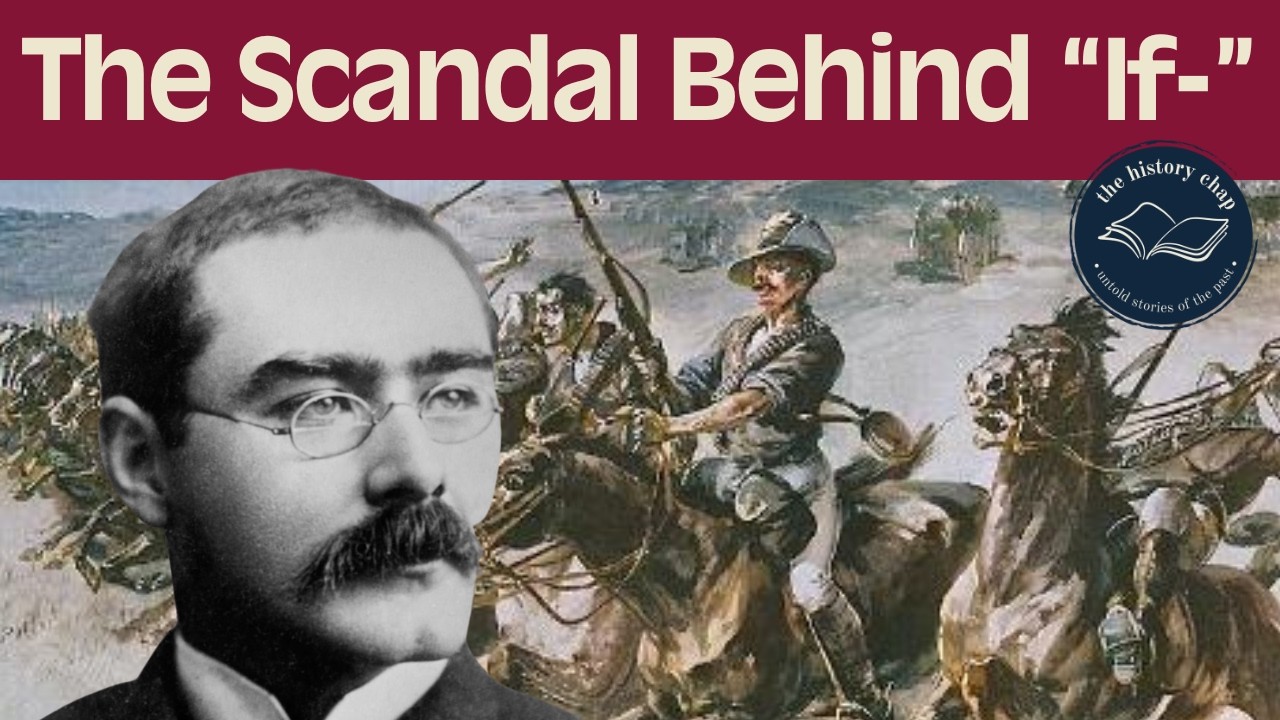 The events leading to this ignominious surrender had been set in motion months earlier, in the smoke-filled boardrooms of Cecil Rhodes’ British South Africa Company. Rhodes, the colossal figure of southern African colonization, harbored a burning ambition to bring the gold-rich Transvaal into the British Empire. The British government under Lord Salisbury, however, was wary of antagonizing the Boers and wished for peace.
Undeterred, Rhodes devised a reckless plan: he would foment an uprising among the pro-British “Uitlanders” in Johannesburg, and then send in his own private army, the British South Africa Company Mounted Police, ostensibly to restore order and protect innocent civilians from Boer aggression. The man selected to lead this unconstitutional charge was his most trusted lieutenant, Jameson.
Jameson was not a stranger to audacious military action. After establishing a medical practice in the diamond town of Kimberley, he had become Rhodes’ indispensable fixer, successfully negotiating a mining concession from the Matabele king in 1888 that led to the colonization of Rhodesia. He had then orchestrated a brutal and unprovoked war against the Matabele in 1893, demonstrating a ruthless willingness to use force to achieve his goals.
By 1895, he was convinced that the Boers, whom he regarded with the same contempt he held for the Matabele, would be just as easy to overpower. He was profoundly, and catastrophically, wrong.
The plan began to unravel even before the first shots were fired. The date for the Johannesburg uprising was set for the 28th of December, 1895. But as the day approached, the leaders of the Reform Committee in Johannesburg lost their nerve.
On the 26th, they sent Jameson a cryptic telegram advising him to postpone. Two messengers were dispatched, with the second finally reaching Jameson on the morning of the 28th. Furious at the vacillation, Jameson sent a telegram to Rhodes stating that if he did not hear to the contrary, he would invade on the evening of the 29th.
Due to a mysterious delay, Rhodes only received this message the following day and immediately tried to countermand the order. But the telegraph line was dead.
Jameson had cut the wires himself. At 5:00 p. m.
 on Sunday, December 29th, 1895, with a pre-written letter invoking the need to protect innocent women and children from Boer atrocities, he led his force of approximately 500 men across the border. The raid was a desperate gamble from the start. The raiders were shadowed by Boer commandos, who were far more formidable and mobile than Jameson had ever anticipated.
Despite being met by a messenger from the British High Commissioner in Cape Town with an order to withdraw, Jameson pressed on, convinced that his presence alone would ignite the rebellion he so desperately needed.
His optimism proved fatal. On New Year’s Day, 1896, word arrived that 200 armed rebels would meet him at the town of Krugersdorp. However, when the raiders arrived, there was no one to greet them.
Instead, they found a Boer commando under Commandant Frederik Malan firmly entrenched on a ridge at Doornkop. A desperate charge led by Captain Charles Barry was repelled with deadly rifle fire, costing Barry his life. Willoughby’s subsequent attempt to flank to the south was abandoned when he heard heavy gunfire.
He assumed it was the 200 promised rebels engaging the enemy. He was wrong. The fire was from a Boer contingent under the veteran commander Piet Cronje, celebrating the arrival of 150 reinforcements.
The promised 200 rebels, meanwhile, had been turned back by their own wavering leaders in Johannesburg. The raiders were now trapped, facing a Boer force nearly three times their own size. The Boer artillery pounded their defensive position throughout the night, while the raiders’ own Maxim guns jammed from overheating.
With ammunition nearly exhausted and casualties mounting, Jameson’s force was surrounded and hopelessly outgunned. Their surrender was inevitable.
 The scale of the humiliation was profound. Twenty-two raiders were dead and forty wounded. Jameson and Willoughby were found weeping, their swashbuckling reputations in ruins.
The political fallout in London was instantaneous and severe. The raiders were transported back to England to face trial under the Foreign Enlistment Act for mounting a military expedition against a friendly state. The trial, Regina versus Jameson and others, began at the High Court in July 1896.
Jameson conducted himself with stoic composure, refusing to utter a single word that would incriminate his co-conspirators, Cecil Rhodes or the Colonial Secretary, Joseph Chamberlain.
This refusal was not born of mere loyalty. It was a calculated act of political survival that would implicate the very highest levels of the British government. The 𝒔𝒄𝒂𝓃𝒹𝒶𝓁 threatened to engulf the government, leading to the creation of a parliamentary select committee to investigate the raid.
In a staggering display of audacity, the committee included Joseph Chamberlain himself, a man who had transferred the Pitsani strip, from which the invasion was launched, from Crown control to the British South Africa Company just months earlier. He maintained a façade of complete ignorance, a claim that strained credibility.
Cecil Rhodes, when summoned before the committee, refused to release seven telegrams that might have proven Chamberlain’s complicity. His motivation was likely a political bargain: if Chamberlain fell, the Prime Minister, Lord Salisbury, would revoke Rhodes’ company charter to rule Rhodesia. All that remained was for Jameson to be directly asked the pivotal question: did Chamberlain know of the plan?
Under oath, Jameson replied, “No.” It was a lie that saved the government, saved Rhodes, and saved the empire from an enormous political crisis. For his silence, Jameson not only preserved his own life but also earned a form of immortal, literary currency.
 While Jameson was sentenced to fifteen months in Holloway Prison, his status as a first-class misdemeanant allowed him luxuries unavailable to ordinary inmates, and he was released after only four months on health grounds. The political cover-up was complete. Chamberlain was exonerated, and Rhodes kept his charter.
Jameson’s reputation, however, was irrevocably tarnished, yet remarkably, he staged a stunning comeback. He returned to the Cape, was elected to Parliament within three years, and became Prime Minister of the Cape Colony in 1904, a position he held for four years.
It was during this period that he forged a friendship with the writer Rudyard Kipling, whom Rhodes had invited to South Africa. Kipling and Jameson became fast friends, with the Kipling family visiting the former raider almost every year for a decade. In 1910, Kipling published his poem “If—” in the collection Rewards and Fairies.
The poem, ostensibly advice for his 13-year-old son, John, was explicitly acknowledged by Kipling later in his autobiography as being inspired by the rise, fall, and rise again of Leander Starr Jameson. The poem’s lines about keeping your head when all about you are losing theirs, trusting yourself when all men doubt you, and meeting with Triumph and Disaster and treating those two impostors just the same, were a perfect distillation of the character of the man who had risked everything, lost, and quietly rebuilt himself.
Jameson’s life after the near-fatal 𝒔𝒄𝒂𝓃𝒹𝒶𝓁 was a remarkable testament to that stoic philosophy. He was knighted in 1911 and became chairman of the British South Africa Company. During the First World War, despite failing health, he served as chairman of the Central Prisoners of War Committee in London, coordinating supplies for British prisoners in German camps.
He held this post until his death in November 1917. Initially buried in London, his body was transferred in 1920 to lie beside Cecil Rhodes in the Matopo Hills of modern-day Zimbabwe.
The irony of “If—” is that it was also a father’s lesson to a son. Kipling’s son John, who had failed his army medical, was only able to get a commission in the Irish Guards because of his father’s intervention. He was killed leading his platoon at the Battle of Loos in 1915, at the age of 18.
Kipling spent the rest of his life searching for the body of the son who was meant to inherit the Earth, a search that proved as fruitless as the Jameson Raid itself. The poem that began as a tribute to a disgraced raider’s courage in the face of adversity became, for Kipling, an anguished memorial to the boy he had pushed toward a war that took his life. The 𝒔𝒄𝒂𝓃𝒹𝒶𝓁 of the raid, once the talk of the empire, is now largely forgotten, but the stoic silence of the man who precipitated it lives on in the verses of Britain’s most quoted poem, a haunting legacy of a broken career and an unbroken spirit.