The Japanese Empire’s relentless assault on the British Crown Colony of Hong Kong reached its grim and inevitable conclusion on Christmas Day, 1941, marking the first time in history that a British colony had been forced to surrender to an invading force. After a brutal 17-day campaign that saw the defenders pushed from the mainland and systematically crushed on Hong Kong Island, Governor Sir Mark Young and General Christopher Maltby capitulated to the Japanese 23rd Army at the Peninsula Hotel in Kowloon at 3:30 p. m.
The surrender, which became known locally as “Black Christmas,” ended a battle that had been lost before it even began, a desperate and bloody holding action that cost thousands of lives and consigned nearly 11,000 Allied soldiers to the horrors of Japanese prisoner-of-war camps.
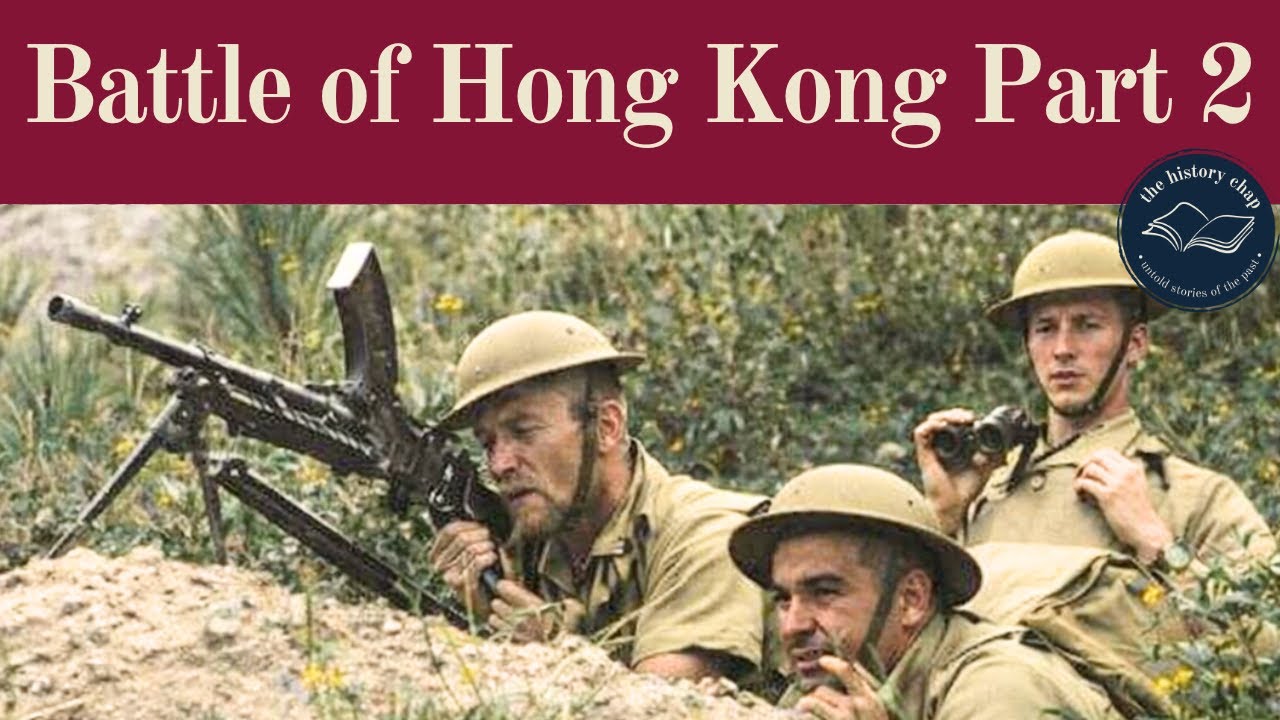 The fall of Hong Kong was a catastrophic strategic blow for the British Empire, occurring just hours after the attack on Pearl Harbor had plunged the Pacific into war. The Japanese invasion began on the morning of December 8, 1941, with a lightning assault that smashed through the “Gin Drinkers Line,” a defensive fortification that British military planners had optimistically dubbed the “Oriental Maginot Line.” The line, which was supposed to hold the Japanese for months, was broken in a matter of days.
General Maltby, the British commander, was forced to evacuate his entire force of 14,000 British, Canadian, Indian, and local troops from the mainland to Hong Kong Island after just five days of fighting. The withdrawal was conducted with remarkable efficiency, but the defenders knew that no help was coming. With no air support and almost no naval presence, they were left to await the inevitable final assault, their only objective being to tie down as many Japanese troops as possible to prevent them from being deployed to the more critical battlefields of Malaya and the Philippines.
General Maltby quickly reorganized his depleted forces into two brigades to defend the island. The West Brigade, under Canadian Brigadier John Lawson, was tasked with holding the northern shoreline opposite Kowloon, comprising the 2nd Battalion, 14th Punjab Regiment, interspersed with the 1st Battalion, Middlesex Regiment, manning pillboxes along the coast. The 1st Battalion, Winnipeg Grenadiers, covered the southwest of the island, while the 2nd Battalion, Royal Scots, and the Hong Kong Volunteer Defence Corps were held in reserve.
The East Brigade, commanded by Brigadier Cedric Wallace, a one-eyed veteran of the Western Front, was responsible for the eastern shoreline facing the Devil’s Peak Peninsula. The 5th Battalion, 7th Rajputs, who had fought with determination on the mainland, held the shoreline opposite their former positions, while the 1st Battalion, Royal Rifles of Canada, defended the eastern coast all the way round to Stanley.
The Japanese did not wait long to test the island’s defenses. On December 13, a solitary launch entered Victoria Harbour under a white flag, carrying a “peace mission” with a demand for surrender from the Japanese commander. The launch carried three officers, an interpreter, and two female hostages, including the wife of the governor’s secretary.
Governor Young refused the demand without hesitation, and the launch returned to Kowloon. The Japanese response was immediate and devastating. An intense artillery bombardment rained down on Victoria and Wanchai, blasting apart buildings and starting massive fires.
Over 150 Chinese civilians were killed when a single shell hit a crowded market. Japanese bombers then appeared overhead, adding to the chaos and disabling several British gun positions. The bombardment intensified over the following days as the Japanese gathered boats on the shoreline opposite the island, signaling that the final reckoning was approaching.
In a desperate act of defiance, the lone British destroyer HMS Thracian steamed into the channel separating the island from the mainland, firing on two river steamers full of Japanese troops and sinking both. However, the ship ran aground on Lamma Island and sustained further damage from Japanese aircraft. Unable to repair herself, she was run aground in Repulse Bay to serve as a static gun platform before being eventually abandoned.
After five days of relentless bombardment, the Japanese sent another launch under a white flag with a second demand for surrender. Once again, they were sent back with Young’s defiant response. The Japanese commander then ordered the assault on Hong Kong Island to proceed.
 On the night of December 18, under the cover of an intense bombardment that set oil storage tanks ablaze and filled the harbor with thick black smoke, the first wave of approximately 3,500 Japanese troops crossed the narrow waterway. The 228th and 230th Infantry Regiments landed between North Point and Braemar Point, while the 229th Regiment landed in Aldrich Bay opposite Devil’s Peak Peninsula, where the Rajputs opened intense fire on the incoming vessels, illuminated by searchlights. Despite the withering fire, the Rajputs could not stop the landings.
The Japanese established beachheads and captured the Taikoo Dockyard before demolitions could be carried out. General Maltby, believing the attack was a diversion prior to a main assault coming from Kowloon, held his reinforcements back. It was the wrong call.
By midnight, six Japanese battalions had successfully landed, and almost the entire northeast corner of Hong Kong was in Japanese hands.
The fighting on December 19 was the bloodiest and most dramatic day of the entire battle. At the North Point Power Station, the Hong Kong Volunteer Defence Corps, comprised of middle-aged bankers and merchants in peacetime, put up a stubborn resistance alongside Free French troops, preventing the Japanese from advancing into Victoria. The Japanese then turned their attention inland, moving towards the vital Wong Nai Chung Gap, a ridgeline that led directly to the center of the island.
Both sides knew that control of the gap would split the Allied garrison in two. The Japanese managed to surround Brigadier Lawson’s headquarters, and after nearly three hours of intense fighting, Lawson sent a final message to Maltby: “I’m going outside to fight it out.” Drawing his revolver, he charged out of the bunker and was immediately killed by a burst of Japanese machine gun fire, becoming the highest-ranking Allied officer killed in the battle.
The courage of the defenders was exemplified by Company Sergeant Major John Osborne of the Winnipeg Grenadiers. A 42-year-old First World War veteran, Osborne led a bayonet charge up Mount Butler, scattering the Japanese and holding the position for over eight hours against repeated enemy attacks. When a grenade fell into his position and he couldn’t retrieve it in time, he shouted a warning, shoved a man aside, and threw himself on the grenade, sacrificing his life to save his men.
He was posthumously awarded the Victoria Cross, the only one awarded for the Battle of Hong Kong. The loyalty of the defenders was also shown by Sergeant Gander, a 140-pound Newfoundland dog adopted by the Royal Rifles of Canada. During the battle at Lye Mun Barracks, Gander twice picked up grenades thrown at his men and dropped them back close to the Japanese attackers.
When he picked up a third grenade, it exploded, killing him. He was posthumously awarded the Dickin Medal, the Animal Victoria Cross.
 Despite the heroism, the Japanese achieved their objective of splitting the island in two by December 21, pushing south to Repulse Bay. The defenders were forced into a fighting retreat towards the Stanley Peninsula. On Christmas Eve, the Japanese renewed their attack, and by Christmas Day, the situation was desperate.
The island’s reservoirs were in Japanese hands, and civilian casualties were mounting. That morning, one of the worst atrocities of the battle unfolded at St. Stephen’s College, an elite school converted into an emergency military hospital treating nearly 1,000 wounded troops.
Japanese soldiers stormed the building, executed the two doctors, gang-raped and mutilated the 11 nurses, and bayoneted wounded soldiers in their beds. It is estimated that between 60 and 100 wounded troops and medical staff were massacred.
At 3:30 p. m. on December 25, Governor Young and General Maltby surrendered to General Sakai at the Peninsula Hotel in Kowloon.
Churchill had personally instructed Young to fight to the last, but with the island split and resistance futile, they agreed they had done all that was expected of them. Over in Stanley, Brigadier Wallace, who had only received orders to hold to the last, launched a final counterattack with the Royal Rifles of Canada to retake Stanley Village. Outnumbered ten to one, the Canadians engaged the Japanese in vicious hand-to-hand combat, achieving a small victory just hours before the official surrender.
Wallace refused to lay down his arms without written authority from Maltby, which he received at 2:30 a. m. on December 26.
Even after the official surrender, one last pocket of resistance held out. A tiny force of around 60 defenders, including sailors from HMS Thracian, Royal Engineers, and Chinese members of the Volunteer Defence Corps, held out in the central ordnance munitions depot, known as “Little Hong Kong.” Commanded by Major Arthur Dewar, an Australian, the garrison threatened to blow the entire supply dump sky-high if attacked.
Impressed by this display of self-sacrifice, the Japanese offered an honorable surrender, which included beer and a lunch. With that surrender, the Battle of Hong Kong was finally over.
 The cost of the battle was staggering. The Japanese claimed approximately 2,700 casualties, though Western estimates suggest over twice that number. Allied losses were 2,100 killed or missing and around 2,000 wounded.
Nearly 11,000 Allied soldiers became prisoners of war, including 5,000 British, 1,700 Canadians, and 3,800 Indian troops. For them, the horror was just beginning. Hundreds would die in captivity from disease, malnutrition, torture, and execution.
The most tragic episode occurred on September 27, 1942, when 1,816 British prisoners were being transported to Japan aboard the cargo ship Lisbon Maru. Torpedoed by an American submarine that did not know she was carrying prisoners, the Japanese troops evacuated but battened down the hatches, trapping the prisoners below. As the ship sank, survivors heard those trapped in the hold singing “It’s a Long Way to Tipperary.”
Over 800 prisoners died, and Japanese guards opened fire on the men as they swam in the water.
The battle also produced incredible stories of escape. Admiral Chan Chak, a one-legged Chinese admiral, led more than 60 intelligence and naval personnel in a breakout through Japanese lines on the day of the surrender. Despite being shot in the wrist and losing his artificial leg, he survived and reached Chinese lines.
Lieutenant Colonel Lindsay Ride, a professor of psychology, escaped from a POW camp and formed the British Army Aid Group, which smuggled food, drugs, and messages to prisoners and helped over 2,000 people escape Japanese captivity. Hong Kong remained under draconian Japanese occupation for three years and eight months, with an estimated 10,000 ethnic Chinese executed during that period. The Battle of Hong Kong has been overshadowed by the fall of Singapore, but the defenders’ resilience in the face of an impossible task deserves to be remembered.
As Churchill later said, “The garrison was faced with an impossible task that from the outset was beyond their powers.” They fought with a quiet loyalty and courage that was shown by all those who never came home.