A dead shark washing ashore on an ancient coastline would have looked like a gift from the sea — enough meat to feed a hungry group for days. But prehistoric humans who cut into that carcass may have discovered something far less generous hidden inside the flesh. Sharks do not regulate their internal chemistry the way most fish do. Instead of constantly pumping salt out of their bodies, they retain a waste compound called urea, which helps them match the salinity of the ocean around them.
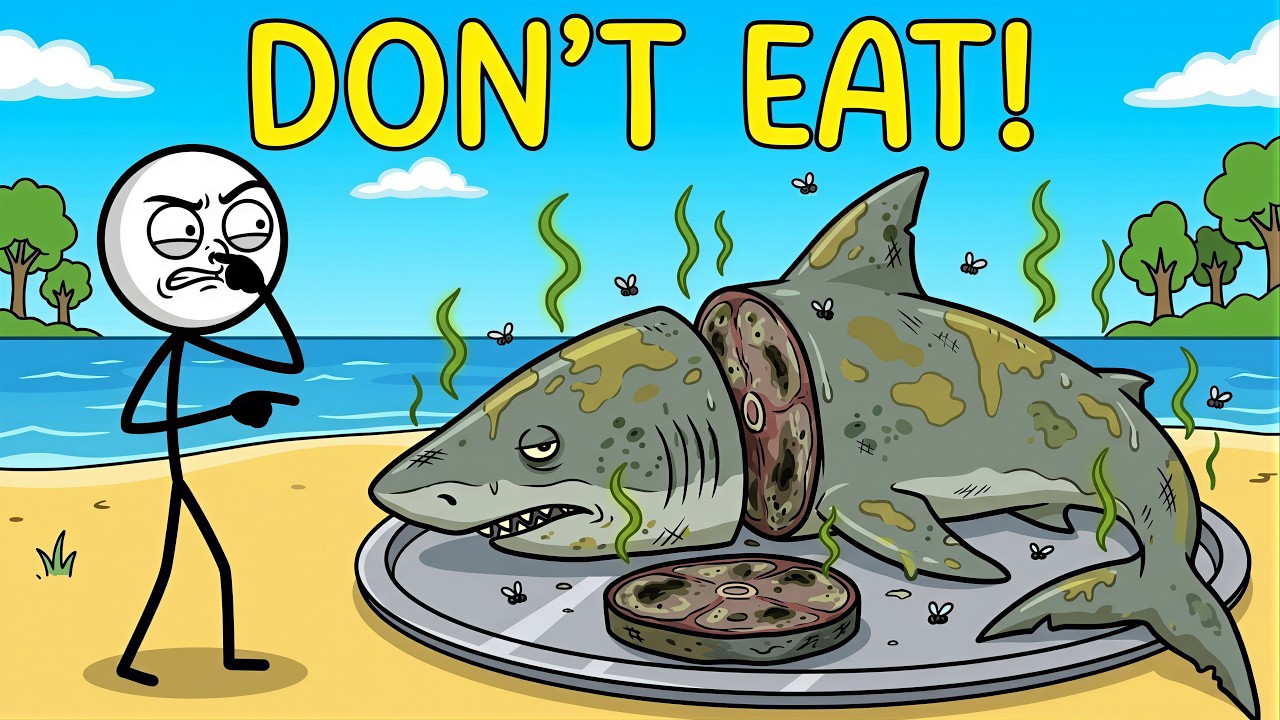
This adaptation saves them energy and has allowed sharks to thrive for hundreds of millions of years. That survival strategy comes at a cost. When a shark dies, bacteria begin breaking down the urea in its tissues, converting it into ammonia. The same chemistry that keeps a shark alive in the water quickly turns its meat toxic, foul-smelling, and dangerous to eat.
Ancient peoples had no knowledge of urea or bacteria, but they had sharp observation skills. They would have noticed that shark meat spoiled faster than other catches, that it stung the throat, and that eating it could lead to sickness or death. Over generations, that experience hardened into cultural rules about when and how shark meat could be prepared, preserved, or avoided. Some coastal communities developed elaborate methods to make the meat edible, including cutting it quickly, draining fluids, drying it in the wind, or fermenting it.
These techniques were not born in laboratories but through trial, error, and the harsh logic of survival. The dangers of shark meat do not end with spoilage. As apex predators, sharks accumulate compounds from everything they eat over long lifetimes. Mercury and other substances move up the food chain, concentrating in the bodies of large predators.
Ancient humans could not have identified these chemicals, but they may have noticed that old, large predators sometimes made people sick, and passed those warnings down through tradition. That pattern extends beyond sharks. Every meal carries traces of its origin, and humans, as the newest top predators, absorb the accumulated history of the food chain in their own bodies. The article concludes that eating is never a neutral act, it is an exchange with the environment, and that modern consumers may have lost the awareness that ancient hunters and gatherers once had.
The shark, the article argues, is not just an animal but a warning. Its body is a record of the ocean, and the hidden chemicals in its flesh remind us that what we eat carries invisible consequences. Knowing what is actually in the food on our plates, and where it came from, may matter more now than it ever did.