At 70, Delta Burke Finally Tells the Truth About Leaving ”Designing Women”
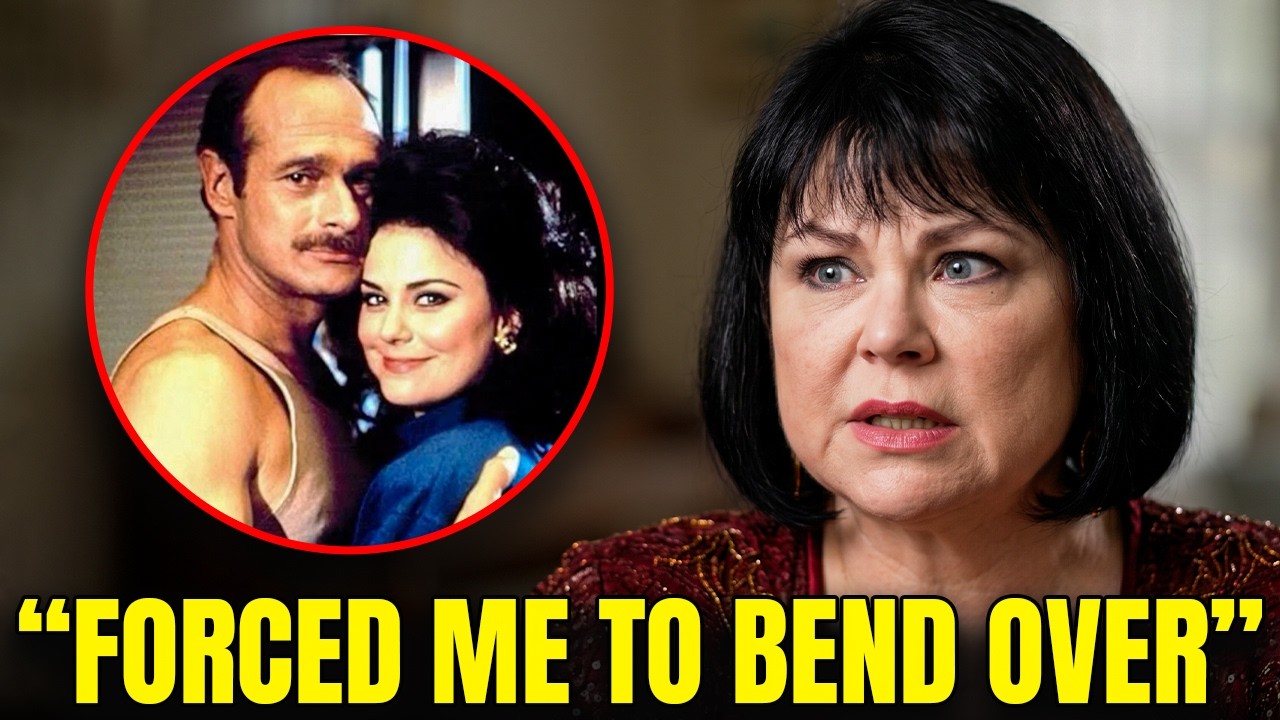
The room was supposed to be full. In the summer of 1991, Delta Burke renewed her wedding vows to actor Gerald McRaney, a ceremony meant to celebrate their love and commitment. Instead, the chairs sat empty. Not one of her castmates from Designing Women attended. Dixie Carter, who had been her matron of honor just two years earlier, was absent. Jean Smart, Annie Potts, and Meshach Taylor were also missing. Every empty seat screamed a truth that no interview from that era ever explained. For decades, the public was told a simple story: Delta Burke was a difficult diva who became impossible to work with. Now, at 70, she is finally telling the real story, and it is far darker than anyone imagined. The silence lasted more than 30 years. Delta Burke rarely spoke about her departure from the hit CBS sitcom that made her a household name. She gave few interviews, avoided the press, and let the narrative built by others stand. But on April 19, 2024, she sat down for a podcast interview with Chelsea Devantez on Glamorous Trash. During that conversation, she uttered a single sentence that changes everything. “I wanted to leave, and I wasn’t allowed to leave.” That sentence, spoken plainly and without fanfare, rewrites the history of one of television’s most famous feuds. The story of a star who became too big for her own show was actually a cover story, a carefully constructed narrative designed to protect the powerful. The trouble began long before the cameras rolled. Delta Burke was born on July 30, 1956, in Orlando, Florida. She was raised by her mother, Jean, and later adopted by her stepfather, Frederick Burke. She never met her biological father. By the time she was 17, she had already learned what it meant to be watched. She won the Miss Flame pageant, then became the youngest Miss Florida title holder in history. That crown came with a scholarship, which she used to study at the London Academy of Music and Dramatic Art. But the pressure to maintain a certain appearance started early. While in London, she began taking prescription diet pills. When she returned to the United States, she discovered those pills were illegal. So she found someone on a set who could get her something else. Black beauties, they were called. She took one in the morning so she would not eat. The pills stopped working. Her body adjusted. So she searched for something stronger. Around 1982, during her time on the short-lived series Filthy Rich, she found crystal methamphetamine. She did not snort it. She dissolved it in cranberry juice and drank it. After that, she would go five days without eating. This was happening while she was building a career, while people around her were still making comments about her body. The industry that rewarded her for her looks was also slowly destroying her. She kept this secret for more than 40 years. It did not appear in her 1998 memoir. It did not come out during her Barbara Walters interview. The tabloids that spent years writing about her weight never came close to the truth. Designing Women premiered on CBS on September 29, 1986. The show followed four women and one man working at an interior design firm in Atlanta. Dixie Carter played Julia Sugarbaker. Delta Burke played her sister, Suzanne. Annie Potts played Mary Jo. Jean Smart played Charlene. Meshach Taylor played Anthony. The show was not an immediate hit. Critics dismissed it as a copy of The Golden Girls. CBS moved it around the schedule and nearly canceled it. But viewers fought for it. Women wrote letters, made phone calls, and pushed the network to pay attention. By 1989, the show had found its place on Monday nights beside Murphy Brown. It became a cultural force. And Delta Burke became the breakout star. Suzanne Sugarbaker was a former beauty queen, vain, sharp, ridiculous, cruel, funny, and sometimes deeply moving. Delta turned her into one of the great comic characters of the decade. The bond between the four women on screen felt so real that many viewers assumed they were close friends off camera. For a while, that was true. There is a Joan Rivers show appearance from that period where all four actresses appeared together. Rivers, who had seen enough show business friendships strain under pressure, told them they were all still very good friends so far, and that she knew trouble would eventually begin. She was right. The awards attention came. Delta received two straight Emmy nominations for Outstanding Lead Actress in a Comedy Series in 1990 and 1991. She was the only woman from that cast ever nominated in that category. Meshach Taylor had received a supporting nomination in 1989. But Dixie Carter, Annie Potts, and Jean Smart did not receive Emmy nominations for this show. That difference created pressure inside an ensemble that the public understood as a group of equals. By the end of her run, Delta had appeared in 120 episodes. In the middle of all this, Delta married Gerald McRaney, the star of Major Dad. They married on May 28, 1989. Dixie Carter served as her matron of honor. Years later, Delta explained what McRaney meant to her. He was the first man who helped her feel comfortable in her own skin. He saw beyond the beauty queen image and made room for the real person behind it. Around this time, Delta’s weight began to change in a way everyone could see. The public saw it. The network saw it. The producers saw it. Her co-stars saw it. Delta saw it too. During the run of the series, she gained more than 40 pounds. McRaney responded with a gesture that became famous. He stocked a room in their home with pounds of chocolate. It was a bold way of telling his wife that his love did not depend on her size. The tabloids took that story and ran with it. For two full years, the size of Delta Burke’s body became a national story. Inside the Designing Women production, McRaney began to be seen in a different way. To Delta, he was a supportive husband. To the people around the show, he became an outside influence. They believed he was giving her confidence, and that confidence was later described as arrogance. Over time, that idea hardened. It became part of the official explanation for everything that happened next. In December 1989, Designing Women aired an episode that would become a landmark. It was called They Shoot Fat Women, Don’t They? The story sent Suzanne Sugarbaker back to her 15-year high school reunion. Suzanne had always been the beauty queen. Her value, her confidence, and her place in the room had all been built around the way people looked at her. Then she walked into that reunion after gaining weight, and the people who once admired her turned cold. The episode earned Delta her first Emmy nomination. But it also became the beginning of something darker. A fight started over whose idea it had been. Delta said the episode came from her. Linda Bloodworth-Thomason said she had spent hours convincing Delta that the story was worth doing. The most praised episode of the show carried value, power, and ownership. In the spring of 1990, Harry Thomason met with Delta Burke’s agent. The purpose of that meeting depends on the person telling the story. Delta’s agent said the meeting was meant to repair the strained relationship. Harry Thomason said the meeting was about Delta becoming the star of the show. Those versions lead to very different rooms. The Thomasons carried enormous power. Linda Bloodworth-Thomason had created Designing Women and had written many of its strongest episodes. She and Harry ran the series through their own company in association with Columbia. Within a few years, they would be close enough to an American president to make films for him. Inside that universe, they controlled the ground everyone stood on. Private tension turned into public war. The official explanation from the production placed much of the blame on one person close to Burke: her husband, Gerald McRaney. In 1992, producer Doug Jackson told TV Guide that after Burke started dating McRaney, her relationship with the production changed sharply. He said she had once been fun and full of energy. Then, according to him, she came on the set one day and said Gerald had told her she was the star of the show and should be the boss. That was one man’s memory of one sentence, told in a magazine a year after the fight had exploded, by someone standing on the winning side. For the next 30 years, that memory became the story most people repeated. On August 2, 1990, Emmy nominations were announced. Delta Burke was nominated. That same day, she spoke to her hometown paper, the Orlando Sentinel. She said the words that changed everything. She admitted that many things about the show were wonderful. Then she said, “I have not wanted to be there for some time now.” She called the workplace bad. She called the environment bad. She described the strange pain of being part of something that looked wonderful from the outside while feeling awful from the inside. For an actress to attack her own hit show on the same day she received an Emmy nomination was almost unheard of in 1990. Television fights usually stayed behind closed doors. Stars smiled in public. Producers made statements. Audiences rarely saw the wounds while they were still open. The Thomasons answered with a press release. The wording was stunning. They said they were all mentally exhausted by the daily trials and tribulations of Delta Burke. That statement did more than deny her claims. It painted her as the problem in the room. Her own employers sent that message to the press about a woman who had been nominated for an Emmy that morning. Burke pushed back. That November, she told the Sun Sentinel that the producers had forced the cast onto extreme diets. She also claimed that Harry Thomason had once locked the cast in a room and screamed at them. Then she went to Barbara Walters. She did not warn the Thomasons first. The interview aired in November 1990 and became the most watched moment of the feud. … Read more