For one extraordinary moment, Penelope Tree seemed to represent everything the 1960s wanted to become.
The enormous eyes.
The fragile beauty.
The unconventional face.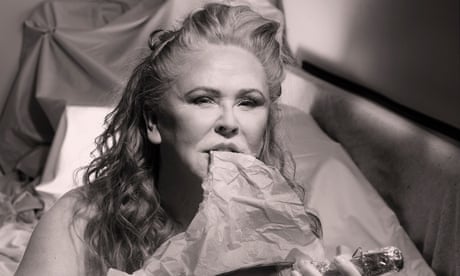
And the dress that helped turn a teenage socialite into one of fashion’s most unforgettable figures.
Her appearance at Truman Capote’s legendary Black and White Ball changed everything.
Photographers noticed her.
Fashion noticed her.
And soon, the world noticed her.
Within a few years, Penelope Tree had become one of the faces of Swinging London.
But behind those extraordinary photographs was a young woman discovering how dangerous it could be to become an image before fully understanding who she was.
There would be fame.
A consuming relationship.
Health struggles.
A public collapse.
An arrest.
And finally, an escape from the very world that had made her famous.
Long before modeling, Tree had grown up surrounded by privilege and complicated family expectations.
But she possessed something the fashion world increasingly wanted.
She looked different.
Photographers Richard Avedon and Cecil Beaton recognized it early.
Her appearance challenged the polished beauty standards of an earlier generation.
She could appear vulnerable and strange, aristocratic and rebellious, all at once.
Then came Truman Capote’s Black and White Ball.
Tree arrived in a daring outfit that immediately attracted attention.
The photographs traveled.
And suddenly, she was no longer simply another young woman from society.
She was a fashion story.
In 1967, Tree moved to London.
It was the perfect moment.
London had become the center of a cultural revolution.
Fashion was changing.
Music was changing.
Photography was changing.
And Penelope Tree fit perfectly into that new world.
Her relationship with photographer David Bailey became central to both her career and personal life.
Bailey was already one of the defining photographers of the era.
Through his lens, Tree became even more distinctive.
The unusual features that might once have kept her outside conventional modeling became precisely what made her unforgettable.
She became his muse.
Their photographs helped define an era.
But the relationship between model and photographer became deeply personal as well.
And behind the glamorous images, pressure was building.
Tree was young, intensely scrutinized, and living inside an industry that constantly judged appearance.
The same face that made her famous became something she could never escape.
By the early 1970s, the fantasy began falling apart.
Health problems affected her appearance and confidence.
Her relationship with Bailey deteriorated.
Her career lost momentum.
The emotional strain became increasingly visible.
Then came a highly publicized arrest.
For someone who had once represented the effortless glamour of Swinging London, the contrast was brutal.
The fashion dream had become something very different.
Tree eventually realized that remaining inside the same world was not going to save her.
So she left.
In 1974, she largely disappeared from public life.
She spent months sailing, physically removing herself from the fashion machine and the identity that had been constructed around her.
It became more than a journey.
It was an attempt to discover what remained when nobody was photographing her.
Eventually, Australia offered another kind of life.
Far from the obsessive attention that had followed her in London, Tree found greater stability.
Motherhood changed her priorities.
Buddhism gave her another way of thinking about identity and meaning.
The woman once celebrated almost entirely for how she looked began constructing a life that had very little to do with being looked at.
But another revelation was still waiting.
In 1990, Tree learned that her late father had been gay.
The discovery forced her to reconsider parts of her childhood and the emotional atmosphere in which she had grown up.
Rather than simply creating another wound, the revelation reportedly brought understanding.
Things that had once seemed confusing began to make more sense.
It became another step in separating the adult Penelope from the complicated world that had shaped the young girl.
Over time, she also found new forms of expression.
She wrote the novel Piece of My Heart.
And eventually, she selectively returned to modeling.
But this time, the meaning was different.
She was no longer the teenage muse expected to embody eternal youth.
She could appear as an older woman on her own terms, embracing the face that time had changed rather than pretending it had not.
That transformation may be the most fascinating part of Penelope Tree’s story.
The fashion industry made her famous because she looked extraordinary.
But her later life became a journey toward discovering that appearance was never enough to build an identity.
She had experienced the intoxicating center of the 1960s.
Truman Capote.
Richard Avedon.
Cecil Beaton.
David Bailey.
Swinging London.
The photographs became iconic.
But the woman inside them eventually needed something the camera could never provide.
Peace.
Today, Tree lives largely outside the celebrity world in rural Sussex.
The girl who once became famous because of a dress and a handful of unforgettable photographs ultimately chose privacy over spectacle.
Her rise was extraordinary.
Her collapse was painful.
But neither became the final chapter.
Penelope Tree escaped the image that once threatened to define her forever.
And somewhere beyond the parties, photographers, heartbreak, and cruel revelations, she finally discovered a life that belonged to her rather than to the camera.