Milly Alcock’s press tour for the new Supergirl film has become a case study in how quickly a movie’s momentum can collapse, with box office projections sliding in near real time after a series of controversial comments. The film, which cost roughly $245 million to produce and needed around $425 million worldwide to break even, opened to just $38 million domestically and $30 million internationally. That $68 million global debut fell below the $70 million domestic opening weekend analysts had originally projected before the controversies began. The first sign of trouble came on March 31 when Alcock spoke to Vanity Fair.
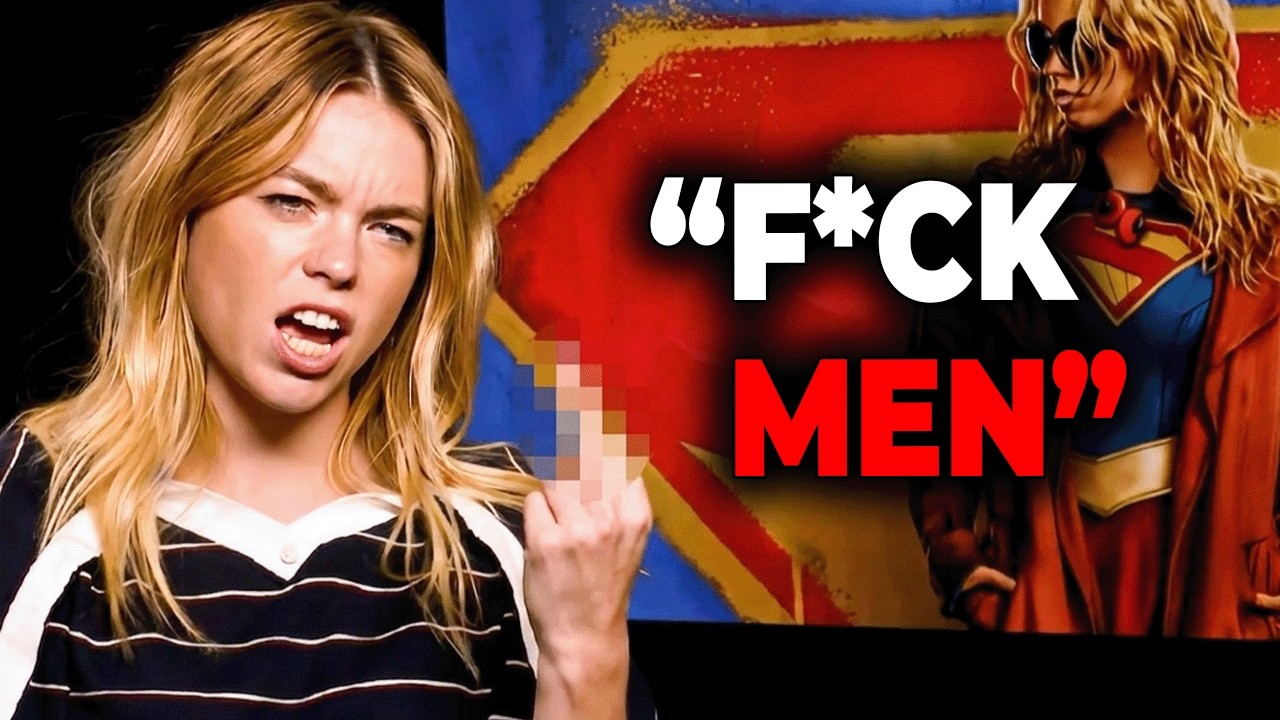
Before any backlash had emerged, before the movie had even been screened, the actress said society had grown too comfortable with what she called “ownership over women’s bodies. ” The timing struck many as odd. She was bracing for criticism that hadn’t yet arrived, and that alone made people uncomfortable. The situation escalated on May 20 when Variety published a cover story on Alcock, calling her a “punk rock superhero” who learned to ignore the trolls.
In that interview, she discussed her online critics, describing many as burner accounts with no profile picture. She then singled one out, saying a profile that read “Dad of four, Christian” struck her as hilarious. That remark directly targeted a key audience for a family superhero film: religious fathers who take their kids to the movies on opening weekend. One widely shared post noted that dads with daughters should be the primary audience for this film, not the group to insult.
Then came the line that turned a normal press tour into a full-blown story. Alcock said, “If you’re pissing the right kind of people off, you’re doing okay. ”
Within 24 hours, tracking numbers began sliding. What had been a promising $70 million opening projection dropped to $47–65 million by mid-April.
After the “Christian dad” quote spread, it fell again to $39 million just before release. The actual opening came in at $38 million, putting the film on pace for an estimated $200 million loss. A third controversy emerged during a Pride Month interview. Asked whether she explored Kara Zor-El’s sexuality in the film, Alcock said the movie isn’t centered around a man or around love at all, adding she didn’t know and that her character “probably go both ways.
” There was nothing in the script to support that characterization. Three controversies in about eight weeks. Each one was followed by more pushback rather than clarification. When critics responded to her earlier comments about women, Alcock said the backlash only proved her point, creating a loop where criticism became validation.
There is an eerie parallel to another recent superhero-adjacent disaster. Fourteen months earlier, Rachel Zegler publicly criticized the original Snow White story before that film’s release, calling it weird because the prince essentially stalks the main character. She also distanced herself from the classic version of her character and clashed with critics during her press tour. The numbers line up almost perfectly.
Snow White opened at $43 million domestically against a $250–270 million budget and lost an estimated $170 million. Supergirl opened at $38 million against $245 million in total costs, tracking toward a $200 million loss. Two films, 14 months apart, nearly identical outcomes. The situation isn’t without complication.
The movie earned a B- CinemaScore from opening night audiences, and while critics gave it 56% on Rotten Tomatoes, paying audiences rated it 77% based on over 2,500 reviews. The people who actually bought tickets liked it far more than the online discourse suggested. One entertainment outlet concluded that Alcock had one job during her press tour: don’t turn potential ticket buyers into enemies. Their verdict was that she failed.
Another outlet noted that a $200 million film’s entire marketing window got consumed by talk of trolls and backlash instead of the story itself. Nobody was discussing the plot, the characters, or the visual effects. They were discussing controversy.
The question now is whether Alcock tanked her own movie or whether she became the public face of a studio’s larger miscalculation.