For millions of rock fans, John Bonham sounded almost superhuman.
The thunderous kick drum.
The crushing snare.
The explosive fills that could make an entire stadium shake.
He was not just the drummer in Led Zeppelin.
He was the engine.
The force that gave the band its weight, danger, and unmistakable power.
But behind that brutal brilliance was a man fighting something far less visible.
Stage anxiety.
Homesickness.
Pressure.
And an increasingly destructive relationship with alcohol.
By the time John Bonham died at only 32, the same intensity that made him legendary had become part of a much darker story.
And when he was gone, Led Zeppelin made a decision few bands at the height of their power would ever make.
They ended.
Because without John Bonham, they believed Led Zeppelin no longer existed.
Long before stadiums and private planes, Bonham was a young drummer from Redditch, England.
Born in 1948, he developed an obsession with drums early.
He was largely self-taught, absorbing influences from major American jazz drummers such as Gene Krupa and Buddy Rich.
But Bonham did not simply imitate them.
He built something of his own.
Powerful.
Loose.
Precise.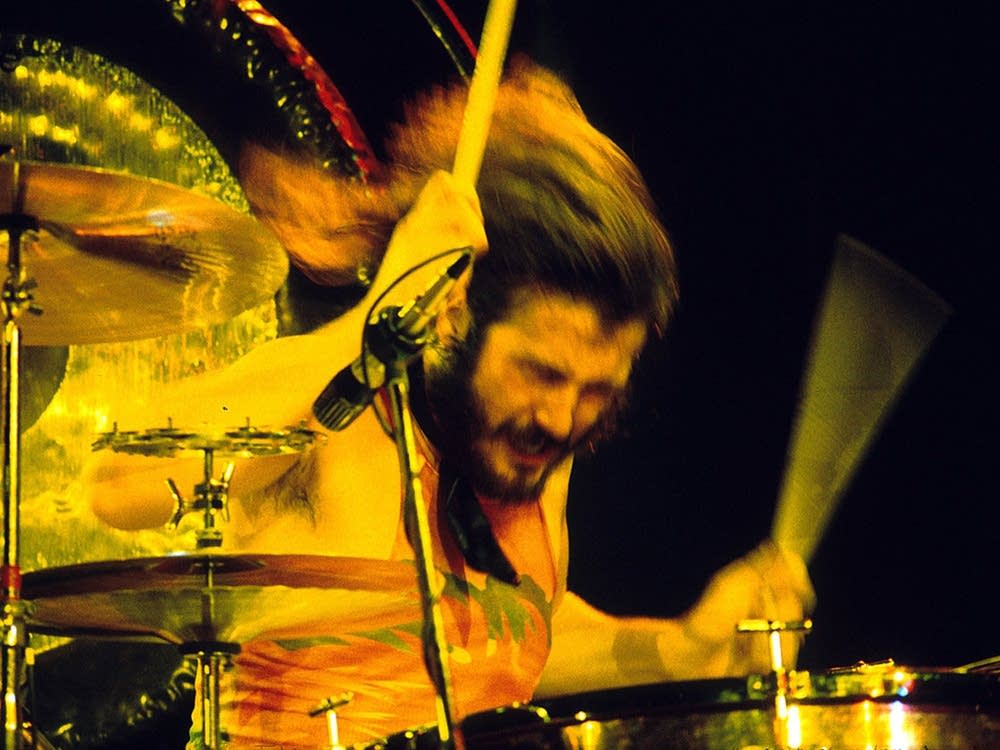
Heavy without becoming clumsy.
Even before fame, musicians around the Midlands began noticing that he played differently.
He did not merely keep time.
He attacked the rhythm.
During the 1960s, Bonham played in several local groups and gradually built a reputation as one of the strongest drummers in the area.
That path eventually connected him with Robert Plant.
And in 1968, everything changed.
Jimmy Page was assembling a new band.
Robert Plant joined.
John Paul Jones came aboard.
And after some persuasion, Bonham became the final piece.
That lineup would soon be known as Led Zeppelin.
From the beginning, his sound was impossible to ignore.
Listen to Good Times Bad Times and the difference is immediate.
Bonham’s footwork sounded almost impossible.
His timing was massive but never stiff.
He could create space inside heavy music in a way few drummers could match.
As Led Zeppelin became one of the biggest rock bands in the world, Bonham’s playing became one of the foundations of their identity.
Then came When the Levee Breaks.
The drum sound on that recording became legendary.
Bonham’s kit was recorded in a stairwell, creating an enormous natural echo.
The result was one of the most recognizable drum sounds in rock history.
Decades later, producers, drummers, and hip-hop artists would still study and sample it.
But Bonham’s greatness was not limited to the studio.
On stage, he became a spectacle.
During Moby Dick, his drum solos could stretch for extraordinary lengths.
He played with his hands.
He pushed the physical limits of performance.
And in massive arenas, he could somehow make one drum kit feel as powerful as the entire band.
To audiences, that looked like complete confidence.
But the man behind the drums was more complicated.
Bonham did not always enjoy the world surrounding rock stardom.
He loved his family.
He loved the quiet life of his farm in Worcestershire.
And despite his intimidating stage presence, touring could be emotionally difficult.
The pressure of performing at the highest level took a toll.
So did homesickness.
And according to accounts of his later years, alcohol increasingly became a way to manage nerves and discomfort.
At first, heavy drinking could be dismissed as part of rock culture.
Led Zeppelin existed in an era where excess was almost expected.
Touring was intense.
Parties were constant.
The band’s reputation for chaos became part of its mythology.
But for Bonham, the drinking became increasingly dangerous.
The contrast was striking.
On stage, he could appear unstoppable.
Off stage, he could be anxious, vulnerable, and exhausted by the pressures of the life surrounding him.
The more famous Led Zeppelin became, the less ordinary life became.
The band moved from clubs to arenas.
From arenas to stadiums.
Their albums sold in enormous numbers.
Their tours became major cultural events.
But success did not remove Bonham’s struggles.
It amplified them.
He still wanted the normality of home.
He still faced the pressure of performance.
And alcohol remained a growing problem.
By the late 1970s, Led Zeppelin had already endured difficult years.
The band had faced personal tragedies, injuries, cancellations, and the growing strain of a decade lived at extreme intensity.
Yet plans for the future continued.
In 1980, the band was preparing to move forward again.
Then came September 25.
After a period of heavy drinking, John Bonham died.
He was only 32.
His death was attributed to pulmonary asphyxiation after excessive alcohol consumption.
The loss was immediate and devastating.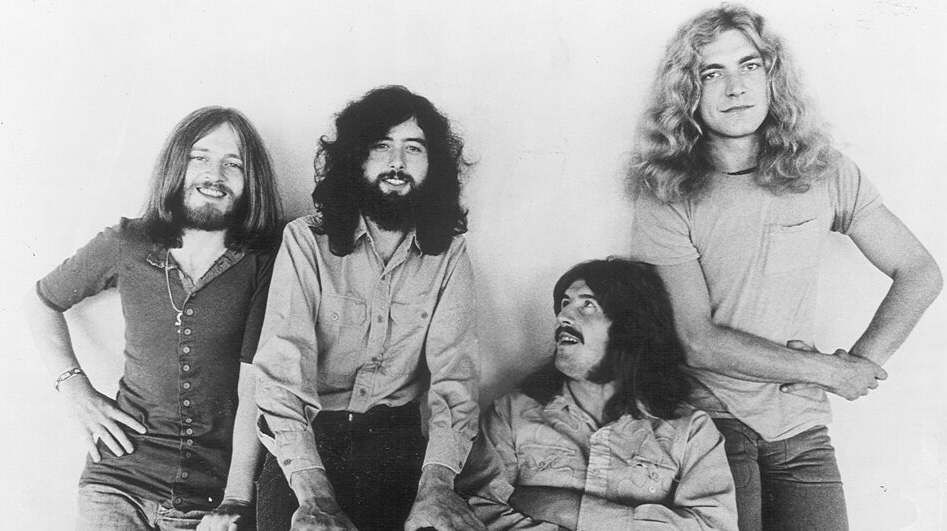
This was not simply the death of a band member.
Bonham’s playing was too deeply connected to Led Zeppelin’s identity.
His relationship with Jimmy Page, Robert Plant, and John Paul Jones had created something that could not easily be replaced.
Other bands might have hired another drummer.
Led Zeppelin refused.
In December 1980, the surviving members announced that they could not continue as they had before.
Led Zeppelin was over.
That decision said everything about Bonham’s importance.
He was not viewed as interchangeable.
He was not just the person behind the drum kit.
He was part of the chemistry that made the band what it was.
Without him, they believed the structure itself had collapsed.
And that is why John Bonham’s death remains one of the defining tragedies in rock history.
He left behind more than a collection of famous drum parts.
He changed how rock drumming could sound.
He proved that power did not have to sacrifice groove.
That heaviness did not have to destroy subtlety.
That a drummer could dominate a song without overwhelming it.
His influence can still be heard everywhere.
In hard rock.
Heavy metal.
Alternative music.
Hip-hop samples.
Modern studio production.
Drummers continue studying the same recordings he made more than four decades ago.
But the legend can sometimes hide the darker truth.
John Bonham was not simply a wild rock star destroyed by excess.
He was also a man who struggled with the pressures that came with the life he had built.
He loved music.
But fame came with demands he did not always handle easily.
He loved performing.
But performance could also make him anxious.
He loved his family and home.
But touring repeatedly pulled him away from both.
Those contradictions make his story more tragic.
The same career that gave him immortality also placed him inside an environment that intensified his weaknesses.
By 32, he had already changed rock music forever.
Then it ended.
Suddenly.
Violently.
And permanently.
Led Zeppelin never truly continued without him.
That may be the greatest proof of what John Bonham meant to the band.
Jimmy Page could find another guitarist.
Robert Plant could find another drummer.
John Paul Jones could join another project.
But Led Zeppelin itself had been built around four people.
And once one was gone, the others refused to pretend the same thing could still exist.
Today, John Bonham remains one of the most influential drummers in music history.
His sound still feels enormous.
His performances still feel dangerous.
His best recordings still make new drummers ask the same question.
How did he do that?
But behind the thunder was a far more fragile story.
A gifted musician.
A devoted family man.
A performer battling nerves.
A superstar increasingly trapped by excess.
And a death at 32 that ended not only a life, but one of the greatest bands rock music had ever produced.
John Bonham’s drumming made Led Zeppelin sound immortal.
His death proved they were not.