The frozen breath of a woolly mammoth would have hung in the air like a ghost as it trudged across a landscape that no longer exists, a world where the horizon was a wall of ice and the temperature could plummet to levels that would 𝓀𝒾𝓁𝓁 a modern human in a matter of hours. This was not a temporary cold snap or a harsh season; this was the baseline reality for anatomically modern humans for roughly 300,000 years, a relentless deep freeze that shaped every fiber of our being and forged the very essence of human intelligence. While we complain about a broken thermostat or a delayed delivery of hot food, our ancestors faced a stark, life-or-death equation every single day, where the margin for error was measured in degrees and the penalty for failure was extinction.
The story of how they not only endured but thrived in these brutal conditions is not just a tale of survival; it is the foundational narrative of human ingenuity, cooperation, and our relentless drive to conquer the impossible.
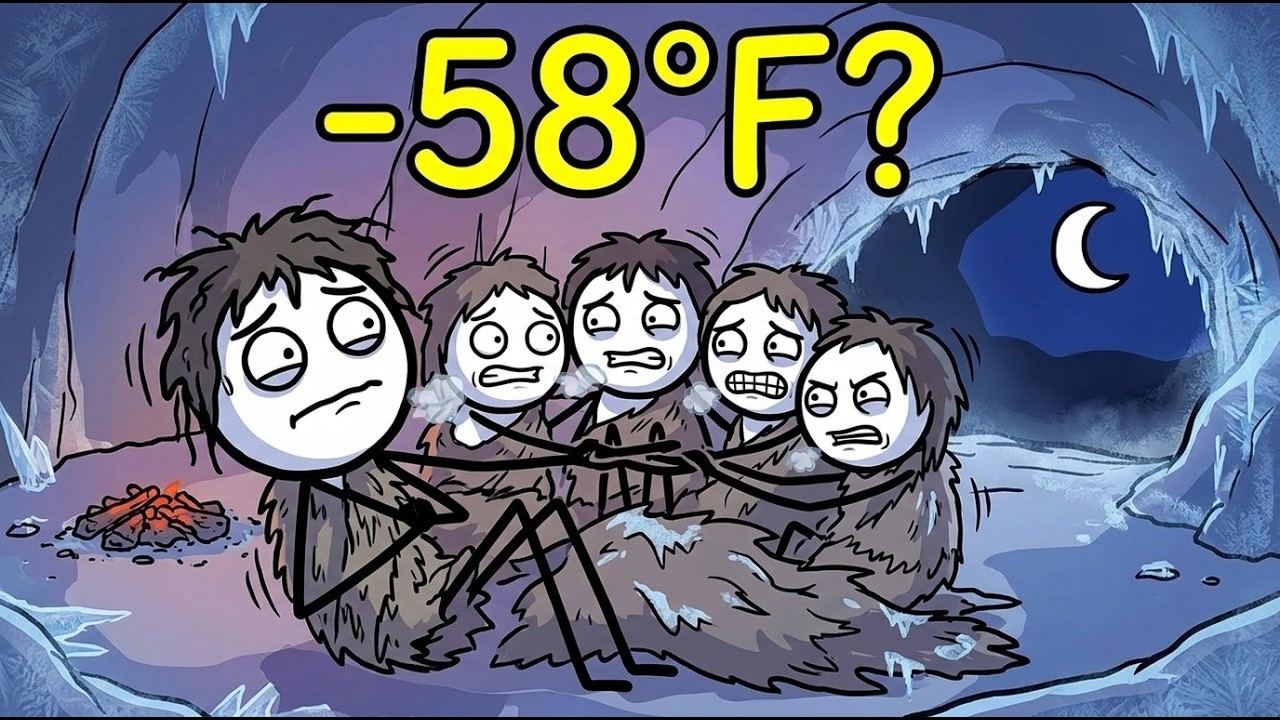 The sheer scale of the challenge is almost incomprehensible to the modern mind. During the last glacial maximum, roughly 20,000 years ago, average global temperatures were a staggering 6°C colder than today, a shift that transformed a bustling metropolis like London into a landscape buried under a kilometer of solid ice. Massive ice sheets, stretching for thousands of kilometers, blanketed large portions of North America, Europe, and Asia, while sea levels dropped by an astonishing 120 meters, connecting landmasses that are now separated by vast oceans.
Britain was physically attached to continental Europe, and a now-submerged plain called Beringia served as a land bridge between Siberia and Alaska, allowing ancient humans to walk across territories that are now deep beneath the waves. In the unglaciated regions where human populations actually lived, winter temperatures would plunge to levels that modern adventurers, armed with high-tech gear and synthetic fabrics, would genuinely struggle to survive for more than a week. This was a world of extremes, a frozen frontier teeming with life, where woolly mammoths, cave bears, and cave lions larger than modern African predators roamed, serving as both the greatest threat and the most critical resource for the humans who dared to share their territory.
The first and most fundamental tool in the ancient human arsenal against this frozen apocalypse was fire, a technology so transformative that its mastery is considered a pivotal turning point in our evolutionary history. Humans have been controlling fire for somewhere between 400,000 and 1 million years, with evidence from Wonderwerk Cave in South Africa suggesting controlled use dating back roughly a million years. By the time the Ice Age winters became a serious survival challenge, fire was not a new invention but an ancient, deeply understood, and absolutely central pillar of human society.
However, the popular perception of fire as merely a source of warmth grossly underestimates its true significance; it was a complete survival system, performing a multitude of critical jobs simultaneously. It cooked food, which dramatically increased the bioavailability of calories, allowing our ancestors to extract significantly more usable energy from the same amount of food. This culinary revolution, as argued compellingly by evolutionary biologist Richard Wrangham, is literally what allowed the human brain to grow as large as it did, as we traded gut tissue for brain tissue by outsourcing the work of digestion to the flame.
Fire was not just a comfort; it was the engine of human intelligence itself.
Beyond its role in nutrition, fire was a critical defense mechanism against the terrifying predators that stalked the Ice Age night. A roaring fire was a reliable bodyguard against a 300-kilogram cave lion, an animal that had no reason to fear a comparatively weak, furless ape. Predators instinctively avoid fire, and the presence of a controlled blaze allowed exhausted humans to sleep, a non-negotiable requirement for survival.
In a world where winter darkness could stretch for 16 hours a day, fire provided essential light, enabling social gathering, storytelling, and the transfer of knowledge that was critical for group cohesion and psychological resilience. It dried wet clothing, a crucial function in frozen conditions where dampness could quickly lead to hypothermia, and it heated enclosed spaces like caves and shelters to temperatures the human body could actually function in. The knowledge of fire maintenance and starting was so valuable that the person responsible for keeping the communal flame alive, the firekeeper, may have been the most important member of the group, more vital than the strongest hunter or the most skilled toolmaker, for losing the fire in a blizzard was a potential death sentence for everyone.
 The popular image of ancient humans as simple cave-dwellers who took refuge in any convenient hole in the ground is a vast oversimplification of their sophisticated approach to shelter. While caves were indeed used and provided excellent natural protection, maintaining a stable internal temperature of around 10 to 13°C year-round, they were not always conveniently located. When resources moved and people followed, ancient humans did not simply sit in the snow; they built.
Archaeological evidence from sites across Europe and Asia reveals that caves used as shelters were not just occupied but deliberately organized, with stone-lined fire pits positioned to maximize heat distribution, designated sleeping areas, separate zones for tool making and food preparation, and even evidence of storage areas. This was not an animal taking refuge but a planned, deliberate use of space, an interior design for survival. In the absence of natural shelters, they constructed remarkable dwellings from the most unlikely materials, most famously the mammoth bone houses of Eastern Europe.
At the site of Mezhyrich in Ukraine, dating back roughly 15,000 years, archaeologists have uncovered circular structures built almost entirely from the bones and tusks of woolly mammoths, a feat of prehistoric engineering that defies modern imagination. These structures, constructed from hundreds of individual femurs, shoulder blades, jawbones, and vertebrae, were carefully interlocked and stacked to form walls, then covered with animal hides stretched tightly over the frame to create a windproof and reasonably waterproof living space. This was not a simple collection of random bones; it was architecture, requiring the sourcing of specific bones for specific structural purposes and their transportation to a chosen site.
Some of these structures required remains from over 150 individual mammoths, representing a staggering level of resource organization and collective planning. Inside these bone-built homes, evidence of hearths, decorated objects, and food processing suggests they were genuine homes where people lived, cooked, made tools, raised children, and waited out the long northern winters together, a testament to human ingenuity in the face of an unforgiving environment.
The romanticized notion of the lone survivor, the solitary hero battling the elements, is a modern myth that would have been a death sentence in the Ice Age. Ancient humans survived not through individual heroism but through the absolute opposite: intense, carefully maintained social cooperation. Hunter-gatherer bands typically ranged from 20 to 50 individuals, but these core groups were connected to broader social networks spanning hundreds or even thousands of people across a wider territory.
These were not casual social arrangements but survival infrastructure, deliberately maintained and understood by all. In winter, when resources were scarce and the margin for error was zero, you needed specialists. You needed the person who knew exactly how to butcher a large animal to extract maximum caloric yield from every part, the person who knew which plants still had nutritious roots under a meter of snow, and the elder who could remember the winter 15 years ago and knew which valley still harbored deer when everywhere else was empty.
 The winter months were likely the primary time for knowledge transfer, with stories told around the fire serving not as mere entertainment but as education, packaging the accumulated survival knowledge of generations into memorable narratives. The old woman who knew every plant in a 100-kilometer radius was not a burden; she was a library, an irreplaceable repository of life-saving information.
Biologically, modern humans are naked apes, with almost no body hair compared to other primates, making us extraordinarily vulnerable to cold. In sub-zero temperatures without insulation, an unclothed human loses body heat faster than it can be generated and dies of hypothermia within hours. The fact that we exist today is almost entirely due to the invention of clothing, a technology so fundamental that its origins are traced through the evolutionary divergence of head lice and body lice, which occurred approximately 170,000 years ago, marking the earliest indication that humans were regularly covering themselves.
By the Upper Paleolithic period, roughly 40,000 to 10,000 years ago, clothing technology had advanced to an extraordinary level of sophistication. Bone needles recovered from sites across Europe and Siberia are so fine and precisely crafted that modern researchers attempting to replicate them using period-appropriate tools have found it genuinely difficult. The Sunghir burial site in Russia, dating to approximately 34,000 years ago, provides the most vivid evidence, with two children buried wearing garments adorned with thousands of individually carved ivory beads.
Reconstruction of these garments suggests a layered system—a close-fitting inner layer for moisture management, a middle insulating layer for warmth, and an outer layer of tougher hide for wind and water resistance—a system almost identical to what modern mountaineering guides recommend today, arrived at through pure empirical trial and error over generations.
The caloric math of winter survival was merciless, and ancient humans understood this at a gut level. Staying warm in genuinely cold conditions burns an enormous number of calories, with the basal metabolic rate increasing by 50% or more in extreme cold. This is why fat was the supreme currency of Ice Age nutrition, being more than twice as energy-dense as protein or carbohydrates and precisely what the body burns to generate heat.
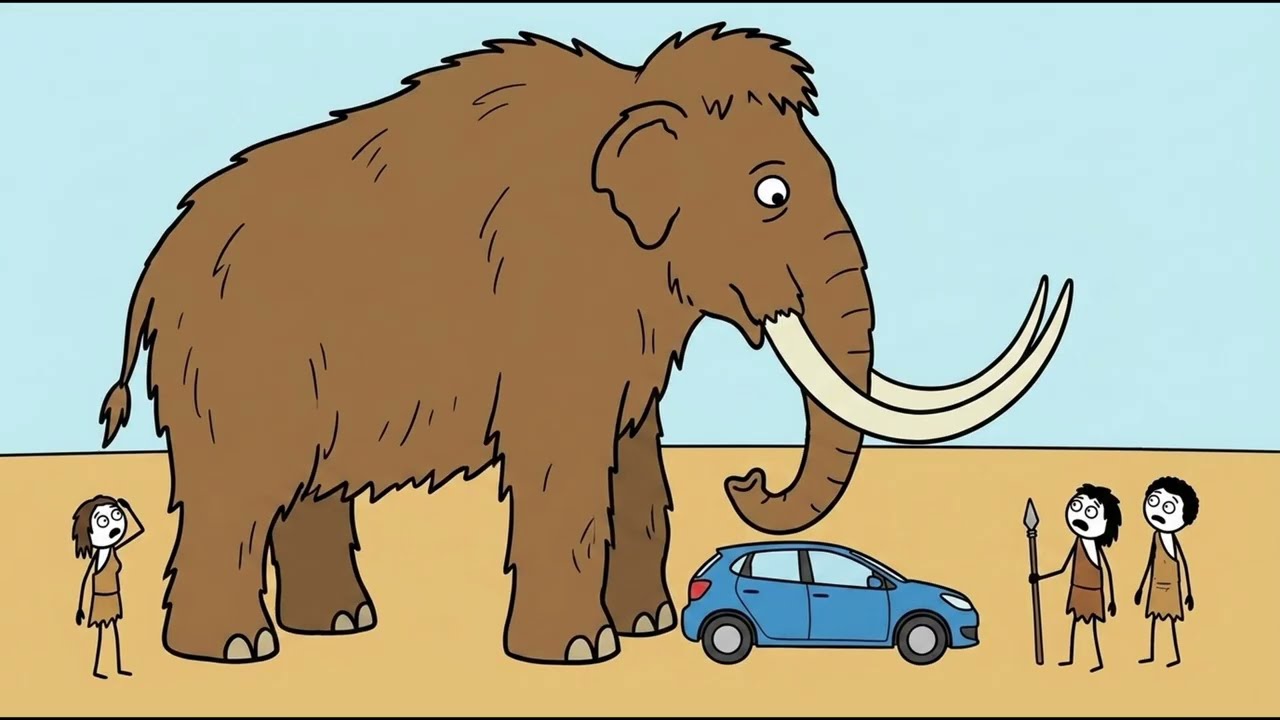
This is why large Ice Age megafauna were so critical to human survival; a single adult woolly mammoth could theoretically provide around half a million calories, enough to sustain a group of 25 people for several weeks. However, hunting a mammoth was a dangerous proposition, requiring coordinated group hunts that involved driving animals into boggy ground, ambushing them at river crossings, and using fire and noise to direct panicked animals toward prepared 𝓀𝒾𝓁𝓁 sites. Once the animal was down, the challenge of storage was solved by the environment itself, as ancient humans dug food caches directly into the permafrost, using the earth’s natural deep freeze to store meat for weeks or months.
 They also developed preservation methods like drying meat over fires and making pemmican, a calorie-dense mixture of dried meat, rendered fat, and berries that could last months without spoiling, ensuring survival through the lean winter months.
Not every ancient human community tried to tough out the winter in place; many simply left, engaging in strategic seasonal migration to follow the resources they depended on. Reindeer herds migrate hundreds of kilometers between summer and winter ranges, and human communities followed, moving from upland areas in the summer to sheltered river valleys in the winter, which provided natural protection from the worst winds and accumulated game animals seeking lower ground. What makes these migration patterns particularly impressive is that they were clearly not improvised.
Analysis of stone tools from various sites shows specific types of rock being transported over distances of hundreds of kilometers, indicating that people were moving regularly between known locations along established routes. They had mental maps of landscapes spanning hundreds of kilometers, knew the routes, the seasonal patterns, and how long each journey would take. This was not wandering; it was strategic annual movement based on accumulated generational knowledge of a vast and intimately understood landscape, a testament to the human capacity for long-term planning and foresight.
All of these survival strategies—fire, shelter, clothing, food, and migration—share a common root: the extraordinary human ability to think about the future, model problems before they happen, and invent solutions to challenges we have never faced personally. No other animal on Earth does this at anything approaching the human level. A bison does not decide to move south earlier because it anticipates a brutal winter, but an ancient human absolutely did and then communicated that decision to the rest of the group in complex language.
The cave paintings of Lascaux, Chauvet, and Altamira, dating from roughly 40,000 to 17,000 years ago, are often discussed as evidence of art and symbolic thinking, but they may also have functioned as sophisticated visual databases, recording the animals in the local environment, their seasonal presence, and their behavioral patterns. Art as survival technology, information storage on the most permanent medium available. The psychological dimension of winter survival was also critical, as long winters in confined spaces with limited food could lead to social fragmentation and internal conflict.
Ancient human communities cultivated group cohesion through ritual, shared ceremony, and music, with bone flutes dating back 40,000 years found at various sites, demonstrating a deliberate effort to maintain morale and psychological resilience through the darkest months.
These were not people who were merely coping with their environment; they were actively managing it, managing the landscape through controlled burning, managing animal populations through selective hunting, and managing their own psychology through culture and ritual. The human relationship with winter was not passive endurance but active, intelligent, collective problem-solving at a scale and sophistication that we consistently underestimate. We traded all of that for central heating, supermarkets, and the ability to order soup from our phones at midnight, which is, on balance, a tremendous trade.
But as we sit in our climate-controlled homes, it is worth remembering that the comfort we enjoy is built on the ingenuity, resilience, and sheer will to survive of our ancient ancestors, who faced the brutal reality of the Ice Age with nothing but their wits, their cooperation, and an unyielding determination to see the spring. Their story is not just a chapter in the history of our species; it is the very foundation of our modern existence, a reminder that the human spirit is capable of overcoming even the most daunting challenges when we work together and apply the power of our collective intelligence.


