A single mosquito buzzing near the ear at night may seem like a minor annoyance today, but for ancient humans, it represented a survival challenge that shaped where they lived, how they slept, and what they knew about the natural world. Long before chemical repellents and window screens, people had to find ways to protect themselves from an insect that tracks its prey through carbon dioxide, body heat, and skin odor. The most basic ancient defense was fire, not because mosquitoes feared flames, but because smoke disrupted their ability to locate a target. Smoke particles mask the chemical signals that draw mosquitoes to warm-blooded bodies, effectively turning a campfire into camouflage.
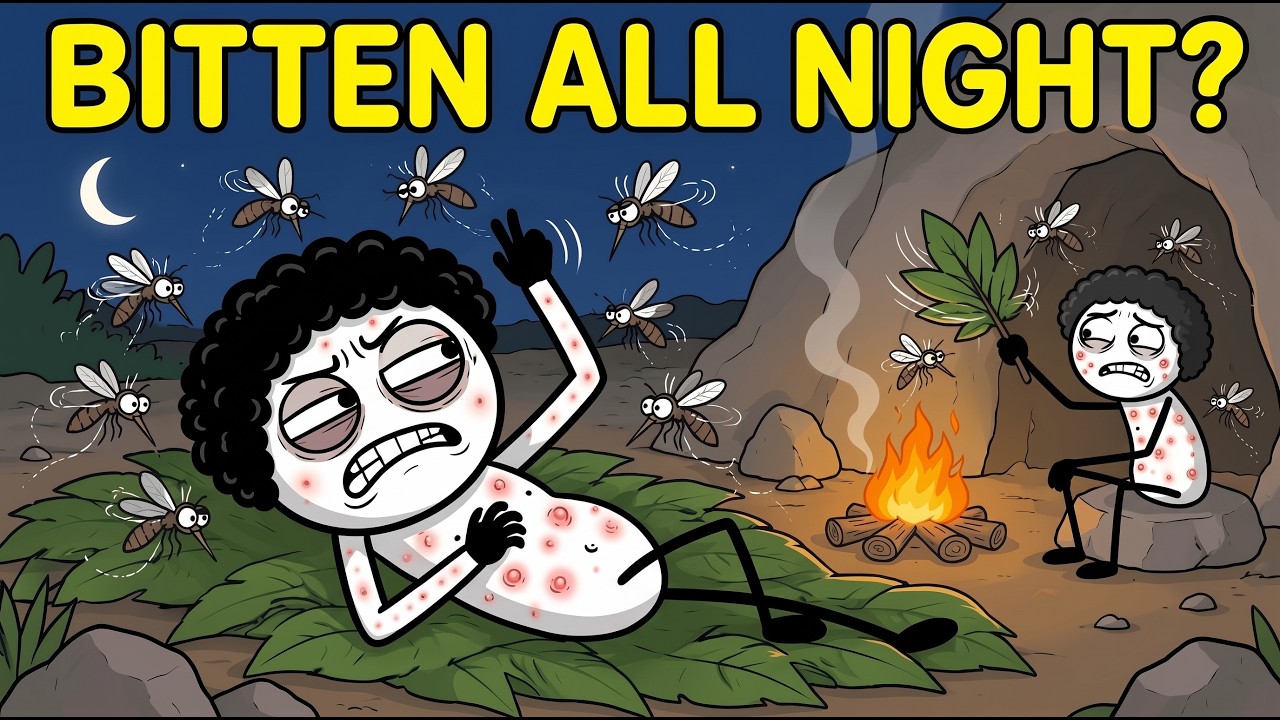
People noticed that sitting close to smoke reduced bites, even if they did not understand the sensory science behind it. A second layer of protection came from covering the skin. Traditional societies used mud, ash, oils, and crushed plants to change their natural scent profile. This practice mirrors behaviors seen in other animals, such as elephants coating themselves in dust or buffalo wallowing in mud, which helps reduce irritation from biting insects.
Plants also played a major role in early mosquito defense. Certain species, including those we now know contain repellent compounds, were burned for smoke or rubbed on the skin. Communities learned through trial and error which plants worked best, and that knowledge was passed down through habit and tradition rather than written records. Location and timing were equally important.
Mosquitoes breed in still water, so ancient people learned to avoid camping near marshes and seasonal pools. They chose windy ridges, elevated sleeping platforms, and open areas. They also observed that biting activity peaked at dusk and dawn, allowing them to adjust their routines accordingly. One of the most notable ancient inventions was the mosquito net.
The Greek historian Herodotus described people in Egypt using fishing nets by day and hanging them around beds at night for protection. The net did not mask the human scent, but it blocked the mosquito’s final approach, preventing the landing that is required for a bite. Architecture also evolved in response to insect pressure. Raised sleeping areas, smoky hearths, and woven door coverings all helped reduce contact with mosquitoes.
These small design choices functioned as layered defenses, each one imperfect on its own but effective when combined with others. Mosquito protection was not just individual; it was communal. Groups shared knowledge about dangerous locations, useful plants, and seasonal risks. Because humans lack thick fur and natural insect repellents, social memory became a survival tool that allowed one person’s painful experience to protect future generations.
The health stakes were significant. Mosquitoes carry diseases that have affected humans for thousands of years. Scientists have detected traces of malaria parasites in the mummified remains of the Egyptian pharaoh Tutankhamun, who reigned from 1333 to 1323 BCE. Ancient people could not identify the cause of the fevers that followed mosquito bites, but they connected wet places with sickness through pattern recognition.
Research discussed by the Natural History Museum has suggested that malaria may have influenced early human habitat choices between 74,000 and 5,000 years ago, pushing groups away from high-risk environments. If accurate, this means mosquitoes shaped not only bedtime habits but also the movement of human populations across landscapes. It is worth noting that only female mosquitoes take blood meals, as blood provides nutrients needed for egg production. From the insect’s perspective, a sleeping human is simply a food source, part of a food chain that does not always depend on size.
Ancient humans survived by accepting their position in that chain. They did not rely on a single perfect solution. Instead, they stacked small advantages, smoke, distance, coverings, nets, architecture, timing, and shared knowledge, to reduce contact with mosquitoes. This approach worked because survival in nature is statistical rather than absolute.
The result was that mosquitoes, weighing no more than a raindrop, influenced human settlement patterns, sleeping arrangements, plant knowledge, and cultural traditions. The battle against the insect helped teach early humans to observe their environment closely and to adapt their behavior accordingly. Modern science has since identified the specific species, diseases, and chemical repellents involved in mosquito control. But the foundational strategy remains the same as it was thousands of years ago: watch, remember, block, mask, move, burn, cover, and share the lesson.
When a person closes a window or moves away from standing water today, they are continuing a survival practice that predates civilization itself.