Ancient humans faced a brutal daily calculation: how to get the most calories and survival value from the animals around them. When they weighed the options, cattle, goats, and sheep won the role of primary dairy providers, while the donkey was assigned a different job entirely. The reason was not taste or ignorance, but a combination of biology, chemistry, yield, and economics that made donkey milk a poor staple food for settlements. Donkey milk is, in several ways, remarkably similar to human milk.
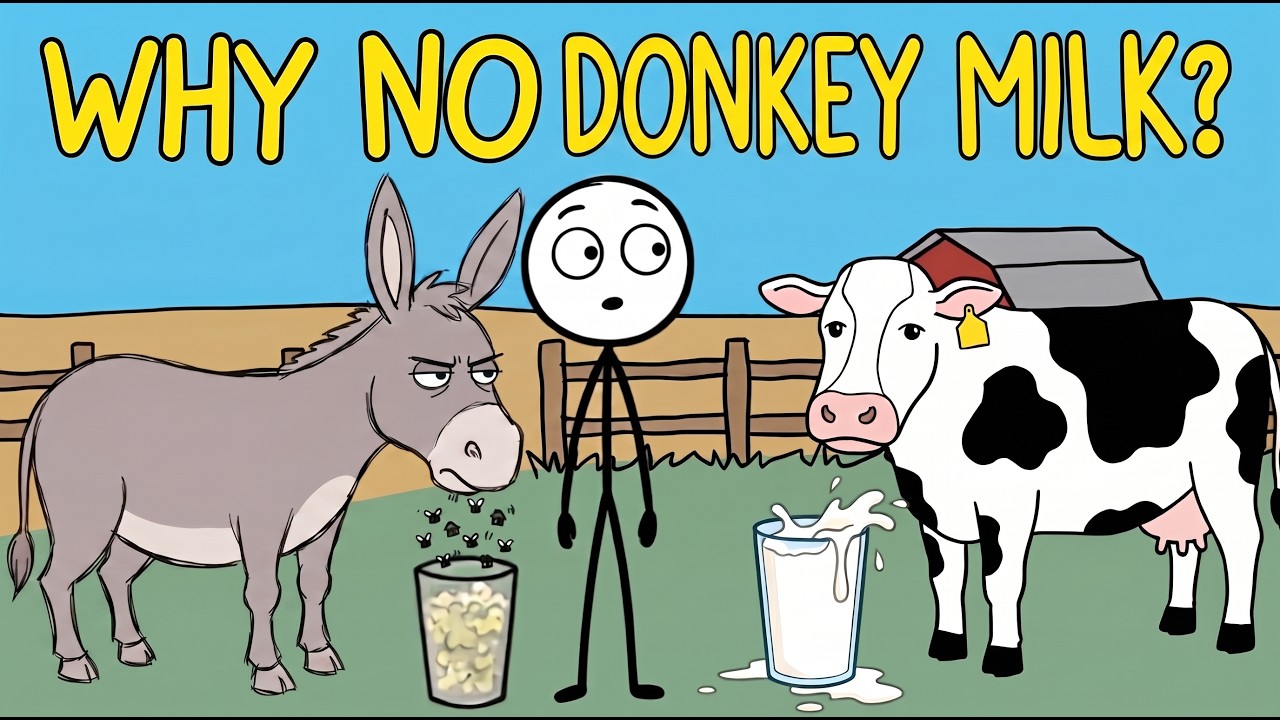
It is sweet, light, and lower in fat and protein than cow milk, with a less heavy casein profile. Historically, it was used as a special food for children and the sick in some regions. This apparent advantage makes the question of its historical neglect even more puzzling. The central problem was yield.
A cow produces a large volume of milk, and goats and sheep provide practical, useful amounts for a family. Donkeys, however, produce very little. In specialized modern systems, individual yields are often only around one to two kilograms per day. In the Stone Age, without proper facilities or calm milking routines, the return on labor was minuscule.
Controlling a nervous animal for hours to get a tiny bowl of milk was a poor survival strategy. Another crucial factor was the donkey’s primary value. Donkeys are not weak; they are survival machines built for endurance. They can carry heavy loads, cross dry landscapes, and survive on rough plants where cattle struggle.
For an ancient village, a donkey was more valuable as transport than as a milk source. Using it for milk meant losing its power to move water, grain, wood, and trade goods—assets that could secure the tribe’s future. Milk chemistry also played a decisive role. Cow, goat, and sheep milk are thick with fat and protein, making them ideal for transformation into butter, cheese, and fermented foods that could be stored for winter.
Donkey milk, with a typical composition of about 1. 57% protein, 1. 16% fat, and 6. 33% lactose, is too light for this purpose.
It contains less casein, which is essential for forming curds, meaning it does not convert well into dense, storable cheese. Ancient life rewarded foods that could be preserved, not delicate drinks that spoiled quickly. The behavior of donkeys created further obstacles. They are intelligent, cautious, and independent, unlike cows or goats that can be more easily trained for milking.
A stressed donkey may not let down milk easily, and the milk is primarily intended for its foal. This made the daily process of milking a donkey a difficult and often unrewarding task compared with other domesticated animals. The issue of lactose also limited its appeal. Donkey milk is high in lactose, which makes it sweet, but many early adult humans could not digest lactose well.
Fermentation and cheese-making helped reduce lactose in cow, goat, and sheep milk, making those products more digestible. Because donkey milk was harder to turn into such fermented foods, it remained trapped as a less usable option for many adults. Over time, humans actively shaped their animals. Cattle, goats, and sheep were selectively bred for calm temperaments and higher milk yields, becoming increasingly dairy-focused.
Donkeys, however, were selected for strength, endurance, and sure-footedness, widening the gap between them and other livestock. Small initial choices eventually became culinary traditions, cultural norms, and entire industries. The final irony is that donkey milk may be one of the most human-like animal milks. It was not rejected because it was disgusting or useless.
It was limited because it was rare, difficult to produce in volume, and hard to store. While a cow could feed many people and a goat could survive almost anywhere while giving milk, the donkey’s superpower was movement. It carried civilization on its back, but it could not pour civilization into a cup.
Ancient humans did not choose the nicest milk; they chose the milk that could scale, store, and see them through the winter.