Jaclyn Smith still signs that iconic red swimsuit photograph almost every single day. But when the last surviving original Charlie’s Angel looks back on her friendship with Farrah Fawcett, the image she carries is not the famous poster or a scene from the hit TV show—it is a hospital room near the very end, where Fawcett was in so much pain she could not lie still, and the only thing that helped was Smith quietly rubbing her feet for hours while the two talked about their children and growing up in Texas. Smith, now 80, is the only original angel still willing to tell that story in full. What she reveals about those final days, she says, says more about real friendship than anything that ever aired on network television.
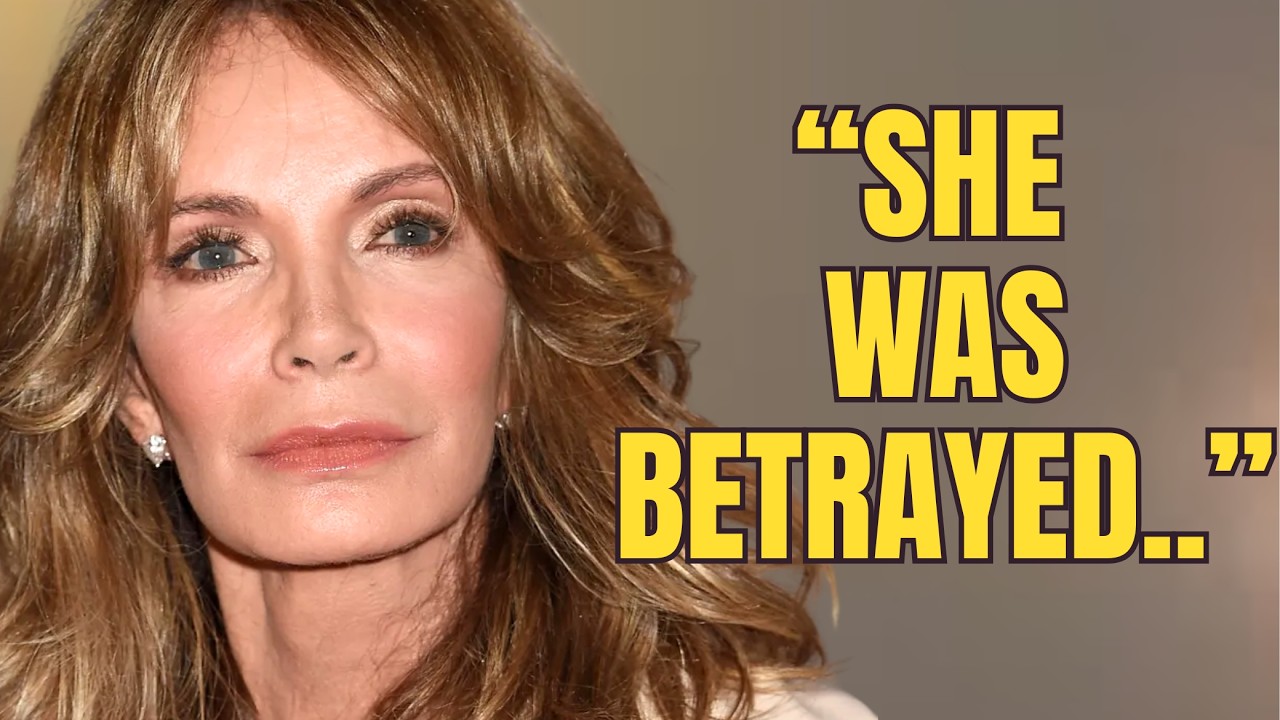
Jaclyn Ellen Smith was born on October 26, 1945, in Houston, Texas. She studied psychology and drama at Trinity University before dropping out to chase a different dream in New York City, where she trained at the School of American Ballet. That did not stick either. Modeling and print ads came next, along with small, often uncredited roles in films like “Goodbye Columbus” in 1969.
The break, when it finally came, was not glamorous at first. A hair commercial caught the attention of television producer Glen Larson, who cast her in the detective series “Most Wanted. ”
“Hair got me my first acting job,” Smith has said decades later. “Somebody saw the commercial, Glen Larson, and said, ‘Hey, you’re going to be starring in Most Wanted.
‘ I thought, ‘This is going to be fun. ‘”
Then in 1976, a pilot script landed on her desk for a new ABC series about three women working as private detectives for an unseen boss named Charlie. Smith read for the role of Kelly Garrett. Joining her were Kate Jackson and a relatively unknown actress and former poster model named Farrah Fawcett.
None of them, by Smith’s own account, walked in thinking they were about to become the most photographed women in America. “I don’t think we did,” she said, looking back. “We were having fun. We were like college roommates.
We didn’t want to work the 18-hour days. ”
“Charlie’s Angels” tested through the roof before it ever aired. Once it hit the air in September 1976, it became an instant phenomenon, turning all three actresses into celebrities overnight. Kate Jackson, despite playing the team’s more serious member on screen, was, according to Smith, very much the real-life boss of the group off camera too.
Smith has told a story from the set that captures the dynamic perfectly. The three were scheduled for a Time magazine photo shoot during their lunch break. When Kate flatly refused to give up the hour, she marched the group into her trailer and locked the door behind them, joking that it was jammed and someone would have to cut a hole in the roof and hand them a hammer to get out. They eventually did the shoot anyway.
Farrah Fawcett, born Mary Farrah Leni Fawcett on February 2, 1947, in Corpus Christi, Texas, had already lived an entire chapter of struggle before “Charlie’s Angels” found her. She had been voted most beautiful all four years of high school, dropped out of the University of Texas at 18 to chase acting in Los Angeles, and spent years doing shampoo commercials while casting directors passed her over again and again. Her 1976 red swimsuit poster, shot almost by accident to help promote the new series, went on to sell more than 12 million copies, becoming the bestselling poster in American history. “It should have been Farrah in the bathing suit,” Smith has admitted, referring to the fact that the image most associated with Fawcett was originally meant to feature someone else.
Fame arrived for all three women at once, and it arrived enormous. They were paid a fraction of what the show earned, worked brutal hours, and became the kind of celebrities who needed round-the-clock security. “We had laughs. We had so many laughs,” Smith said in one interview, remembering silly details like being handcuffed together for an action scene or eating lunch together between takes.
“It was an education and it was eye-opening because each girl was so unique with her own personality and style. And these are my friends today. That bond is what I really remember. ”
The fashion on the show became just as much a phenomenon as the plots themselves—a trend Smith would later credit as the spark that led her into building her own fashion label.
But Fawcett wanted something the show was not built to give her. She wanted to be taken seriously as an actress, not just celebrated as a poster. After only one season, she left “Charlie’s Angels” to chase film roles—a decision that shocked the industry, cost her a lucrative contract, and triggered a bitter public lawsuit from the studio. Smith, watching a friend walk away from the biggest phenomenon in television, never treated it as a betrayal.
“When Farrah decided to leave after one season, we all supported her,” she said years later. “She wasn’t afraid to say, ‘This is what I’m going to do. ‘ She marched to her own drum. ”
Smith stayed.
She remained with “Charlie’s Angels” for its entire five-season run, the only member of the original trio to do so, watching Fawcett and later Kate Jackson cycle out while new angels came and went. Both women, it turned out, were navigating remarkably similar storms in their personal lives. Smith’s own marriages were far from the fairy tale her public image suggested. After her first marriage to Roger Davis ended in 1975, she married actor Dennis Cole in 1978, a relationship that collapsed just three years later amid struggles with drugs and alcohol and ultimately infidelity.
Her third marriage to cinematographer Tony Richmond brought her two children, Gaston and Spencer, but it too ended in a costly custody settlement in 1989. Fawcett was living through her own version of the same turbulence—a headline-making marriage to Lee Majors that dissolved, and decades of an on-again, off-again relationship with actor Ryan O’Neal that brought her a son, Redmond. In 1997, film director James Orr assaulted Fawcett during an argument, an attack serious enough that he was later arrested and convicted. Fawcett testified about it publicly at a time when very few actresses were willing to speak up about violence from powerful men in the industry.
One of the moments Smith returns to most fondly was not from a soundstage at all. When her son Gaston was born in 1982, Fawcett was the very first friend to show up at the hospital. “The first one, first girlfriend to visit,” Smith recalled. “She said some funny things, and Ryan was waiting downstairs.
She wanted it just to be us. ”
Everything changed in September 2006 when Fawcett was diagnosed with anal cancer. Smith remembers with striking clarity the exact moment her friend told her. “She said, ‘I always thought I might get breast cancer or heart disease, but never this,'” Smith recalled.
“And she started to cry. I never saw her cry after that. ”
From that day forward, Fawcett fought her illness the way she had once fought the studio system—on her own terms, refusing to be defined by fear, and eventually opening up her private battle to the entire world through the documentary “Farrah’s Story,” which nearly 9 million people watched when it aired in 2009. “Who would have dreamed,” Smith later marveled, “that this girl who was known for the smile and the hair and the glamour would open up the depths of her soul to share with the world?
”
As the cancer progressed and spread to Fawcett’s liver, the friendship between the two women only deepened. Smith has described visiting her near the very end when the pain had become so constant that Fawcett could barely stay still in bed. “She was in pain and couldn’t stay still,” Smith said. “I was rubbing her feet, trying to make her feel better, and that relaxed her.
We must have talked for 3 hours about our lives, about our children, about growing up in Texas. ”
It was not a conversation about “Charlie’s Angels” or fame. It was two old friends from Texas talking the way old friends do while one quietly rubbed the other’s feet to ease a pain neither of them could fix. “The time I spent with Farrah at the end,” Smith has said, “was the best because we appreciated the friendship.
”
Even in those final months, Smith says her friend never lost the qualities that made her who she was. “Farrah never lost her humor and never lost her hope and never was ‘poor me,'” Smith told one interviewer. “She did say, ‘I never thought this would happen to me. ‘ But she never gave up.
”
Farrah Fawcett died on June 25, 2009, at St. John’s Health Center in Santa Monica, surrounded by Ryan O’Neal and her closest friends. She was 62 years old. Her son Redmond, who had struggled with addiction for years and was in prison at the time of her final decline, was granted permission to visit her near the end, though by then she was so heavily medicated for pain that she barely recognized him.
For Smith, the loss was devastating, but it did not erase what the two had built over more than three decades. In the years since, Smith has continued showing up at the Farrah Fawcett Foundation’s fundraising events, keeping the memory and the mission of her friend alive. “I saw the best of Farrah at the end,” Smith said in one interview years after the funeral. “I saw a person that just fought for life and fought to be here for her family, her loved ones.
”
When asked even a full decade later what she misses most, her answer has never needed much embellishing. “Oh, I miss the friendship,” she said simply. “She was a loyal friend to girlfriends and you only have on one hand those kind that go the distance with you and share history. We were family girls.
”
Long after “Charlie’s Angels” ended in 1981, Smith kept working steadily. She played Jacqueline Kennedy in a television movie, appeared in more than 50 television films across four decades, and returned for a cameo in the 2003 feature film “Charlie’s Angels: Full Throttle. ”
But her most surprising second act had nothing to do with acting at all. In the early 1980s, she launched a clothing line with Kmart that would go on to be worn by more than 100 million women, later expanding into skin care, home furnishings, and fragrance, and eventually moving her fashion label to Sears, where it remains today more than three decades after it began.
“Charlie’s Angels” made both women famous almost overnight, turned them into pop culture symbols whose faces sold lunchboxes and posters by the millions, and then just as quickly sent them down very different paths—one who stayed for all five seasons and one who walked away after just one. What never changed, through marriages that fell apart, through custody battles and public scandals, and a cancer diagnosis that eventually took her friend far too soon, was the bond between two women from Texas who found each other on a studio lot in 1976 and simply never let go. Smith still signs that iconic bathing suit photo almost every single day of her life. But if you ask her what she actually remembers when she thinks back on those years, it was never really about the swimsuit at all.
It was the girls. It was the friendship. It was three hours in a hospital room near the end, rubbing a dying friend’s feet and finding even then something worth appreciating in all of it.


