For five consecutive years, from 1978 to 1982, Burt Reynolds was the most bankable star in Hollywood—the mustached outlaw who drove a black Trans Am, performed his own stunts, and grinned his way through box office dominance. But by the time he reached his mid-70s, the reality behind that grin told a very different story. Reynolds spent his final years battling severe heart disease, chronic pain, addiction, financial collapse, and a loneliness he refused to acknowledge in public. He laughed off questions about his frailty, insisted he was fine, and worked relentlessly to protect the image of invincibility he had spent six decades building.
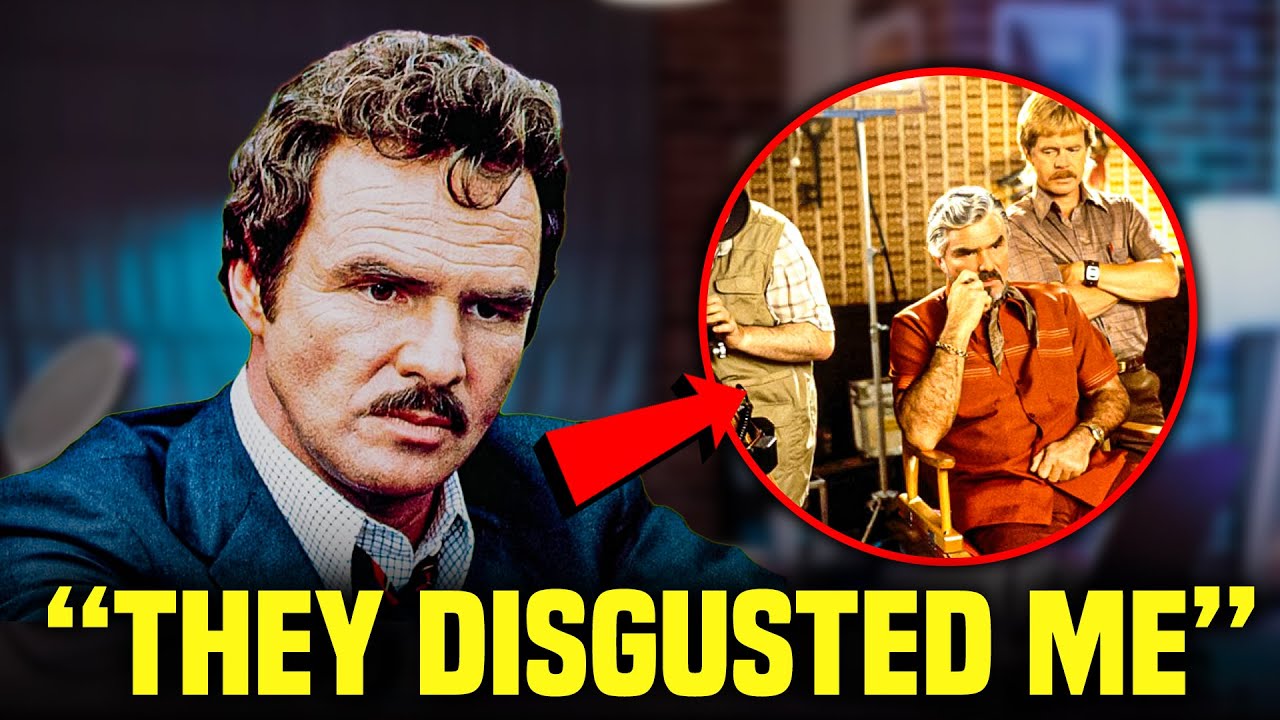
In February 2010, at age 75, Reynolds underwent quintuple bypass surgery in Florida. His health had been quietly crumbling for years. Decades of performing dangerous stunts had left him with crippling arthritis, and a 1984 accident on the set of *City Heat*—when he was struck in the face and shattered his jaw—never fully healed. The old injury required multiple surgeries and left him in constant pain, which he managed with prescription painkillers that eventually became a dependency.
His weight loss became so dramatic by 2015 that tabloid covers speculated about his imminent death. Friends recalled how he would flash that mischievous grin and insist he was fine whenever anyone expressed concern. But behind closed doors, he was frail, tired, and struggling just to get out of bed. Reynolds had built his career on toughness—the stunt man, the football player, the outlaw.
Admitting weakness, he believed, would mean admitting defeat. So he buried the truth, hiding a body that was fading fast. His finances were another secret he worked hard to bury. Despite earning more than $10 million annually at his peak and commanding $1 million per film in the late 1970s, Reynolds filed for Chapter 11 bankruptcy in 1996.
He reported debts exceeding $10 million against assets far smaller. Lavish spending had drained his fortune. He bought dozens of luxury cars, including multiple Pontiac Trans Ams. He built a sprawling Florida ranch in Jupiter, purchased properties in California, and filled them with expensive memorabilia.
He showered friends and lovers with Cadillacs, jewelry, and art. But the biggest losses came from bad real estate deals in Florida during the 1980s, when property values collapsed and left him millions underwater. His personal life deepened the strain. Reynolds divorced actress Judy Carne in 1965 and later Loni Anderson in 1993, a bitter split that included a costly settlement.
By the late 1990s, he was forced to sell his beloved Florida ranch and auction off memorabilia, including one of the *Smokey and the Bandit* Trans Ams, to cover debts. By the time of his death in September 2018, his estate was valued at around $5 million—a fraction of what he had once commanded. But health and money were only part of the story. Perhaps the most painful secrets Reynolds carried concerned the roles he didn’t take.
He famously declined the chance to play James Bond after Sean Connery stepped away in 1971, saying audiences wouldn’t accept an American 007. He also passed on Han Solo in *Star Wars* (1977), a part that turned Harrison Ford into a global icon, and turned down a role in *One Flew Over the Cuckoo’s Nest* (1975), which won Jack Nicholson an Oscar. Each refusal seemed small at the time. By the 1980s, their weight became clear.
As younger actors rose, Reynolds’s career began to falter, and he never regained the dominance of his prime. In interviews during the 1990s and 2000s, he confessed that those missed roles hurt more than anything else. Even near the end, in 2017, he admitted the biggest heartbreak of his career wasn’t what he did—but what he didn’t do. If career regrets gnawed at him privately, the pain in his personal life was even deeper.
Beginning in 1977, Reynolds dated actress Sally Field, and their on-screen chemistry in *Smokey and the Bandit* carried into an off-screen romance. They worked together in *Hooper* (1978) and *The End* (1978), and fans believed they were Hollywood’s golden couple. But the relationship was turbulent, strained by career pressures and insecurities. They split in 1982, a decision Reynolds later described as the biggest mistake of his life.
He went on to marry Loni Anderson in 1988, but that marriage ended in a bitter 1993 divorce. Field remained the one who got away. In his 2015 memoir, *But Enough About Me*, Reynolds finally confessed that she was the love of his life. In interviews as late as 2017, just a year before his death, he repeated the sentiment, saying he still thought of her constantly.
Friends later revealed that on his deathbed in September 2018, Reynolds mentioned Field’s name more than once. Field, in her own 2018 memoir *In Pieces*, described the relationship as complicated, often overshadowed by Reynolds’s controlling nature, but acknowledged his love was real, even if flawed. Behind the mustache, the cars, and the charisma, Reynolds also fought the war of addiction he rarely admitted publicly. After the 1984 *City Heat* accident, the painkillers prescribed for his shattered jaw became a dependency that plagued him for decades.
From 1985 to 1995, his once athletic frame withered. At its lowest point, his weight dropped to 120 pounds, alarming fans and feeding rumors of cancer. He brushed off the speculation, insisting on *The Tonight Show* and other programs that he was fine. By the early 2000s, Reynolds quietly entered rehab, away from cameras.
When he did address it publicly, such as in a 2003 *People* magazine interview, he minimized the severity, framing it as just another hurdle. Insiders knew the truth: dependency had nearly destroyed his career and his health. As health and money problems mounted, his personal life grew increasingly lonely. After two divorces, Reynolds never remarried.
His adopted son, Quinton, was at the center of bitter custody battles during the 1993 divorce from Anderson, and their relationship suffered. For years, they remained estranged, with Quinton choosing to live with his mother. Rebuilding trust was slow, and the distance lasted well into the 2000s. In his later years, Reynolds lived quietly in Florida, surrounded not by family but by a small circle of loyal friends and staff.
In interviews in 2015 and 2017, he admitted loneliness, though he cloaked it in humor. “I’ve made a lot of dumb mistakes,” he said, hinting at regrets without fully confessing the pain. His greatest fear, friends said, was not death. It was being remembered as a man who had everything but ended up alone.
Loneliness fueled one last dream: a Hollywood comeback. In 2018, director Quentin Tarantino cast the 82-year-old Reynolds in *Once Upon a Time in Hollywood*, in the role of George Spahn, the elderly ranch owner whose property became the infamous home of the Manson family in 1969. Reynolds attended a table read in June 2018 with Leonardo DiCaprio, Brad Pitt, and Margot Robbie. Insiders said he was thrilled, believing this was his chance to go out swinging.
But fate intervened. On September 6, 2018, Reynolds died of a heart attack in Jupiter, Florida, just days before he was scheduled to film his first scenes. The role went to veteran actor Bruce Dern. The film went on to gross over $377 million worldwide, and audiences couldn’t help but imagine how Reynolds might have shined.
The missed comeback symbolized the unfulfilled promise of his later years. Though he had worked steadily on smaller projects like *Boogie Nights* (1997), which earned him an Oscar nomination, Reynolds longed for one final spotlight moment. His death robbed him of that chance. Even without that final comeback, Reynolds refused to let go of the image that had defined him.
From his infamous 1972 *Cosmopolitan* centerfold to his status as Hollywood’s ultimate man’s man, he worked tirelessly to protect that persona. By the 2000s, fans could see he was frail—he appeared gaunt at the 2015 Palm Springs International Film Festival—but he laughed it off. In 2017, promoting *The Last Movie Star*, which critics praised as a poignant reflection of his own career, he sat in interviews with a cane in hand, joking about aging while carefully shielding the reality of his fragility. Insiders described how fiercely he resisted sympathy.
He avoided discussing his heart surgery, his reliance on painkillers, or his loneliness. For Reynolds, image was everything. Admitting vulnerability, he believed, would tarnish the legend he had built. But not all of his secrets were about protecting his image.
Some revealed a softer side he rarely let the public see. Despite his financial struggles, Reynolds quietly gave back—helping struggling actors with rent, tuition, and medical bills, often anonymously. One longtime associate said, “Even when he sold memorabilia to cover debts, Bert kept aside funds for those who needed help more. ”
Reynolds also supported his alma mater, Florida State University, where he had played football in the 1950s.
Over the years, he donated millions, funding scholarships for athletes and contributing to the Burt Reynolds Institute for Film and Theater, founded in 1979, which provided training for young performers in Florida. After his death, stories emerged of his quiet generosity: a waitress in Jupiter revealed he once paid off her tuition; a struggling stuntman said Reynolds covered his medical bills after an accident in 2002. These were private acts, done because Reynolds understood hardship and wanted to ease it for others. The greatest secret Reynolds carried was his fear of how he would be remembered.
More than money, health, or love, he dreaded being seen as a fallen star rather than a legend. That fear shaped how he spoke, how he smiled, and how he hid the truth. His funeral on September 20, 2018, was held quietly in West Palm Beach, Florida, attended only by close family and friends. There was no Hollywood spectacle, just a private goodbye honoring his wish for dignity.
Outside, tributes poured in. Actors like Sally Field, Mark Wahlberg, and Quentin Tarantino spoke of his influence. Fans across the world lit candles and shared memories of the man who had defined a generation of cinema. In life, Reynolds worked so hard to keep the frailty hidden.
In death, the truth emerged: he had been fragile, lonely, and haunted. But that didn’t erase the legend. Instead, it made it richer, more human. People admired him not just for the roles he played, but for the struggles he endured.
His final secret was that he never felt as strong as he looked. Yet his legacy endures. He was flawed, vulnerable, and often reckless, but he was also unforgettable. In the end, he achieved what he feared might slip away.
He was remembered not as a fallen star, but as Hollywood’s great leading man—charming, rugged, and forever larger than life.


