11 September 2026
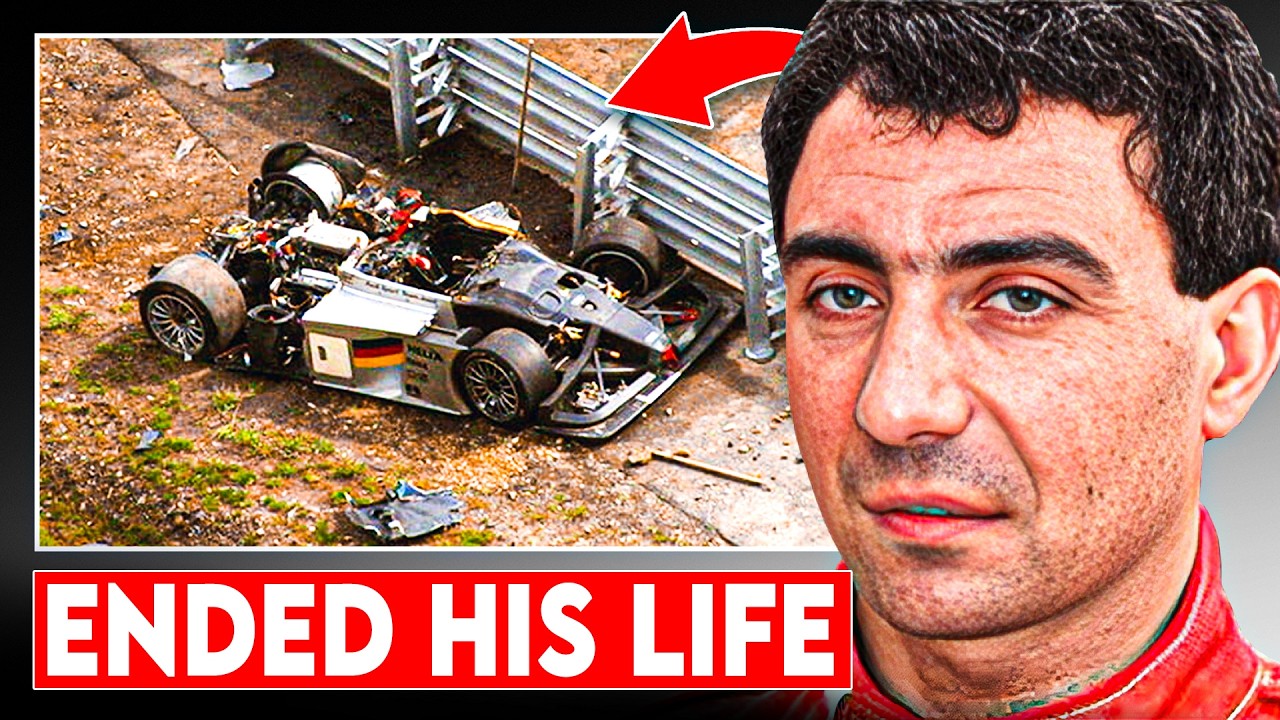
The mournful silence that fell over the EuroSpeedway Lausitz on the evening of April 25, 2001, was a brutal counterpoint to the mechanical symphony that had filled the air just moments before. Michele Alboreto, a name synonymous with Italian racing passion and the last true gladiator of a bygone Formula 1 era, was gone. The 44-year-old Milanese driver, a man who once carried the hopes of the Tifosi on his shoulders as Enzo Ferrari’s chosen heir, had been killed instantly in a high-speed testing accident. The tragedy, which would later be attributed to a flaw so minuscule it defied belief, sent a shockwave through the motorsport world, leaving a void that has never truly been filled. Alboreto was not merely a driver; he was a relic of a purer time in motorsport, a man who climbed into any machine with a level of fearlessness and adaptability that modern specialists could only dream of. His career was a tapestry woven with threads of endurance racing, Formula 2, and the pinnacle of open-wheel competition. On that fateful day, he was performing a role he had mastered decades prior: testing a prototype for the grueling 24 Hours of Le Mans. The Audi R8, a machine of staggering complexity and speed, was his chariot. The team was conducting final setup runs, chasing tenths of a second on the circuit’s high-speed oval, a venue designed to expose the slightest aerodynamic or mechanical weakness. The clock had just struck half-past five in the afternoon. Alboreto, pushing the R8 to its absolute maximum on the elongated straight of the proving ground, was a blur of silver and red. The speedometer needle was climbing past 330 kilometers per hour, a velocity where the margin for error is measured in millimeters and milliseconds. It was at this apex of performance that the physics of the machine turned malevolent. A sickening pop, barely audible over the screaming V8, echoed through the cockpit as the left rear tire catastrophically failed. The explosion of rubber and debris was instantaneous, transforming the meticulously engineered prototype into a projectile of chaos. The R8, now a wounded beast, snapped into a violent, uncontrollable spin. The forces acting on the chassis were immense, tearing the car from its intended trajectory and hurling it across the asphalt like a stone skipped across water. Alboreto, trapped inside the carbon fiber monocoque, fought desperately against the wheel, but the car was no longer a vehicle; it was a missile with no guidance system. The impact, when it came, was devastating. The Audi was launched into the air, clearing the Armco barrier before landing upside down in a twisted, unrecognizable heap of metal. The silence that followed was more deafening than any crash, a chilling confirmation that the worst had occurred. In the immediate aftermath, Audi officials were tight-lipped, their initial statements expressing shock and offering no explanation for the catastrophic event. They insisted that the R8 had completed thousands of kilometers of testing on various circuits without a single issue, a statement that hung in the air with cruel irony. The motorsport community, however, was already mourning. Alboreto was not just a fast driver; he was a beloved figure, a "racer's racer" known for his sportsmanship and his infectious smile. He had been a world championship contender in 1985, dueling with Alain Prost until the very end, a season that saw him win the German Grand Prix, a victory that remains the last for an Italian driver in a Ferrari. The investigation, which concluded five days later, delivered a verdict that was as shocking as the crash itself. The cause was a loose screw. A single, seemingly insignificant fastener had become dislodged and found its way into the tire assembly, causing a gradual loss of air pressure. This microscopic flaw, this tiny crack in the armor of a multimillion-dollar racing machine, had triggered a chain reaction that culminated in the death of a legend. The revelation was a stark, brutal reminder of the fragility of life, even for those who seemed invincible behind the wheel. It was a cruel twist of fate that a man who had survived the terrifying turbo era of the 1980s should be taken by such a mundane mechanical failure. The outpouring of grief was immediate and global. In Italy, the pain was particularly visceral. Alboreto was the last of a breed, the final Italian to win a Grand Prix for the Scuderia Ferrari, a fact that enshrined him in the pantheon of national heroes. His cousin, Marisa, spoke to the Italian news agency ANSA, her words capturing the raw devastation of the family. "You can't imagine the pain we're enduring as a family," she lamented, her voice breaking. "We're absolutely devastated." The tributes flowed in from every corner of the paddock, from former rivals to young drivers who had only ever seen him on old tapes. Years later, the legacy of Alboreto was honored in a manner that transcended the sport itself. At the 2005 Italian Grand Prix, another Italian driver, Giancarlo Fisichella, stood on the podium at Monza, a feat that had not been achieved by an Italian since Alboreto himself. Fisichella, visibly emotional, dedicated his success to the fallen hero. "I know Alboreto was the last Italian to stand on this podium at Monza before me," Fisichella said, his voice thick with emotion. "He was a great person, truly special. I want to dedicate this result to his memory." It was a poignant moment that bridged the gap between generations and underscored the profound respect Alboreto commanded. The ultimate tribute, however, came on August 28, 2021, when it was announced that the final corner at the iconic Monza circuit, the legendary Curva Parabolica, would be officially renamed the Curva Alboreto. The gesture, unveiled during the 2021 Italian Grand Prix weekend, marked the 20th anniversary of his passing. It was a fitting and permanent enshrinement of his name in the heart of Italian motorsport, a testament to a driver who captured the hearts of the Tifosi with his relentless determination and his pure, unfiltered love for speed. The corner, one of the fastest and most demanding on the Formula 1 calendar, now serves as a permanent memorial to a man who embodied its very spirit. Alboreto’s journey to that fateful day in Germany was one of relentless ambition and remarkable versatility. Born in Milan in 1956, he began his career in Formula 3, where his talent was immediately apparent. In 1980, he won the European Formula 3 Championship, a golden ticket that launched him into the competitive world of Formula 2. His performances caught the eye of the Tyrrell team, and he made his Formula 1 debut in 1981. But it was his move to Ferrari in 1984 that transformed him into a national icon. He was handpicked by Enzo Ferrari himself, the Commendatore seeing in the young Italian a fire and a technical acumen that reminded him of the great champions of the past.…