When Rock Hudson died of AIDS-related complications in October 1985, the world learned the truth about the man who had been Hollywood’s biggest box-office star for decades. His year-long battle with AIDS was over, and soon after, the carefully constructed public image of the ultimate leading man began to crumble. Hudson had lived a double life for 40 years, and his agent, Henry Wilson, had worked behind the scenes to manage the narrative. Wilson, a notorious power player, actively worked to suppress stories about Hudson’s personal life.
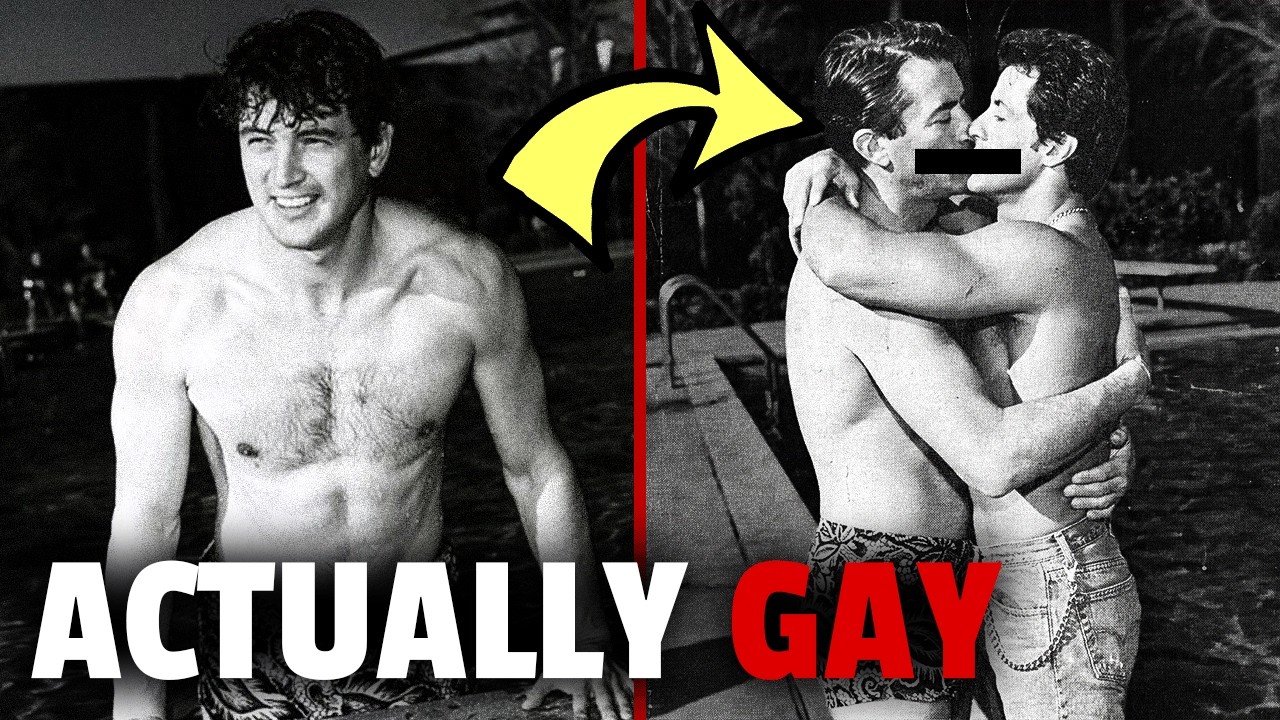
In one instance, Wilson fed a false story to the press about Hudson dating actress Tab Hunter, not because the relationship was real, but because it killed rumors about Hudson’s sexuality and gave the media another story to chase. Hudson himself reportedly confirmed that Wilson gave them Tab Hunter’s name to distract from the truth. The pattern of concealment stretched across generations of Hollywood stars. Tab Hunter, the actor Wilson threw under the bus, had his own secret.
Hunter was in a long-term, hidden relationship with Anthony Perkins, the star of *Psycho*. The two men, both enormously recognizable in their era, carried on their relationship quietly for years. Hunter later revealed in his autobiography, published 50 years after the fact, that he and Perkins had been together. Hunter, who died in 2021, had spent his career at the center of the golden age of television’s masculinity, but he waited until he was in his 80s to tell his own story.
Kevin Conroy, the voice of Batman in *Batman: The Animated Series* and the *Batman: Arkham* video games, spent his career playing one of the most iconic symbols of masculinity. What most fans never knew was that Conroy was gay and that he channeled his personal pain into his performance. He explained that growing up as a closeted gay kid in a Catholic family taught him exactly what it felt like to lock part of yourself away. He described creating a public face that had nothing to do with who he really was.
Conroy said he used his own grief to build Bruce Wayne’s pain, and he was the first voice actor to create two completely distinct voices for Batman and his alter ego, Bruce Wayne. Conroy, who voiced Batman for nearly 30 years, came out publicly later in life and said he understood why the secret had to be kept. He noted that if Hollywood had known, he likely wouldn’t have had a career, and said he felt he wouldn’t have had the career he had if he had been open. The same pattern applies to Richard Chamberlain, the star of *The Thorn Birds*, one of the most-watched TV events in history.
Chamberlain played a Catholic priest torn between his faith and a woman, and he explained that being gay in the 1930s, ’40s, and ’50s was not an option. He said he decided to be somebody else, to play a straight man, and lived a huge portion of his life pretending to be someone he wasn’t. He acknowledged that it isn’t the ideal way to live. Jim Nabors, who played Gomer Pyle on *The Andy Griffith Show*, was another beloved, wholesome television icon who locked away part of himself.
Nabors, who died in 2017, had been in a secret relationship with his partner for nearly 40 years before they finally made it public. He kept his sexuality hidden for decades, even as the characters he played represented the height of American sweetness. The stories are often painful, but they are also stories of resilience. Some of these men gave unforgettable performances while hiding a crucial part of themselves.
In some cases, they even credited their concealment with making them better actors. One of them, in a rare moment of reflection, pointed out that playing a superhero, the ultimate symbol of strength and masculinity, would seem like the last role a closeted gay man could pull off convincingly. Yet two of the most iconic superhero performances in history came from gay men. Kevin Conroy, the definitive Batman, said he used his own experience of hiding to understand Bruce Wayne’s isolation and inner conflict.
He explained that a man who is forced to wear a mask every day, to be something he is not, understands what it means to have a secret identity. He said he played that part with an eye on what it feels like to be denied the truth about yourself. In 2013, Wentworth Miller, the star of *Prison Break*, revealed his own story in an unusual way. He turned down an invitation to a Russian film festival because of Russia’s new law banning “propaganda of non-traditional sexual relations.
” Miller, who had come out publicly through that decision, said he declined because of how Russia was treating gay people at the time. He explained that the decision to be open came after years of being in the closet, and that he wasn’t just an actor, but a man with a story. He also pointed out that Hollywood itself has often been complicit in forcing actors to hide, and noted that the industry that built these stars was often the same one that forced them to maintain a public fiction. Even Cary Grant, widely considered the smoothest and most charming leading man in Hollywood history, carried a secret.
Grant had a relationship with a man that predated his fame, a relationship that outlasted most of his marriages. The romance was kept entirely out of the public eye, and Grant went to his grave without ever confirming the details publicly. His story, like the others, remained hidden for decades. The consequences of hiding have been real, and they have been painful.
Some of these men never came out during their lifetimes. Others came out only after years of isolation and fear. Jonathan Bennett, who played Aaron Samuels in *Mean Girls*, came out years after the film, and he has spoken about how the reaction to his public life was far more accepting than he feared. But even he noted that the industry has forced many actors to hide.
Bennett, who did not originally want to make a big deal of his personal life, said that deciding to be open made him a better person and a better actor. The question of why these men sacrificed so much to keep their secrets points directly to the culture of Hollywood itself. The industry built its heroes on a version of masculinity that had no room for the truth. The actors who navigated that environment did so at enormous personal cost.
While some, like Kevin Conroy, said they would have had no career if they had been open, others, like Tab Hunter, waited 50 years to tell their own story. But the impact of these revelations has been significant. For many, the fact that a closeted gay man played Batman, Superman’s rival but also one of the most iconic superheroes, means something. It means the ceiling that existed in Hollywood for decades was never invisible.
It was just hidden. And some of the most beloved and famous performances in pop culture history came from men who were hiding part of themselves in plain sight. When Jonathan Bennett was asked about the connection between his public life and his *Mean Girls* character, who famously got through high school by pretending to be something he wasn’t, Bennett said he understood the character completely. The stories are as much about the actors themselves as they are about a system that demanded their silence.
For every one of these men, the weight of their double life was real. But for every one of them, there was also a choice. And in nearly every case, the choice to hide came at a cost. Some of these men are still with us, some are not.
But their stories, written over decades, are only now being fully told. And they are not ancient history. They are, in many ways, a guide to how far the industry still has to go.