Rita Moreno won an Oscar.
Then Hollywood practically stopped calling.
She had beauty.
Talent.
A role in one of the most celebrated musicals ever made.
And a relationship with one of the most magnetic actors in Hollywood.
But behind the triumph was a much darker story.
Stereotypes.
Sexual exploitation.
A destructive relationship with Marlon Brando.
A traumatic abortion.
A suicide attempt.
And an industry that repeatedly told a young Puerto Rican actress exactly what she was allowed to be.
Hollywood did not destroy Rita Moreno.
But for years, it came dangerously close.
Long before the Academy Awards and West Side Story, she was Rosa Dolores Alverio.
Born in Puerto Rico, Moreno moved to New York when she was five.
The transition was difficult.
Language created barriers.
Money was limited.
And the young girl often felt isolated inside an unfamiliar world.
Dance became an escape.
Then came performing.
Her talent emerged early, and eventually Hollywood noticed.
But the dream she entered was very different from the one she had imagined.
In the 1950s, studios saw Moreno as what she later described as a kind of “utility ethnic.”
If Hollywood needed a vaguely Latina, Native American, Asian, or otherwise “exotic” young woman, she could be pushed into the role.
The accents were often interchangeable.
The makeup could be exaggerated.
The characters were frequently stereotypes.
Moreno hated it.
But refusing work could mean having no career at all.
Behind those professional frustrations was something even darker.
Moreno has spoken publicly about sexism and sexual exploitation during her early Hollywood years, including experiences of assault.
The glamorous movie business she had dreamed about could be predatory.
And she was young.
Ambitious.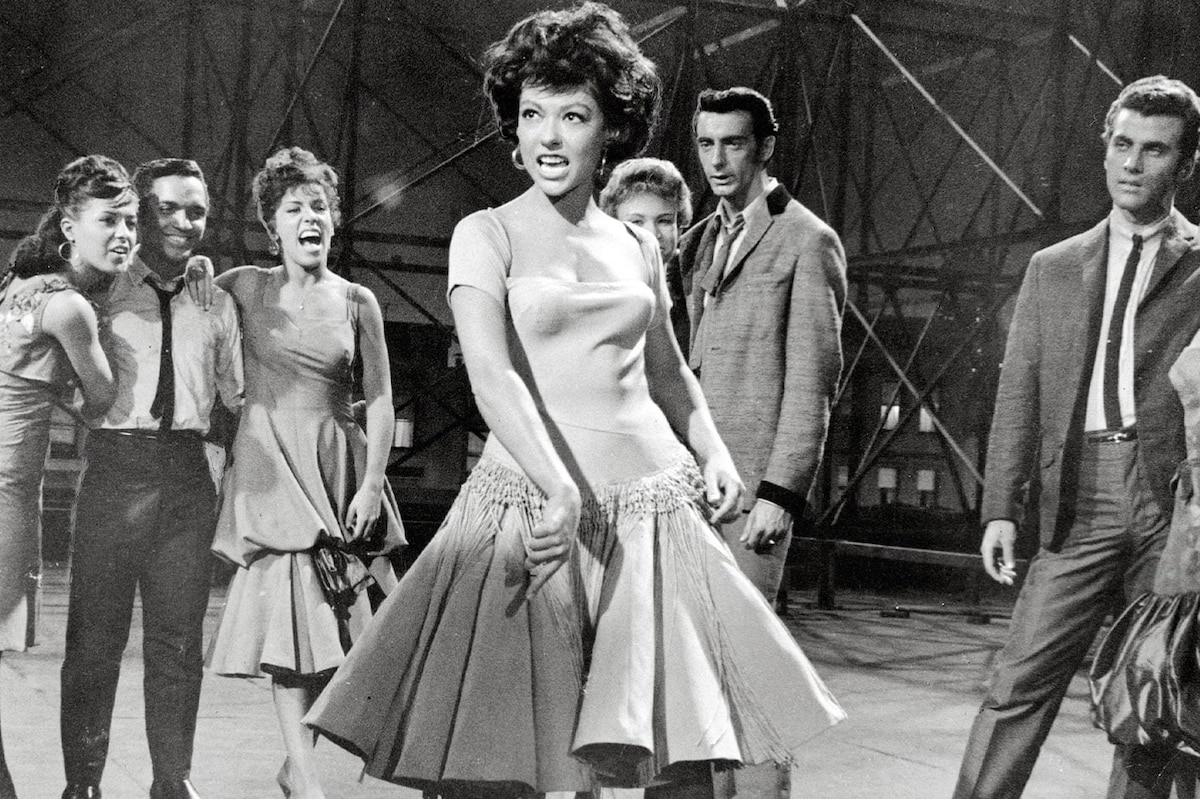
And trying desperately to survive inside a system controlled almost entirely by powerful men.
Then she met Marlon Brando.
Their relationship would become one of the most intense chapters of her life.
Brando was already becoming one of Hollywood’s defining actors.
Charismatic.
Brilliant.
Unpredictable.
Moreno became deeply involved with him.
What followed was an on-and-off relationship lasting roughly eight years.
Passionate.
Jealous.
Painful.
And increasingly destructive.
Brando was repeatedly unfaithful, and Moreno struggled to break away from him emotionally.
During this period, she also became pregnant.
She later described undergoing an abortion that went badly and required hospitalization.
The experience was traumatic.
But the relationship continued.
At one point, Moreno even dated Elvis Presley.
She later described the episode as partly intended to make Brando jealous after discovering another betrayal.
Elvis was one of the most famous men alive.
Yet even that extraordinary chapter remained entangled with Brando.
The emotional cycle continued.
Until Moreno reached a breaking point.
In 1961, she attempted suicide.
She survived.
And survival forced her to confront a devastating truth.
Whatever she felt for Brando, she could no longer allow the relationship to determine whether she wanted to live.
Around the same period came the role that would transform her career.
Anita.
West Side Story.
Moreno immediately understood that the film represented an extraordinary opportunity.
But even this breakthrough came with battles.
She objected to aspects of the production that she felt reduced Puerto Rican characters to stereotypes, including the dark makeup used on performers.
Still, when the cameras rolled, Moreno gave Anita enormous energy, pride, humor and vulnerability.
The result was unforgettable.
In 1962, Rita Moreno won the Academy Award for Best Supporting Actress.
It should have changed everything.
Instead, Hollywood seemed confused about what to do with her.
The Oscar did not suddenly create an abundance of complex roles for Latina actresses.
Moreno continued receiving offers she considered stereotypical or degrading.
This time, she made a different choice.
She said no.
And the price was enormous.
For roughly seven years after West Side Story, substantial film opportunities became scarce.
Imagine the contradiction.
She had achieved one of the highest honors in Hollywood.
Yet the industry still struggled to imagine her beyond the same stereotypes she had spent years fighting.
But Moreno refused to disappear.
Instead, she expanded.
Television.
Theater.
Children’s programming.
Drama.
Comedy.
Broadway.
The Electric Company introduced her to another generation.
Theater gave her opportunities Hollywood often had not.
And slowly, the woman the studio system had once tried to squeeze into interchangeable “ethnic” roles built one of the most varied careers in American entertainment.
Then the awards began accumulating.
Oscar.
Grammy.
Tony.
Emmy.
Eventually, Rita Moreno became one of the extraordinarily small number of performers to achieve EGOT status.
The actress Hollywood once struggled to categorize had conquered four different major entertainment fields.
And she still was not finished.
As Moreno grew older, something remarkable happened.
Instead of fading into Hollywood history, she experienced another renaissance.
Netflix’s One Day at a Time introduced her to younger viewers and gave her a vibrant role that embraced her age rather than hiding it.
Then came an extraordinary return to the story that had changed everything.
West Side Story.
Sixty years after playing Anita, Moreno appeared in Steven Spielberg’s 2021 adaptation.
This time, she was not Anita.
She played Valentina, a new character created for the film.
The symbolism was difficult to miss.
The young actress who had once fought against Hollywood’s stereotypes had returned decades later as an industry legend.
But Rita Moreno’s story cannot be reduced to awards.
The Oscar is only part of it.
So is the EGOT.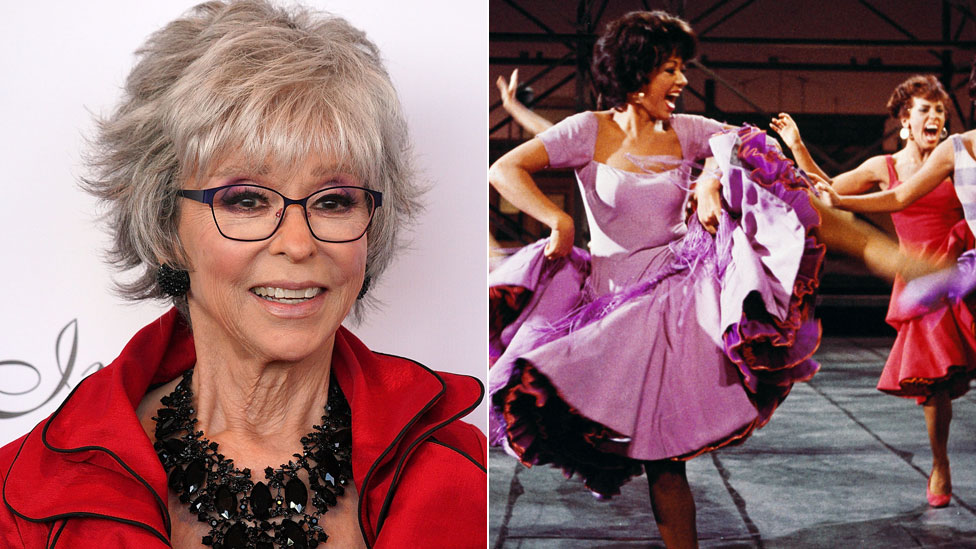
The more revealing story is what happened between those victories.
She survived an industry that repeatedly stereotyped her.
She survived exploitation.
She survived a relationship that she later described as emotionally devastating.
She survived a medical trauma.
She survived her darkest psychological moment.
And when Hollywood offered her roles she believed would drag her backward, she risked her career by refusing them.
So who destroyed Rita Moreno?
Marlon Brando did not.
Hollywood did not.
Racism did not.
Sexism did not.
They wounded her.
They cost her years.
They shaped some of the darkest chapters of her life.
But they did not get the final word.
Rosa Dolores Alverio arrived in New York as a five-year-old Puerto Rican girl struggling to find her place.
Rita Moreno eventually became an Oscar winner.
Then an Emmy winner.
A Grammy winner.
A Tony winner.
An EGOT.
And decades after Hollywood tried to decide exactly what kind of woman she was allowed to play, she was still standing.
Not as the stereotype they created for her.
But as the woman who survived it.