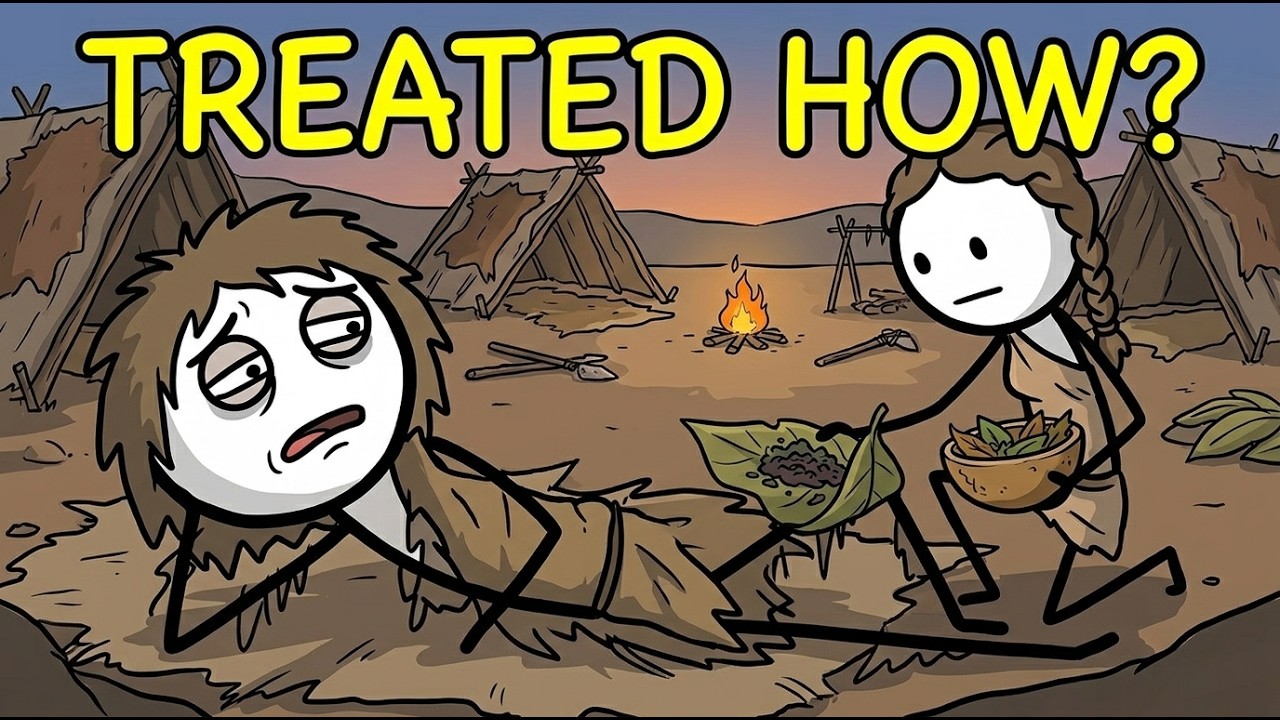
A Neanderthal buried in a cave in northern Iraq roughly 60,000 years ago was found surrounded by flowers, a discovery long treated as proof that ancient hominins grieved and performed burial ceremonies. But a closer look at the plants themselves—yarrow, ephedra, and grape hyacinth, all of which possess recognized medicinal properties—has raised a different possibility: the remains may represent an accidental fossilized medical record, with leftover treatments buried alongside a sick individual rather than flowers picked for sentiment. That find raises a broader question that has long puzzled researchers. How did ancient humans, with no germ theory, no microscopes, and no understanding of bacteria or viruses, figure out how to treat disease at all?
The evidence suggests a combination of accurate plant-based pharmacology, trial and error, spiritual ritual, and surprisingly sophisticated surgical skill, often deployed without any real understanding of why it worked. The deep history of self-medication extends well beyond modern humans. At the Neanderthal site of El Sidrón in Spain, researchers analyzing fossilized dental plaque found traces of poplar, a plant containing salicylic acid, the active compound in modern aspirin, embedded in the teeth of an individual who appears to have suffered from a dental abscess and an intestinal parasite. The same plaque also contained traces of Penicillium, the mold genus that eventually gave humanity penicillin.
Whether the Neanderthal deliberately consumed these substances or benefited accidentally is unclear, but the find suggests that a species once dismissed as primitive was using genuine pharmacological remedies tens of thousands of years before modern medicine formalized them. Ötzi the Iceman, who died in the Alps around 3,300 BC and was preserved in glacial ice until his discovery in 1991, offers an even more detailed example. Forensic analysis revealed he suffered from whipworm, arthritis, and markers associated with Lyme disease. Among his possessions, archaeologists found birch polypore fungus, a substance with antibacterial and anti-inflammatory properties, along with bracken fern in his stomach, a plant with documented antiparasitic effects.
He also carried sloe berries and sphagnum moss, materials associated with treating vertigo, skin conditions, and wounds. Researchers have described the collection as a deliberately assembled prehistoric medical kit, each item targeting a specific ailment his body showed signs of suffering. Ötzi’s body also carried 61 tattoos, mostly lines and dots clustered around his joints, wrists, ankles, and lower back. Long assumed to be decorative, their placement was later cross-referenced with classical acupuncture points used in traditional Chinese medicine, and the overlap was striking.
Many tattoos sat directly on points still used to treat joint pain, arthritis, and digestive complaints, ailments Ötzi is known to have had. Some researchers now suggest that something resembling acupuncture may have emerged independently in Copper Age Europe, or that ancient cultures across different regions arrived at similar treatment points through repeated empirical observation. But ancient medicine was not limited to effective plant remedies. In a world without any concept of invisible biological causes, illness was widely understood as a punishment, a curse, or an invasion by a malicious spirit.
Many ancient cultures developed remarkably similar supernatural frameworks: disease was caused by an angry deity, a hostile spell, a small foreign object magically projected into the body, or the loss of the soul. The first healers in most societies were shamans or medicine men who combined priest, pharmacist, and performer, using incantations, ritual dance, and dramatic gestures alongside the actual administration of herbal treatments. While the rituals themselves had no scientific basis, the plants handed to patients during them often genuinely worked. One of the most striking pieces of evidence in ancient medicine is trepanation, the practice of drilling or scraping a hole into a living person’s skull.
Evidence of the procedure has been found on every inhabited continent, in skulls dating back as far as 7,000 years, performed by unconnected cultures, most extensively in ancient Peru. The documented reasoning was usually spiritual: the hole was meant to provide an exit for the demon or evil spirit believed to be causing headaches, seizures, or mental illness. But studies of trepanned skulls have found clear bone regrowth around the edges of many holes, proving that patients survived the surgery, sometimes for years. Estimates from Peruvian skulls suggest survival rates as high as 50% for some periods, a remarkable figure for a procedure performed with stone tools, no anesthesia beyond available painkilling plants, and no sterile environment.
Some cases of trepanation likely had a genuinely medical justification, such as relieving pressure from skull fractures or cleaning out bone fragments after head trauma, a principle structurally similar to a modern craniotomy. As societies became more organized, medicine formalized into institutions. The Ebers Papyrus, dating to around 1550 BCE in ancient Egypt, is one of the oldest surviving medical documents and shows a sophisticated approach to treating infections and wounds. Egyptian physicians used aloe vera, myrrh, sage, garlic, and honey, substances modern research has confirmed to possess genuine antimicrobial properties.
The papyrus also contains less palatable recommendations, including remedies involving animal dung, which modern research has found can contain antibiotic substances, even if the delivery method leaves much to be desired. Egyptian medicine also produced Imhotep, the vizier to Pharaoh Djoser, widely regarded as one of the first individual physicians named in history. He combined surgical procedures, herbal remedies, and ritual incantations, and was so revered that he was eventually deified as a god of healing. Ancient Greek medicine, particularly under Hippocrates around the 5th century BCE, marked a major conceptual shift.
Hippocrates deliberately moved away from purely supernatural explanations of disease and proposed that illness had natural, observable, physical causes. His framework of the four humors—blood, phlegm, yellow bile, and black bile—was scientifically incorrect, but the underlying instinct that disease resulted from an internal imbalance that could be studied and corrected through observation was a genuinely important step forward. This framework dominated Western medicine for over 2,000 years until the rise of germ theory and modern biology. Greek and Roman societies also built aqueducts, public baths, and sewage systems based on the practical observation that clean water and proper waste management reduced illness, laying groundwork for modern public health.
The full picture of ancient medicine is a chaotic but surprisingly effective mixture of genuine pharmacological insight, spiritual ritual, painful trial and error, and occasional surgical skill. Ancient humans lacked any understanding of the invisible mechanisms behind disease, but through relentless, intergenerational observation they built up a substantial body of medical knowledge. They identified plants that reduced pain, fought infection, and calmed inflammation, discoveries so accurate that modern pharmaceutical companies still extract active compounds first identified by people chewing roots and bark long before written language existed. They learned how to cut into a human skull and have a meaningful number of patients survive.
And they figured out that honey, garlic, and clean water helped prevent illness without ever knowing why. What ancient practitioners lacked in scientific understanding, they made up for with patience and careful repetition. Someone tried something, saw whether it worked, passed the knowledge on, and the next generation tested it on new patients. Across thousands of years and countless human bodies, they built a body of knowledge that modern science has spent the last two centuries painstakingly rediscovering, confirming, and explaining for the first time.
Sometimes the healer performing an elaborate spirit extraction ritual was also, almost as an afterthought, handing the patient the one plant on the entire mountainside that contained real aspirin. They simply had no idea why it worked. They only knew, generation after generation, that it did.