A 32,000-year-old skull found in Belgium’s Goyet Cave has forced scientists to reconsider one of the most fundamental relationships in human history. The skull, which belonged to an early proto-dog rather than a wolf or modern canine, is now considered key evidence in understanding how humans survived the last glacial maximum. The prevailing theory that ancient humans captured and tamed wolf pups has largely been abandoned by researchers. Wolf behavior makes this scenario nearly impossible, as these animals are high-risk predators with rigid social structures that would not adapt to a cramped cave environment.
Instead, the evidence points to wolves choosing proximity to human settlements on their own. Researchers including Dr. Greger Larson have found that the genetic split between wolves and proto-dogs occurred much earlier than previously thought, possibly in two separate locations simultaneously. This suggests the partnership was not a coincidence but a biological inevitability driven by mutual survival needs.
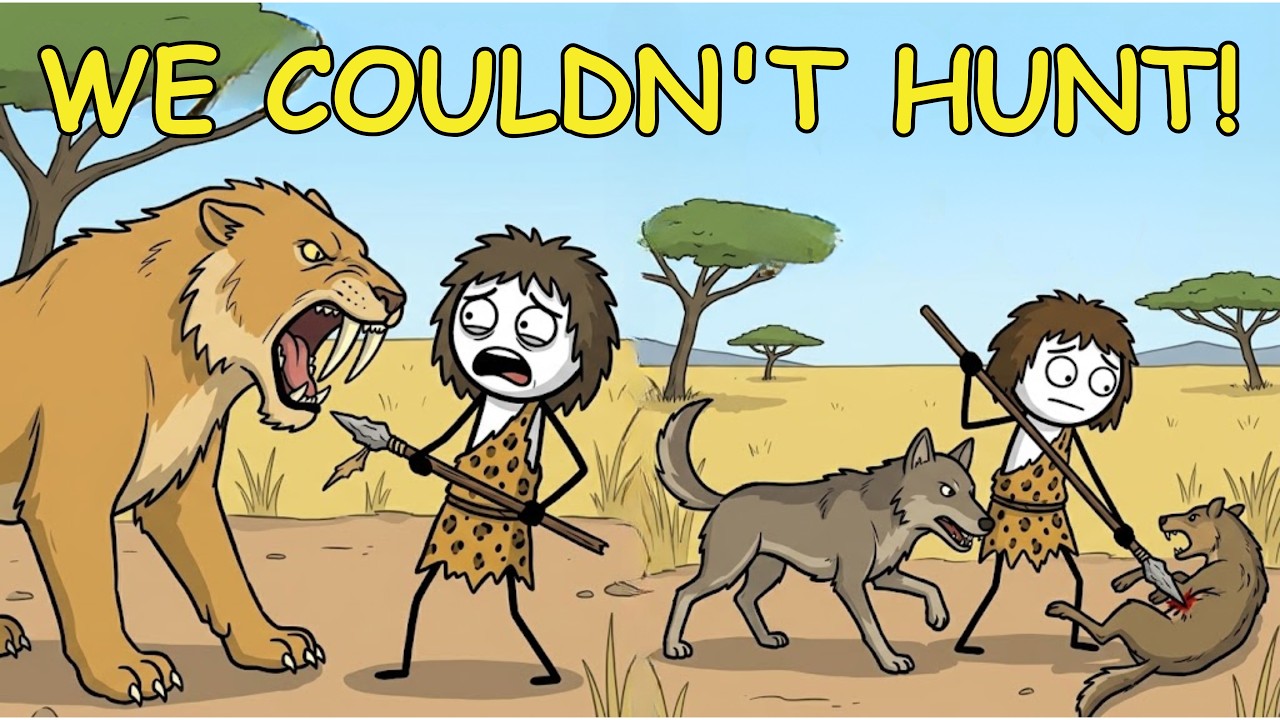
The timing of this partnership coincides with the disappearance of the Neanderthals around 40,000 years ago. Despite being stronger and having larger brains than early modern humans, Neanderthals required an estimated 4,000 to 7,000 calories per day to survive European winters. Their ambush hunting style was dangerous and energetically costly. Modern humans arrived with a different strategy.
At mammoth mega sites like Mezhyrich in Ukraine and Předmostí in the Czech Republic, archaeologists found the remains of over a hundred mammoths along with huts built from their bones. Nitrogen isotope analysis revealed that the canids buried at these sites were eating the same high-quality mammoth meat as the humans. Dr. Pat Shipman, a biological anthropologist, argues this was the strategy that allowed modern humans to succeed.
The proto-dogs would track and corner mammoths, distracting the massive beasts while human hunters delivered the killing blow. This transformed hunting from a high-risk gamble into a calculated high-probability success, creating an energy advantage that compounded over generations. The biological evidence for this ancient partnership extends to human anatomy. Humans are the only primates with vivid white sclera, allowing for cooperative eye tracking.
Dogs are the only non-primate species that can spontaneously understand human pointing gestures, a skill present even in 7-week-old puppies that have received no training. Research by Dr. Brian Hare at the Duke Canine Cognition Center shows dogs have developed social intelligence functionally similar to that of human toddlers. Geneticist Dr.
Bridget von Holdt at Princeton University found that dogs carry genetic deletions associated with Williams-Beuren syndrome in humans, which causes hypersociability and a lack of social fear. Around 20,000 years ago, the Earth entered a period of extreme cold that caused human populations to plummet. Genetic studies show humans hit several population bottlenecks where the number of breeding individuals was dangerously low. To survive, humans had to cross the Bering Land Bridge into the Americas.
Archaeological evidence shows the first Americans traveled with their dogs. In a landscape where a wrong turn meant starvation, dogs provided essential services: smelling water under ice, detecting herds from miles away, and serving as an alarm system against predators like the 12-foot-tall short-faced bears. Dogs also served as the first beasts of burden before horses or oxen were domesticated. Evidence of dog sleds and pack harnesses dating back thousands of years has been found at sites in Beringia.
This allowed humans to move more gear, meat, and children than any other primate species. The relationship is reinforced by a unique biological mechanism. When humans and dogs look into each other’s eyes, both release oxytocin, the bonding hormone typically reserved for mothers and infants. This cross-species oxytocin loop exists nowhere else in nature.
Evidence of the depth of this bond appears in a 14,000-year-old grave at Bonn-Oberkassel in Germany containing a man, a woman, and a puppy. Analysis showed the puppy had survived multiple bouts of canine distemper, a disease that would have been fatal without human care, indicating people invested significant time in nursing an animal that could not hunt. The stress-reducing effect of dogs also appears to have played a role in human development. A calm dog lowered baseline cortisol levels in human camps, which affects reproductive health and cognitive function.
The explosion of human art and complex tool-making occurred around the same period dogs were integrated into human life. According to the researchers cited in this case, without the dog-human partnership, humans would likely have followed the same path as the Neanderthals, the Denisovans, and other hominid species that eventually died out. The relationship multiplied human senses, hunting range, and mobility at a critical moment in history. The Goyet Cave skull represents what researchers describe as the moment humans stopped being just another animal and became something new.
That yellowed canine tooth, along with the genetic and archaeological evidence, points to a partnership that changed the trajectory of human evolution.


