The genetic ghost of a species that vanished from the Earth 40,000 years ago is not merely a fossil in the ground; it is a living, breathing component of your own biological makeup, a silent inheritance that continues to dictate the terms of your health, your survival, and your very existence in a world that has changed beyond recognition.
If your ancestral lineage traces back beyond the African continent, you are carrying a biological legacy that defies conventional history. Between one and two percent of your genome is a direct inheritance from the Neanderthals, a hominid species that dominated the European and Asian continents for over 300,000 years before the first modern human ever crossed their path. This is not a metaphorical connection or a distant evolutionary echo; this is physical, verifiable genetic code, a molecular fingerprint embedded in your chromosomes that originated from a creature that was not fully human.
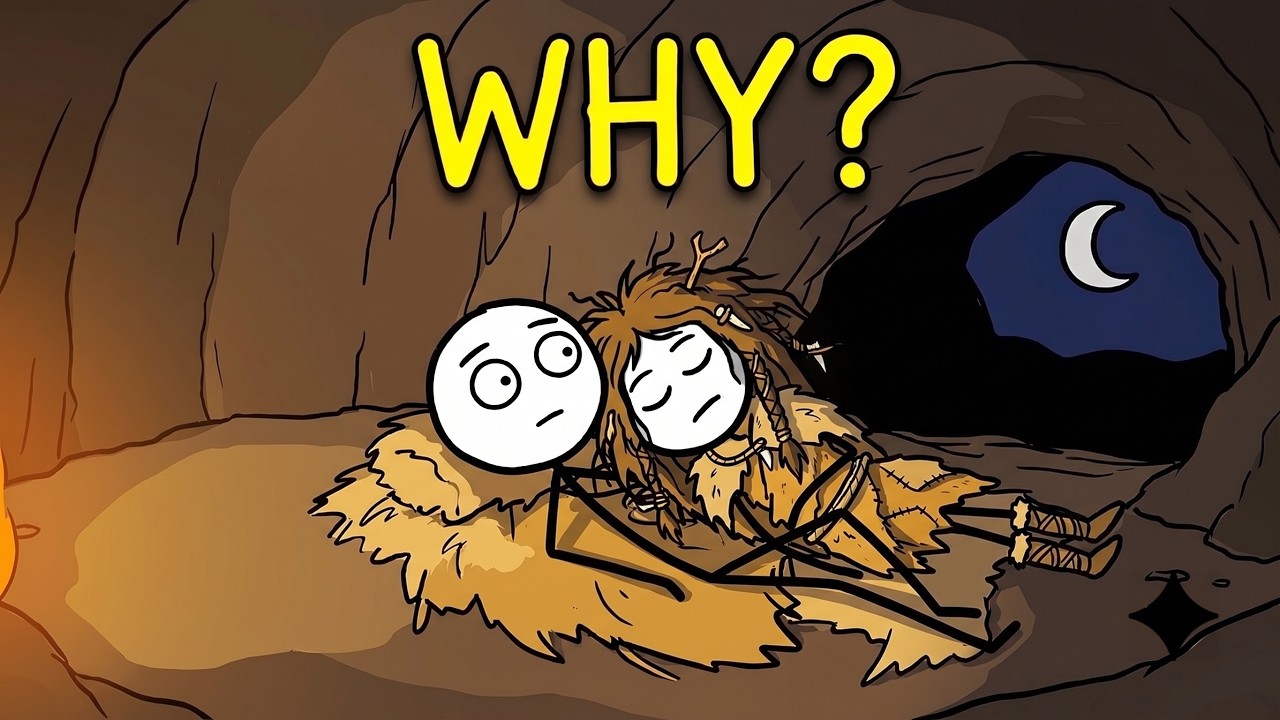 The scientific consensus is now undeniable: your ancestors didn’t just encounter these archaic humans; they mated with them, repeatedly, over thousands of years, creating a hybrid lineage that would go on to conquer the globe.
The question that haunts the scientific community and challenges our understanding of human exceptionalism is a stark one: why would a supposedly more advanced, more intelligent species choose to intimately engage with a population that was on the brink of extinction? The answer, unearthed through painstaking genetic analysis and archaeological discovery, reveals a story far more complex than a simple tale of conquest or a one-night accident. It is a narrative of desperation, survival, and a biological transaction that would forever alter the trajectory of human evolution, for better and for worse.
To comprehend this profound intermingling, we must rewind the clock to roughly 60,000 years ago, a pivotal moment when your ancestors were leaving the African cradle in unprecedented numbers. They were not walking into an empty world; they were entering a territory that had established owners. The Neanderthals had weathered the harsh climates of Europe and Asia for millennia, adapting to the cold, mastering the landscape, and knowing intimately which resources would sustain life and which would bring death.
Your ancestors, in stark contrast, were the outsiders, the newcomers. They were biologically ill-equipped for the freezing temperatures, their bodies evolved for the warmth of the African savanna, their immune systems unprepared for the novel pathogens that lurked in this new world. They were, in every sense, vulnerable invaders in a land that was not their own.
The moment of contact was not a singular event but a prolonged, grinding convergence. Researchers have now pinpointed a specific genetic window, approximately 47,000 years ago, that lasted for a staggering 7,000 years. This was not a fleeting encounter between two isolated individuals; it was generations upon generations of sustained contact, a period of co-existence that left an indelible mark on the human genome.
Archaeological evidence corroborates this, showing the two species living side-by-side in the same river valleys and seeking shelter in the same caves across Eurasia for millennia. This was not a story of two armies clashing on a battlefield and then retreating. It was a slow, grinding process of small bands of modern humans pushing deeper into Neanderthal territory, encountering the same neighboring groups repeatedly, until the initial hostility of the unknown inevitably gave way to the routine of familiarity.
The first and most pragmatic reason for this interbreeding is a cold, brutal calculation of survival. Your ancestors were in desperate need of an evolutionary upgrade, and they needed it immediately. Building immunity to a continent’s worth of new diseases through the slow, agonizing process of natural selection would have taken tens of thousands of years, a timeline that would have seen the majority of the migrating population perish.
Mating with Neanderthals offered a genetic shortcut, a way to bypass millions of years of evolutionary trial and error. The Neanderthal body had already spent 300,000 years perfecting its defenses against the local pathogens, the cold, and the low sunlight. Their immune systems, their skin pigmentation, their metabolic adaptations were all pre-built for this environment.
Every time a modern human produced a child with a Neanderthal, that child inherited a suite of genetic tools that their parents could never have acquired on their own. This was not a random occurrence; scientists have mapped specific Neanderthal genes that remain active in modern humans today, genes directly tied to skin pigmentation, hair texture, and the body’s response to cold and specific viruses. These were not passive leftovers; they were the exact traits that provided a survival advantage, the biological armor that allowed your ancestors to thrive in a world they were never designed to inhabit.
 But biology alone cannot explain the intimacy of this relationship. The second reason shatters the outdated, cartoonish image of Neanderthals as grunting, brutish cavemen. The archaeological record paints a picture of a species with a profound capacity for complex thought, empathy, and even art.
Neanderthals buried their dead with ritualistic care. They crafted jewelry from the talons of eagles, a practice that suggests a sense of personal adornment and symbolic meaning. They used pigments, likely for body decoration, and they cared for their sick and injured.
Skeletons have been unearthed showing healed wounds and missing limbs, individuals who could only have survived for years because others in their group fed them, protected them, and carried them through their disabilities. They possessed a hyoid bone, the delicate bone in the throat that allows for complex speech, shaped almost identically to that of a modern human. These were not animals that your ancestors stumbled upon in the dark.
They were people, undeniably different in appearance and culture, but recognizably human in their capacity for emotion, social bonding, and communication. This recognition, born of proximity and shared experience, transformed the dynamic from one of pure conflict to something far more nuanced.
The third reason is the one that is rarely spoken aloud because it strips away the romanticism and reveals a raw, primal truth about the struggle for existence. These were small, isolated groups of humans traversing a vast, empty, and freezing world. A band of modern humans moving into new territory might have numbered in the dozens, scattered across a wide and unforgiving landscape.
When two such groups crossed paths after weeks or months of seeing no other human faces, the instinct to mate was not a matter of choice or preference; it was a biological imperative. Genetic isolation is a death sentence for small populations, more lethal than predators or starvation. It leads to inbreeding, genetic defects, and a weakened immune system that cannot adapt to new threats.
In this context, every outside group your ancestors met was a lifeline, a source of fresh genetic material that was essential for the survival of their bloodline. Refusing that opportunity could mean the end of their genetic line within a generation or two. The choice, if it could even be called a choice, was between certain extinction and the possibility of a future.
However, the story of this intermingling is not a simple tale of mutual benefit. A 2026 genetic analysis comparing the X chromosomes of Neanderthals and modern humans has revealed a deeply uncomfortable asymmetry. The interbreeding was not evenly distributed between the sexes.
 The pattern suggests it ran mostly in one direction: Neanderthal males with modern human females. The reasons for this remain a mystery, a dark void in our understanding of these ancient encounters. Scientists can only speculate whether this pattern reflects a matter of choice, a cultural practice, or something far more disturbing, a dynamic of coercion or violence that we can never hope to fully understand.
Nobody alive today can ask either side what those encounters actually felt like, what was said, what was felt, or what was forced. This asymmetry remains one of the most haunting and unresolved questions in human evolution.
Your ancestors got their shortcut. They survived the ice, they survived the new diseases, and they spread across two continents, carrying the Neanderthal legacy within them. But every shortcut has a price, and this one came with a long-delayed invoice that is now coming due in ways we are only beginning to understand.
The same genes that protected your ancestors from frostbite and fatal infections are still running inside your body right now, in a world that no longer presents those same threats. Consider blood clotting. Neanderthal genes made blood thicker and faster to clot.
In the ice age, this was a lifesaving adaptation; a hunting wound would seal itself quickly, preventing a hunter from bleeding out in the snow, and a mother could survive childbirth without hemorrhaging to death. Today, that same gene variant is a liability, raising the risk of dangerous blood clots, strokes, and pulmonary embolisms. Your body is still trying to save you from a wound you will never get, a biological anachronism that is now a threat to your life.
The same is true for your immune system. The genes your ancestors borrowed to fight off unfamiliar pathogens are the same genes now linked to a host of autoimmune disorders, including lupus, Crohn’s disease, and rheumatoid arthritis. Your own body is attacking itself because its defenses are still calibrated for threats that disappeared tens of thousands of years ago.
During the COVID-19 pandemic, researchers traced a specific cluster of Neanderthal DNA on chromosome 3 directly to higher rates of severe illness and hospitalization in some patients. A defense system built for one war is still firing in a completely different one, causing collateral damage in the process. Even allergies have been tied back to this inherited immune machinery, a system so aggressive that it now reacts to harmless substances like pollen and peanuts with the same ferocity it once reserved for a genuinely deadly infection.
The reach of this ancient DNA extends even into the recesses of your mind. Researchers scanning the medical records of 28,000 people found a link between Neanderthal DNA and a higher risk of depression, specifically tied to how those genes interact with the circadian rhythm. This is the same internal clock that once told a Neanderthal exactly when to retreat into a cave before the cold and the dark became lethal.
 That clock is still running inside you, but it has nowhere left to send its warning. It is a nervous system tuned for constant threat, for a world of predators and ice, and it is now operating in a world of relative safety and comfort, leading to chronic anxiety, depression, and a persistent sense of unease that has no clear source. Every one of these traits made perfect sense 50,000 years ago.
Thick blood, an aggressive immune system, and a hyper-vigilant nervous system were not flaws; they were the difference between a bloodline that continued and one that didn’t. The flaw only appeared later, when the world got softer and the genes never got the message.
And here is the strangest part of all. The Neanderthals did not disappear because modern humans wiped them out in a great, climactic war. There is no mass grave, no archaeological evidence of a final, decisive battle.
Their population was already small, already struggling, and already losing ground to a faster-breeding, faster-spreading rival. As the two species continued to mingle generation after generation, the smaller Neanderthal population was simply absorbed, diluted, and folded into the larger modern human population until there weren’t enough purebred Neanderthals left to constitute a separate species. They didn’t go extinct in the way you picture extinction.
There was no last Neanderthal standing alone on a cliff, watching the end of their kind. Their genes just kept moving forward, carried inside modern human bodies, spreading across every continent those bodies eventually reached. When you read about the last Neanderthal dying out 40,000 years ago, what actually happened is closer to this: they stopped existing as a separate group because they were never really gone.
They became us.
So, the next time someone tells you that Neanderthals are extinct, you can correct them. They are not extinct. They are sitting inside your blood, your skin, your immune system, and your mood on a bad day.
A species that vanished 40,000 years ago is still making decisions about your health right now, and you never got a vote. The legacy of that ancient, desperate, and profoundly human choice is not just a historical footnote; it is a living, active force that shapes your life, your health, and your very identity. The question of why ancient humans had 𝒔𝒆𝒙 with Neanderthals is not just a question about the past; it is a question about who you are, right now, in this very moment.
The answer is written in every cell of your body, a testament to the fact that survival is not always about being the strongest or the smartest, but about being willing to adapt, to mingle, and to carry the ghosts of the past with you into the future.