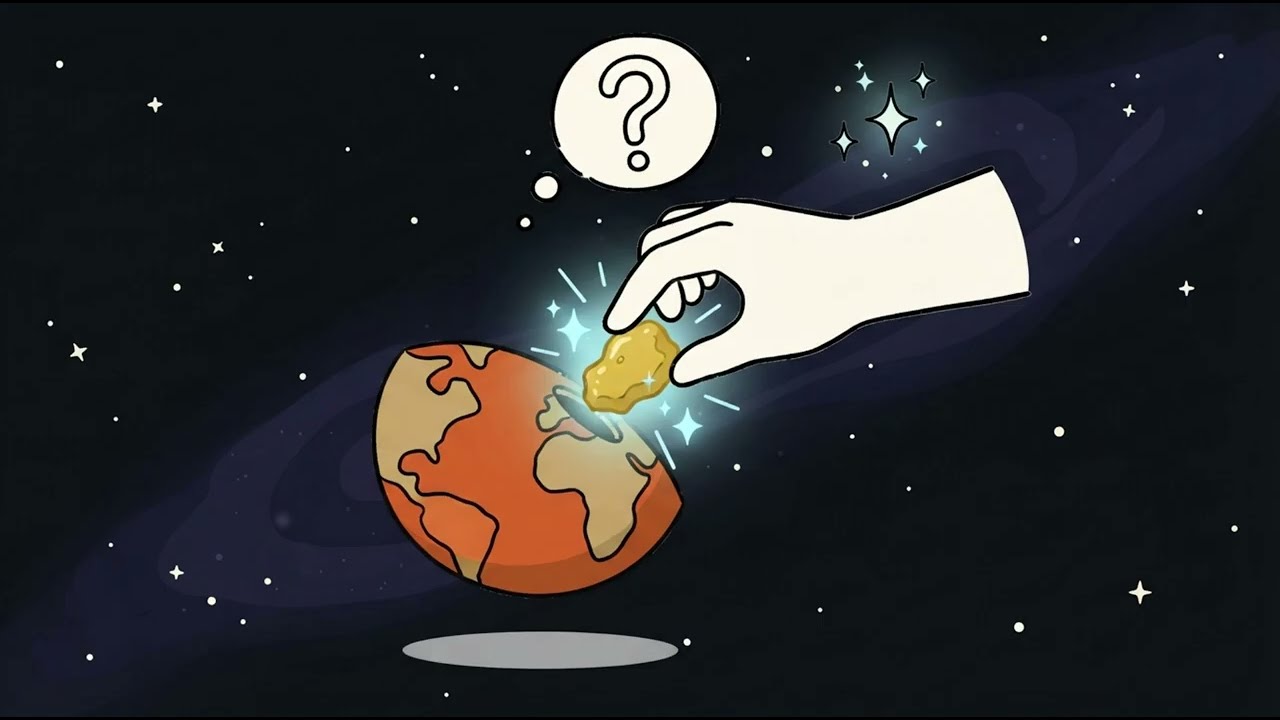
The gold ring on your finger, the bar sealed in a vault, the gilded visor of an astronaut’s helmet—every atom of it is older than the Earth, older than the Sun, forged in the cataclysmic collision of two dead stars billions of years before our planet existed.
That is the startling conclusion of a new and comprehensive analysis that seeks to answer one of humanity’s oldest and most violent questions: why, out of 118 elements on the periodic table, has nearly every civilization that ever existed—separated by oceans, time, and with zero contact—independently decided that this soft, yellow metal is the most precious substance on Earth?
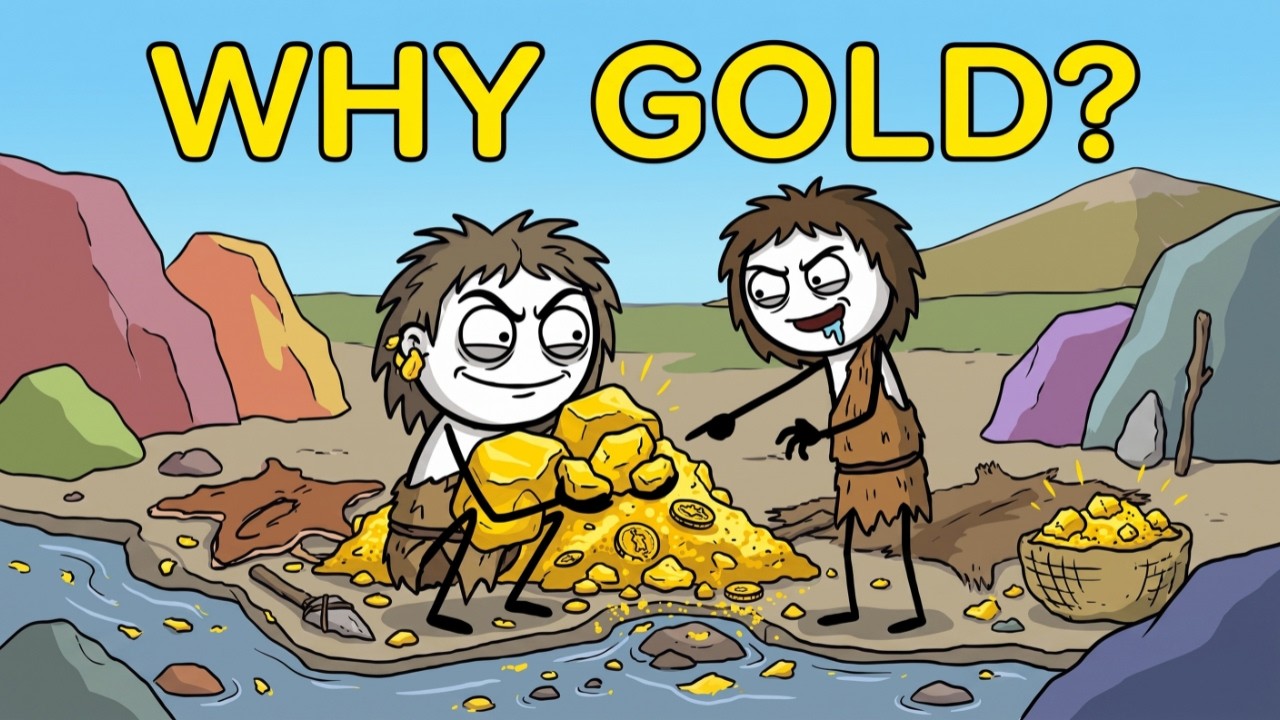 The answer, according to the research, is not greed, and it is not a cultural accident. The obsession is written in the atom itself, a direct consequence of physics so extreme that it took the genius of Albert Einstein to explain it, and a property so unique that it makes gold the only metal on Earth that glows like the sun.
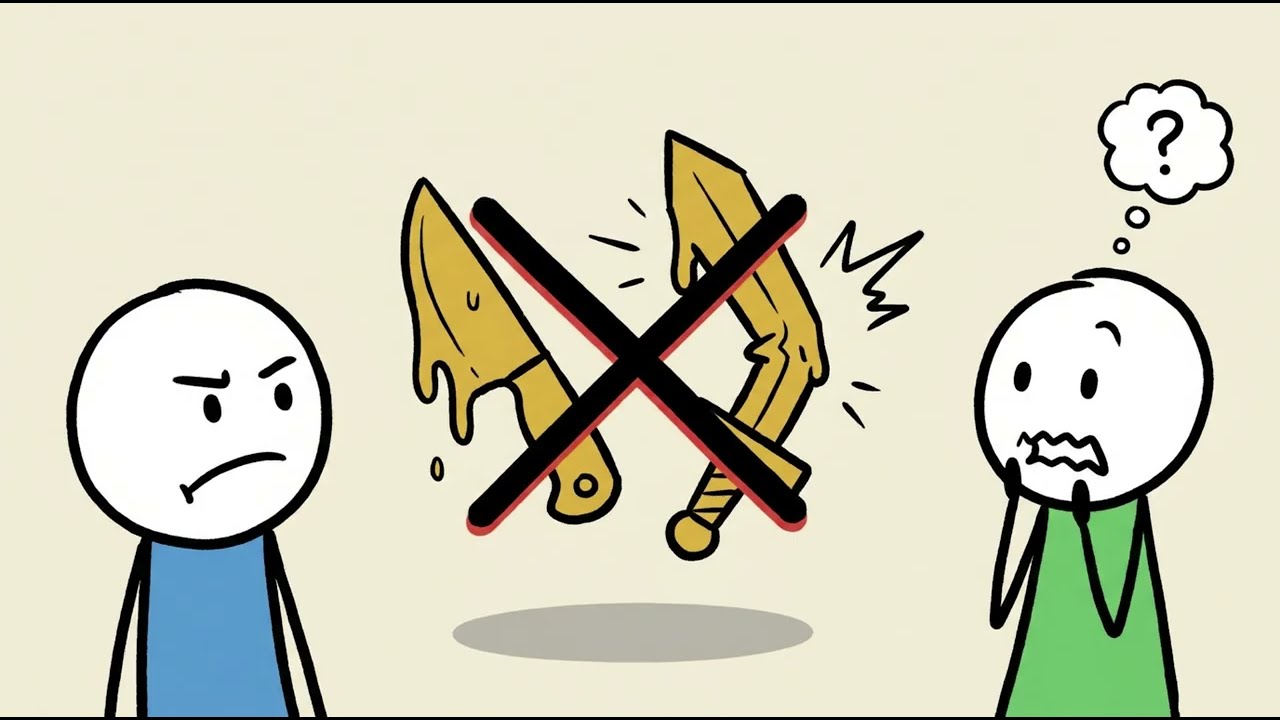
The report confirms that as a material, gold is “almost worthless.” It is too soft to hold an edge, making it useless for tools or weapons. It is heavy and weak, impossible for construction.
It cannot be eaten, cannot be burned for warmth.
For 6,000 years, humanity has dug it from the earth at tremendous human cost, only to refine it and bury it again in guarded vaults, an act the analysis describes as “a creature that risks its life to extract a shiny useless metal from the ground, and then puts that metal back into the ground in a different, more guarded hole.”
The logic behind this apparent madness was uncovered through a process of elimination. By running a filter down the entire periodic table—discarding gases, radioactive elements, reactive metals that explode on contact with water, metals that corrode, and metals too rare or too common to be useful—researchers found that only a handful of elements remain viable as a store of value.
Of those, only two, silver and gold, fit the criteria for ancient humans to find and work. But silver tarnishes. Gold does not.
A gold coin pulled from a 2,000-year-old shipwreck emerges bright, unblemished, and new.
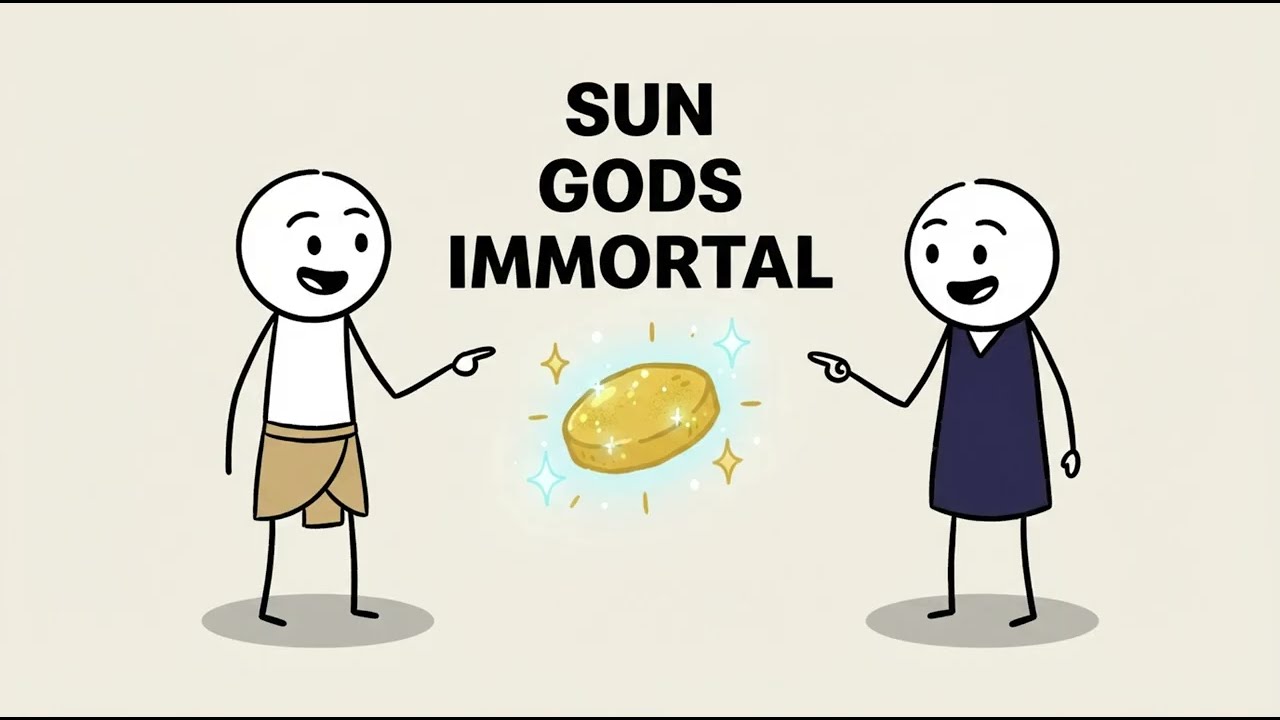
 This permanence, the report argues, is the key to understanding the divine status that ancient cultures assigned to the metal. To the Egyptians, gold was the flesh of Ra, the sun god, and lining tombs with it was a technology for 𝒸𝒽𝑒𝒶𝓉𝒾𝓃𝑔 death. To the Inca, a civilization that had no knowledge of Egypt’s existence, gold was the sweat of the sun, used to create a garden of imperishable metal dedicated to the gods.
“The same yellow metal, the same conclusion,” the report states, calling it “the substance of the sun, the stuff of the gods.”
The most extraordinary finding, however, involves the very color that first attracted these ancient eyes. While all other metals are gray—iron, silver, aluminum, platinum—gold is a warm, sunlit yellow. For centuries, no one knew why.
The answer, finally discovered in the 20th century, is relativity. A gold atom’s 79 protons create a massive positive charge that pulls electrons to colossal speeds, exceeding half the speed of light. At those relativistic speeds, the electrons gain mass, their orbits contract, and the metal absorbs blue and violet light, reflecting back the rest.
The result is that unmistakable glow.
Chemists have confirmed that if Einstein’s equations are removed from the math, gold would be a plain, boring, gray metal like all the others. The very property that made human beings fall in love with gold, that made it look like a piece of the sun, is a visible fingerprint of Einstein’s relativity occurring on your finger.
 “It is almost as if the universe designed a substance to obsess a species,” the analysis concludes.
But the beauty of that physics has a dark and enduring underside. The report reminds us that this obsession has a body count.
In 1532, conquistador Francisco Pizarro captured the Inca emperor Atahualpa, who offered to fill a room once with gold and twice with silver for his freedom. The Inca delivered the treasure—golden sun discs, sacred vessels, religious masterpieces—and the Spanish took it all. They executed Atahualpa anyway.
The true horror is that almost none of that Inca gold survives today. The Spanish did not want the art; they wanted the metal. Priceless cultural artifacts were fed into furnaces and melted down into anonymous ingots.
“An entire culture’s soul was reduced to bars,” the report states, calling it “the story of gold in miniature.”
The pattern is a constant in human history: Egypt’s gold mined by enslaved laborers who died in the dark, the Roman economy run on gold extracted by condemned prisoners, the Spanish emptying two continents and drowning their own economy in the process.
 “The metal that symbolized the eternal has been one of the greatest drivers of human cruelty ever discovered,” the analysis notes.
Despite this, the analysis is careful to draw a line between objective chemistry and subjective meaning. One camp argues gold’s value is written into physics, and that any intelligent species in the universe would land on it as a store of value. The other argues that value exists only in the human story we project onto it.
The truth, according to the report, lies in the intersection. Chemistry did not force humanity to worship gold, but it stacked the deck so heavily that the choice was nearly inevitable. Gold is rare, permanent, workable, and the color of the sun.
It was the perfect blank screen for humanity’s deepest wish: permanence, eternity, life that does not end.
“The physics made gold special. The human mind made it sacred,” the analysis concludes.
The report closes with a look at gold’s enduring utility. It remains in the visors of astronauts and the skin of spacecraft, shielding them from radiation, because it is a connector that never corrodes. It is in the phone in your hand, threaded in microscopic wires.
“The gold in a wedding ring tonight may once have been a Roman coin, and before that an Egyptian ornament,” the report states. “And before that, before all of it, a spray of atoms flung out of two colliding stars 12 billion years ago.”
It has been a god’s flesh, a king’s ransom, a soldier’s plunder, a bank’s reserve, and a lover’s promise, surviving every single one of them unchanged.