The heat was the first thing that hit him, a suffocating, wet blanket that made the air itself feel solid, and he knew in that instant that the world he had trained for was nothing like the one he had just entered. This is the stark, visceral memory of a Vietnam War veteran, a paratrooper who carried the weight of his service and a famous family name into the jungles of Southeast Asia, only to come home to a nation that had turned its back on him.
In an exclusive interview, the man known as Winters, a cousin of the legendary World War II officer Dick Winters, opened up about his harrowing 28-month deployment, the brotherhood forged in combat, and the complex legacy of the name he carries. He spoke of the brutal adaptation required to survive a war where the enemy was invisible and the environment itself was an adversary, detailing the constant state of vigilance that consumed his every waking moment.
 “I trained with two different weapons. I started out with a M1A1, then a M14. I got to Nam and they gave me a Mattel gun called M16.
Bingo,” he said, his voice carrying a hint of the irony he felt upon receiving the new rifle. It was a piece of equipment that would become an extension of his own body throughout his deployment. “I kept the weapon all through my service there.
I slept with it, I ate with it. I was never without it,” he stated, painting a picture of a soldier living in a constant state of heightened alert and survival.
He described the disorienting sensation of speaking on a “Mattel gun,” a term used by soldiers of the era, highlighting the stark difference between the weapon he knew and the one he was issued. This was his introduction to a war that defied the conventions of his early training. He added, “I had a side holster.
Always had a weapon on me. I didn’t trust anybody over there,” a chilling testament to the psychological toll of fighting as a long-range reconnaissance patrol, or LURP, team leader.
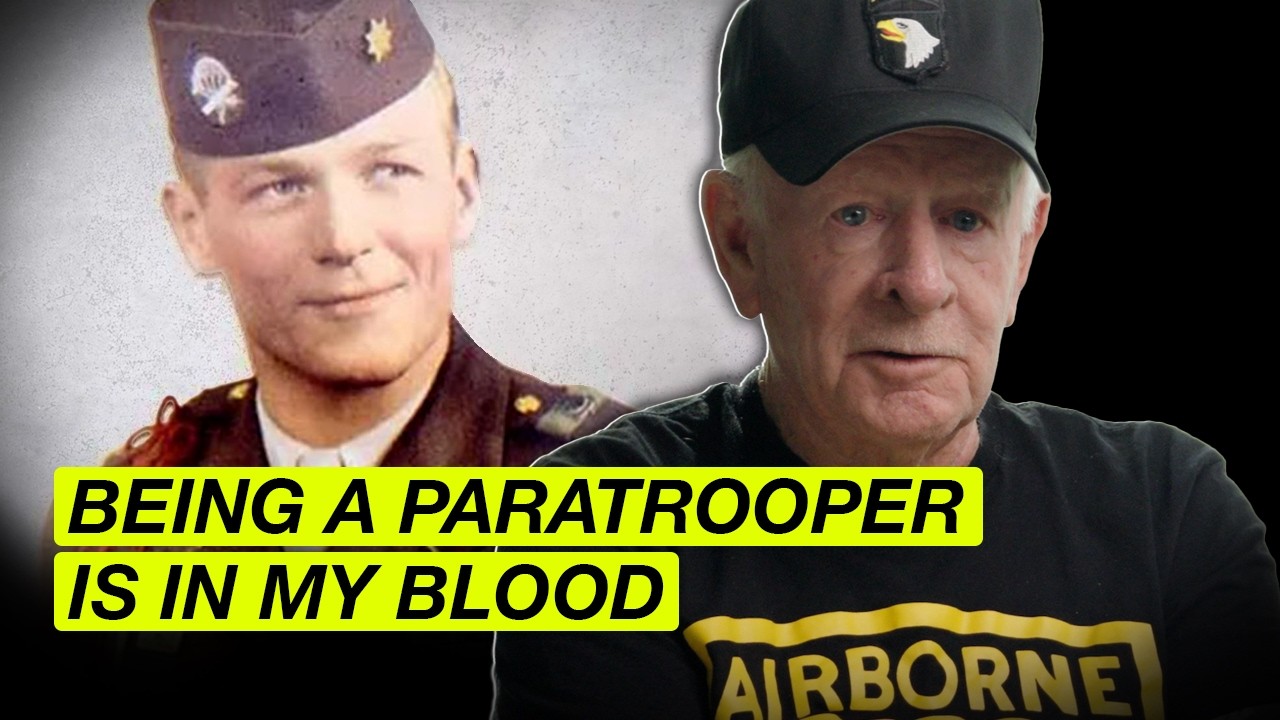
The veteran, who was born in Hershey, Pennsylvania, and raised partly in Maryland, is linked to one of the most celebrated figures in World War II military history. He confirmed his familial tie, explaining, “Well, Winters was actually my cousin. But back in the day they were all aunts and uncles when we did reunions and stuff.”
He acknowledged that the bonds of extended family, so strong in the post-war years, frayed as the younger generation pursued its own path, moving away from the confines of a Pennsylvania factory town to build a new life.
His own father, himself a World War II veteran, was a man who carried the invisible scars of his conflict, never speaking of his service. “My dad didn’t want to work in the candy factory, so he came down to Maryland and ended up going in partners with a couple guys in auto parts,” he recounted. “He never talked about the war,” he added, revealing a silence code that would later shape his own journey into a conflict his family could not comprehend.
The silence was a common thread for many veterans of his father’s era, but for this veteran, his father’s service had a tragic delineation. He learned in pieces that his father had jumped in with the 507th Parachute Infantry Regiment near the critical Chef du Pont Bridge in Normandy, a pivotal action on D-Day. Yet, his father saw things that song of the human spirit to return to a place of such pain.
“Dick tried to get him to go back over and I take that to when his units and stuff they liberated a lot of the concentration camps. So, he would never go back across,” he said, his voice dropping as he connected his father’s post-war actions to the horrors he had witnessed first-hand.
 The urge to follow in his family’s martial footsteps, to be part of the “airborne brotherhood,” was a pull he could not resist, even as the draft loomed. “So I guess it runs in our blood because when I got drafted there was no way I couldn’t come home. Not me and a paratrooper,” he stated proudly, marking his choice as a predestined duty.
His training took him from the swamps of Fort Polk, Louisiana, to the iconic jump towers of Fort Benning, Georgia, and then to Fort Dix, New Jersey, where he was formed basic ground wit, immediately connecting with a bond of friendship that would be the strongest thing to get through the war.
He spoke a few times about his two closest friends, “Laney and Snap,” who would become his entire world, the brothers he chose. “We stayed together the whole time in Nam and the whole time at Bragg. It was a threesome and everything.
We got into a lot of trouble, but we had some good times,” he recalled, his tone becoming almost nostalgic despite the setting. Their trouble-filled excursions into Fayetteville, North Carolina, were a classic paratrooper story of blowing, trading off, and bending the rules, but his voice also held a hint of the tightrope they walked as non-commissioned officers. He recalled the first sergeant’s unofficial system of pulling rank to maintain order, a system that could mean a month of extra duty or a fine that went back to the soldier’s fund.
The training to become a paratrooper was a stark evolution from the vintage C-47s of his uncle’s generation to the modern machinery of the Cold War era. “We jumped out of a C-119, that’s the flying boxcar,” he said, describing the workhorse of a plane with a “duck tail” that he initially doubted could even lift off. The progression moved to the massive C-141 Starlifter, a jet that could carry over a hundred fully equipped troops.
It was a high-octane, dangerous ballet of queuing jumping out of the sky, with the constant danger of entanglements andpayload drops becoming a central reality of his military life.
His pride in his combat jumpmaster skills was evident as he explained the logistics and speed required to get a plane empty in under 30 seconds on a drop zone, a practice he described as simultaneously “fun” and a controlled chaos. “First thing you want to do is get on the ground, figure your parachute, and get the hell off, and hope something didn’t fall out of the sky,” he laughed, the humor tinged with real-world risk, like the time he landed on top of another jumper’s canopy and had to run across it as it deflated, or the incident where he dislocated his shoulder during a training jump in a cornfield due to weather payload.
When the question shifted to the Vietnam War itself, a somber weight fills the air. He was deployed in October, but his first impression of the country was not of the politics or the geography, but of the weather itself. “In that heat.
The heat and the rain, monsoon. You never see any rain that hard. We were in triple canopies, in the jungle, and the water was still barely coming through, but it was raining like hell,” he described.
 “You stayed wet,” he emphasized, returning to the physical memory of life in the jungle, where he went to great efforts to keep his feet dry, losing socks to the dense “bushes” that tore at his gear, and creating a sleeping niche for himself inside a grove of bamboo to escape the rain, his mother sending him a luxury hammock from home.
He explained the common sense adaptations of his daily existence, practical for life under the canopy of a jungle. “When you pack up and roll up your sleeping bag, you turn it inside out. So, when you get there, and get ready to use it, he says you flip it back because you know there’s nothing inside.”
He slept with his boots and his rifle inside, indifferent to the physical comfort, driven by a deeper need for security. The constant rain did not just create physical discomfort; it shaped the very nature of the war itself. “Half the time you didn’t even know what you had shooter at.
You just shot in that direction,” he revealed, the unsaid truth of a war of invisible enemies and dense jungle foliage.
Unlike their World War II predecessors, they were often denied the first chance to be jump into combat. There was only one actual combat jump in the 173rd Airborne, where the drop zone was already secure. “Nobody really can’t jump in the jungle, you know,” he said with a sense of universal understanding, as he learned the war anew from the soldiers who had survived before him.
The weapon he would carry throughout his service was a powerful thing, but the emotional strength came from, in his own words, “Not letting it get to you. You know, you had to have your mission and there were things that happened that you weren’t proud of, you know, but it’s war.” He accents a subtle but stark difference between his service and that of the conscripted men he fought alongside: “I was lucky to come back and stay in the military, so you could make that adjustment.
But a lot of the guys were drafted for a year, and as soon as they left Vietnam, the army just let them out. So, there was no place to de-roast, to come back.”
This sense of pushing through the timeline drove him to complete a truly remarkable tour of duty. “I think my total time before I got on a bird to come home was 28 months,” he states, having already served a full-year obligation. His service was profoundly dangerous, marked by multiple injuries, including shrapnel and bamboo from a Chi Com mine on one occasion and slim, a near-miss crease in a mortar and the quick application of a cauterized K-Bar wound.
He spoke of adaptability as the lifeblood of their combat effectiveness, their great medics, and the brotherhood that meant taking care of one another without wanting to know too deeply about their families, keeping a crucial emotional barrier. Cruelly, his war came to an end after another sniper, and it was time to “get the hell out of dodge.”
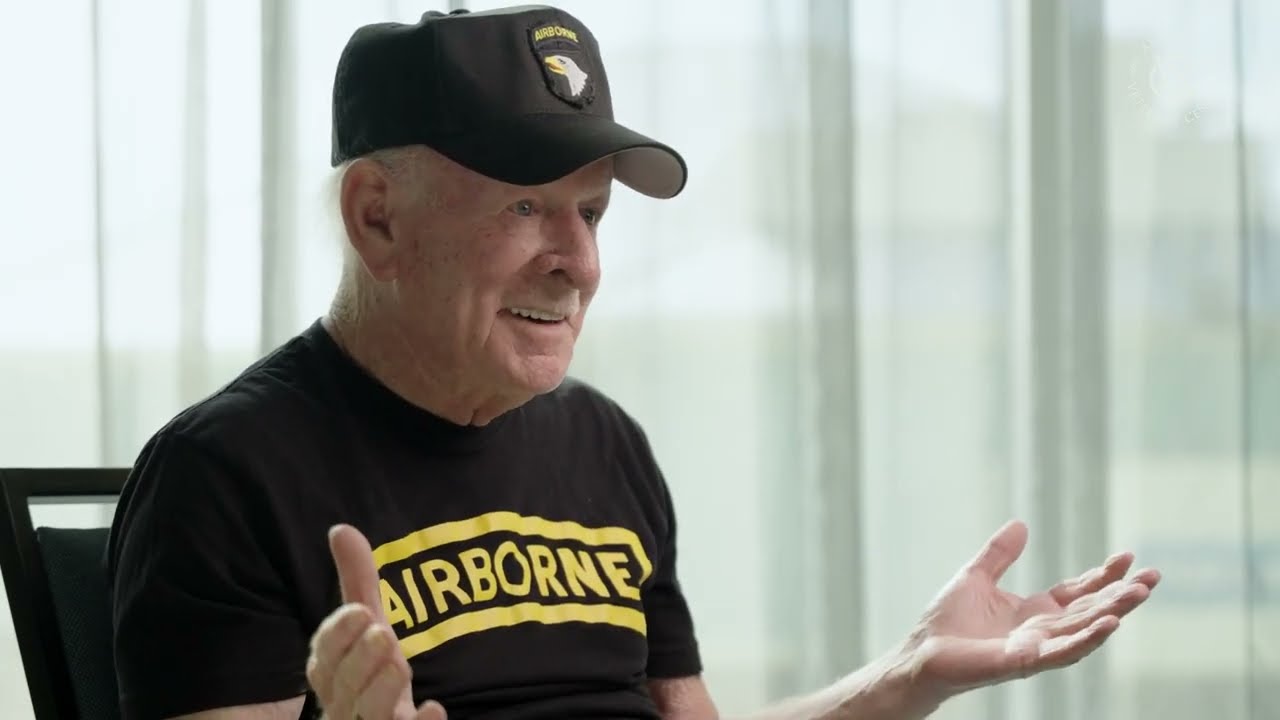 His return home didn’t lead to a shameful family or a hero’s welcome, but a return to the job as an electrician, working on the Pentagon where he navigated the vast complex in a golf cart. The deep divide of the Vietnam War veteran’s homecoming, a time of spitting and silence, is not lost on him. “We weren’t being recognized.
That was the biggest thing. And now, after 50-some years, don’t come around and thank me for my service. Where were you when we came home?”
he said, his voice sharp with the decades of accumulated resentment, the raw edge of memory still intact.
But in a defining act of service, he found a way to channel his own experience to help the next generation wounded and his own healing. After touring Walter Reed in 2005 and feeling he could not handle the pain, he returned the next year almost daily, volunteering his time. Using a network of veterans and donations, he would pick up families of wounded soldiers from the airport, a compassionate made more poignant by his own experiences.
He secured a position at the Army Medical Center, and job he loved, driving 725 miles each way to Fort Campbell to provide support. “It was a calling,” he tells me, “That’s the way I put it, so I’m honored to do it.”
The legacy of his famous uncle, Major Richard “Dick” Winters, opened doors for him smooth, the HBO series “Band of Brothers” brought the name back into the culture in the 1990s. He recalled his own skepticism at first, feeling it was “just another war movie.” But that HBO production, based on a Stephen Ambrose book, had a deep validation of the men he knew intimately.
His response was to connect with the veterans like Shifty Powers, the celebrated self-taught sniper of Easy Company, a man he considered a close friend, with conversations that weren’t about the glory of Battle of Foy but about a fishing trip that had never happened. “He was so at ease with everybody. And that’s the way he was, just like he said in the movie.
‘If it was the war, we might be best friends and gone hunting together,'” the veteran recalled.
The meeting with his uncle’s to tell the story, was not always easy, how the media behind the actor, Damian Lewis, sometimes, mirrored the things he’d seen, but the tension was placed in a moment that encapsulates the entire tapestry of his life. He remembers the HBO set when the actors were all in the back of a deuce-and-a-half truck on set, and Dick Winters came up and pulled the flap closed on them. “He never came back.
It reminded him so much,” he says, the weight of that shared, unspoken memory heavy in the air. The fragile line between the past and the present, between the stories told and the lived reality of the men who carry the name, remains a deeply personal and original part of his story and the history he exists to define.