Gary Sinise, the actor who immortalized the double-amputee Vietnam veteran Lieutenant Dan Taylor in the 1994 cinematic classic Forrest Gump, has revealed that the role did not merely define his career—it fundamentally redirected the course of his life, transforming him from a celebrated Hollywood figure into one of the most dedicated and tireless advocates for America’s military veterans and first responders. In a candid and expansive reflection, Sinise detailed how a character forged in the crucible of war became the catalyst for a three-decade-long mission of service, one that has seen him perform for troops in combat zones, comfort wounded warriors in hospitals, and build a multi-faceted foundation that supports those who serve. The actor’s journey, which began on the South Side of Chicago and wound through the creation of the legendary Steppenwolf Theatre Company, took a definitive turn when he stepped into the boots of a soldier, and he has never looked back, dedicating his life to ensuring that no veteran feels abandoned by the nation they fought to protect.
The narrative of Sinise’s life is a testament to the unpredictable power of art to shape destiny. Born in Blue Island, Illinois, a small suburb on Chicago’s South Side, his early years were marked by academic struggle. “I was a troubled teenager in some ways academically; it just didn’t go well for me,” Sinise admitted, but he found a lifeline on the stage.
 “I did find something that I was good at, which was getting on stage and clowning around and spitting out lines and acting in plays.” This passion, discovered in high school, became the foundation of his future. Rather than pursuing a traditional college path after graduating, he gathered a group of like-minded friends in 1974, and they began staging plays in any space they could find, purely for the love of the craft.
This humble beginning would eventually blossom into the Steppenwolf Theatre Company, a now multi-million-dollar institution on North Halsted Street that has launched the careers of countless actors, writers, and directors, embodying a quintessential American story of grit and determination. “It all started with nothing but little kids wanting to do plays,” Sinise reflected. “It really is a great kind of American Theater Story, the sort of the American dream—you just think of something and you put your heart into it and go for it and keep at it.”
The seeds of Sinise’s profound connection to the military were planted well before he ever donned a costume or spoke a line as Lieutenant Dan. His family history is steeped in service and sacrifice. His grandfather served in World War I as an ambulance driver during the devastating Battle of the Argonne, a conflict that claimed 26,000 American lives.
In a harrowing tale recounted by Sinise, his grandfather was part of a convoy of ambulances, all marked with Red Cross insignia, which the Germans deliberately targeted. “The one in front of him was destroyed and the one behind him was destroyed; for whatever reason he escaped,” Sinise recalled, noting that his grandfather, then just 17 or 18 years old, went right back to work after the attack. This legacy of service continued through the generations.
His Uncle Jerry was in the Navy in the Pacific during World War II, his Uncle Jack was a navigator on a B-17 bomber over Europe, and his father served in the Navy during the Korean War. Despite this rich history, these men remained silent about their experiences, a common trait among veterans of that era. “By the time I was old enough to really understand that my family had served in these devastating wars, all of them had put it behind them and they never talked about it,” Sinise explained.
It was only later, through his own journey into veteran advocacy, that he began to draw out these stories, piecing together the profound sacrifices his own blood had made.
It was his wife’s family, however, that would deliver the most visceral and immediate impact on his conscience. When he met his wife, he was introduced to her brothers, all of whom were Army veterans of the Vietnam War. This connection, coming at a time when the nation was still deeply divided over the conflict, proved to be a turning point.
Sinise listened with horror and compassion as his brother-in-law Jack, a combat medic, described the reception he received upon returning home from the jungles of Southeast Asia. “He got off the plane and he’s walking through the airport in his uniform and people are screaming at him and spitting on him,” Sinise recounted, the anger and sadness still palpable in his voice. “Can you imagine?
He just two days ago is in the jungle fighting a war and finally he gets to come home and that’s the reception he received.” That moment of profound national betrayal deeply affected Sinise, who felt a terrible compassion for these men who had served. He witnessed the fallout firsthand: Jack, who stayed in the Army and was surrounded by a community that understood him, fared better than his younger brother, a combat helicopter pilot who left the service and struggled enormously without that support system.
“I learned a lot quite a bit from the Vietnam veteran side of my family and I felt a lot of compassion for them… I felt terrible for them,” Sinise stated. The injustice and the suffering he saw ignited a desire within him to act, to do something to help right the wrongs of a generation.
In the early 1980s, looking for a way to channel his empathy and support for Vietnam veterans, Sinise, then a director, sought out material that could speak to their experience. He discovered a play called Tracers, written and performed by a group of Vietnam veterans themselves. The play was a raw, unflinching, and powerful depiction of their lives.
“It was so powerful, I convinced them to let me do it in Chicago,” Sinise said, describing the experience as a “galvanizing moment.” The production connected him to a community of veterans in Chicago, some of whom he remains in contact with today. The play was not just a theatrical exercise; it was a healing experience for the men who had written it and performed it.
For Sinise, it was a deep dive into a world he had only glimpsed from the outside, and it solidified his commitment to engaging with and supporting the veteran community. He was no longer just a sympathetic observer; he had become an active participant in their story, using his art to give voice to their struggles and begin the long process of healing.
This passion made him a natural fit for Hollywood’s wave of Vietnam films, leading him to audition for Oliver Stone’s Platoon in 1984. Having just spent years immersed in the Vietnam veteran community in Chicago, Sinise felt an intense imperative to be part of the film. “I’ve got to do this…
I felt like you know so passionate about the Vietnam experience,” he stated. Though his audition was strong, the project was shelved when its financing fell through. Undeterred, Sinise continued his work, moving to California to pursue more movie work, all the while keeping his focus on supporting veterans.
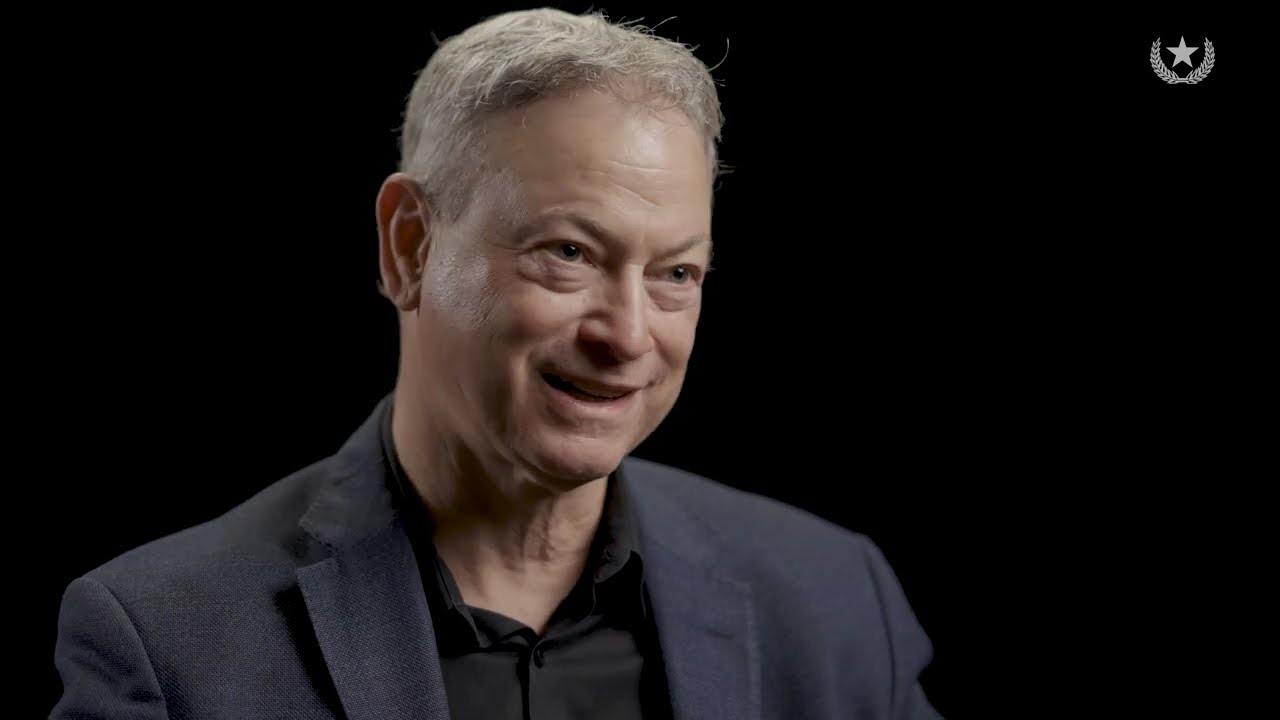 A decade later, a new opportunity arose: an audition for a character named Lieutenant Dan in a film based on a novel called Forrest Gump. After auditioning in 1993, he heard nothing for several weeks. He continued to audition for other roles, but that call eventually came.
“Three weeks later I get a call that I got the part,” Sinise said. “It was a career-changing because the movie was so good and so many people saw it.”
Playing Lieutenant Dan was more than a box office success; it was a profound artistic and personal challenge. The character, a proud military man from a long line of soldiers who loses his legs in the Vietnam War, was a complex portrait of trauma, bitterness, guilt, and, ultimately, redemption. Sinise was determined to get it right.
He drew on his family’s military history and the stories he had heard for years. He also leaned heavily on the film’s military advisor, a former Marine Captain named Dale Dye, who had trained actors for Platoon and many other films. “I really give him a lot of credit for helping to shape that first part of the story, making Gary Sinise into a military leader,” Sinise acknowledged.
He also based his portrayal of the character’s military bearing on his brother-in-law Mack, a West Point graduate who served two tours in Vietnam. The result was a performance that was lauded for its authenticity and emotional depth. Sinise understood the tragedy of Lieutenant Dan’s arc: a man who was destined for greatness on the battlefield, only to be sidelined and left to grapple with his own brokenness.
He couldn’t know it then, but the character’s journey would become the blueprint for his own life’s work.
Sinise saw in Lieutenant Dan a story that had never been told on screen before. In the Vietnam films of the late ’70s and ’80s like Coming Home, Apocalypse Now, and The Deer Hunter, the protagonists were often left broken, isolated, or dead. “You just always felt, I’m not just sure that that Vietnam veteran is going to be okay at the end of the movie,” Sinise observed.
But Forrest Gump offered a different narrative, one where a veteran, in this case, the fictional Lieutenant Dan, is able to process his war experience, move on, and find success. At the end of the film, Lieutenant Dan is not just standing; he is thriving—married, wealthy, and at peace. “That is the story that is what we want for every single veteran coming home from war.
We want them to be standing up again, moving on, and to be okay,” Sinise explains. This positive, hopeful ending is a major reason why the character has resonated so deeply with real veterans. He represents not just the struggle, but the possibility of a good life after service, a message of hope that Sinise would personally dedicate himself to spreading.
The massive success of Forrest Gump opened countless doors for Sinise, but he chose to use that platform to re-invest in the veteran community. He began supporting the Disabled American Veterans (DAV) organization, which represented 1. 5 million wounded veterans.
The role of Lieutenant Dan, now an iconic piece of American cinema, served as an introduction to innumerable veteran organizations and individuals. Sinise became a familiar and welcome presence, a symbol of respect and recognition for a generation that had been so shamefully treated upon their return from Vietnam. His work continued alongside his acting career, taking him into the next decade with films like Apollo 13, where he played astronaut Ken Mattingly, and The Green Mile.
While his Hollywood career flourished, the call to service grew stronger, laying the groundwork for a mission that would soon consume his life.
The events of September 11, 2001, changed everything. “I just wanted to do something to support them,” Sinise said, referring to the soldiers and families who would be affected by the new wars in Afghanistan and Iraq. He immediately volunteered for the USO, the organization that provides morale and welfare services to military members.
He began making tours to war zones, military bases, and hospitals, walking in and shaking hands with service members. In those moments, his fame as Lieutenant Dan became a powerful tool for connection. “Nine times out of 10 they didn’t know what my name was, but they knew Lieutenant Dan walked in the room,” he recalled.
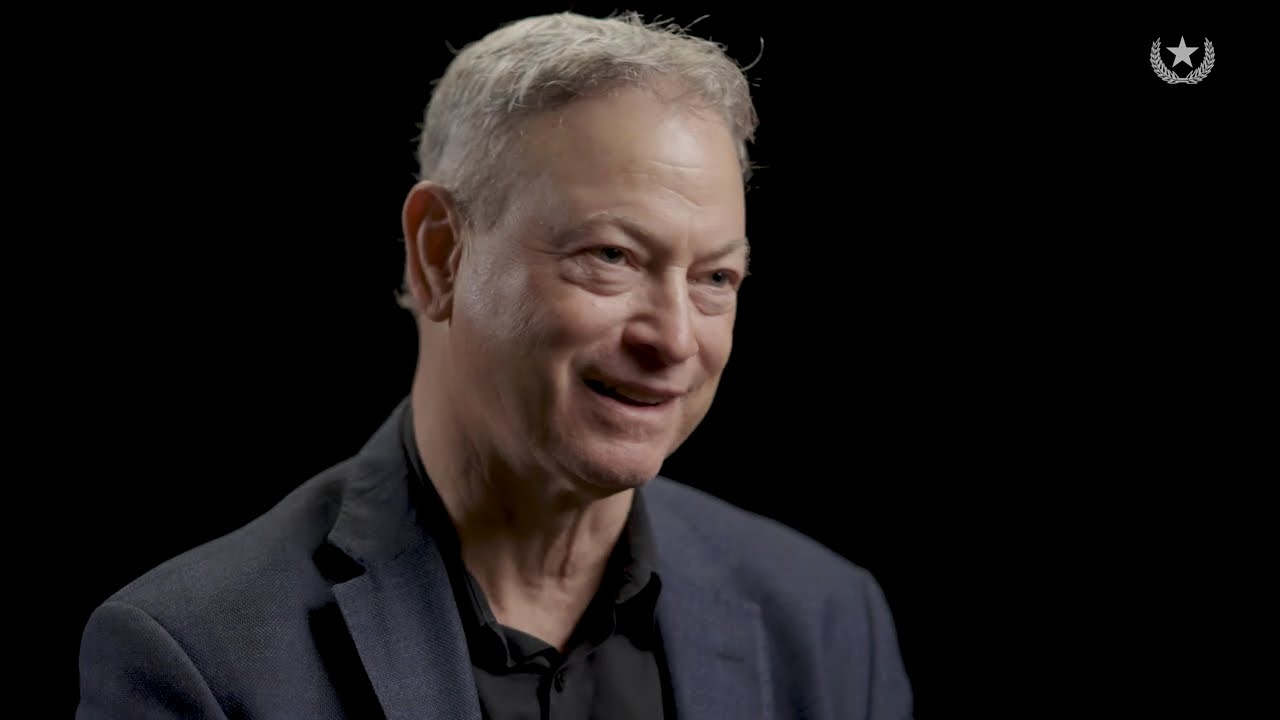 These interactions were the beginning of dozens of trips that would take him into the heart of combat zones and the sterile wards of military hospitals, where he would sit with the wounded and their families, listening to their stories and offering a moment of comfort.
During these USO tours, Sinise observed the entertainers who would perform for the troops and felt a pull to do more. An accomplished musician, he had a band that he played with for fun. He began to pester the USO for a slot where he could bring his music to the troops, hoping to expand his contribution beyond handshakes and hospital visits.
They eventually agreed, and the Lieutenant Dan Band was born. “Most people know who Lieutenant Dan is but they don’t know me, so I’ll just call it the Lieutenant Dan Band,” Sinise joked about the name. The band became a powerful way to entertain the troops, performing high-energy shows for thousands of service members around the world.
It was a way to give back the kind of morale boost that entertainers like Bob Hope had provided for earlier generations. The band tours regularly, playing for military audiences as a central program of his charitable work, providing a welcome escape and a sense of celebrity appreciation for their sacrifices.
The Lieutenant Dan Band was a starting point, but Sinise found himself constantly being asked to help with a wide variety of causes. He began a kind of peripatetic philanthropy, lending his name, time, and musical talents to dozens of different military and veteran nonprofits. He estimated he worked with 25 to 30 different organizations over a long period.
“One way that I found that I could support more people was by supporting a lot of different military and veteran and first responder nonprofits,” he explained. He was a one-man fundraising machine, helping these organizations to raise money and awareness for their critical work. It was a chaotic but effective approach, and it gave him a broad understanding of the landscape of needs facing the military community.
However, this scattershot approach had its limits, and Sinise began to feel the pull to consolidate his efforts under one roof, to create a more strategic and direct engine for good.
In 2010-2011, after decades of service, Sinise made the decision to formalize his work by creating his own nonprofit: The Gary Sinise Foundation. The name was a statement of commitment. “I’m just going to put my name on it and I’m going to make sure that people know if I’m putting my name on this it’s serious,” he said, understanding that his name represented a promise of quality, trust, and authenticity to the community he served.
The foundation would become his life’s work, allowing him to scale his personal mission to an institutional level. Under the foundation’s umbrella, his various projects—from the band to direct support for veterans—could have a dedicated team, a clear focus, and a sustainable infrastructure. The foundation now engages in a wide array of programs, from building custom smart homes for the most severely wounded veterans to providing essential resources, financial support, and community to active-duty service members, veterans, and first responders.
The Gary Sinise Foundation’s mission is broad and deeply personal. It is built on the simple but profound idea of showing up. “From the get-go, from the beginning, I saw that just being there, just showing up, just wrapping my arms around these kids was making an impact on them and their families,” Sinise said.
He describes himself as a “personal touch sort of person,” preferring to put on his boots and get on the ground rather than just writing a check. He travels to war zones, visits hospitals, and meets with surviving families, always engaging in a personal way. He famously tells his staff that if he cannot be there, they are his arms.
“You need to go out there and hug these kids and hug their moms and hug these wounded folks and just make sure that they know that you’re getting hugged from Gary if I can’t be there.” This philosophy is about more than just material aid; it’s about creating a sense of solidarity and belonging, proving to those who serve that their fellow citizens have not forgotten them.
For Sinise, this work is not just a duty; it is a source of profound personal enrichment. He has often spoken about the benefits he receives from connecting with the men and women he serves. “I’ve gotten a lot of spiritual personal enrichment from knowing that I can do something to help somebody,” he confessed.
It’s a reciprocity that he values deeply. In the faces of the soldiers, sailors, airmen, and Marines he meets, he sees the embodiment of the values he holds dear: courage, sacrifice, and resilience. The work gives his life a deeper meaning and purpose that his acting career alone could never have provided.
 He is genuinely moved by their stories and driven by their needs. This is not a performative act of charity; it is an authentic human connection that fuels his relentless schedule. He remains humble, insisting, “I don’t do it for a living.
I mean I make my living as an actor. The music I play is all for free, the traveling, all the work for these folks is all out of the service mission.”
Sinise’s transformation into an advocate is a remarkable story of how art can inspire action and how a fictional character can become a real-world force for good. He took the tragic hero of Lieutenant Dan and internalized his ultimate victory—his perseverance, his hope, and his return to life—and turned it into a mandate for himself. The actor’s nearly three-decade-long commitment to veterans and first responders has become his defining legacy, arguably overshadowing even his most iconic film roles.
With every handshake at a hospital, every guitar riff on a military base, and every custom home built for a wounded warrior or Gold Star family, Gary Sinise is honoring the spirit of the character who changed his life. He has become a living bridge for a nation trying to reconcile with its past and its present, ensuring that the men and women who wear the uniform are met with honor, gratitude, and unwavering support. The closing chapter of Lieutenant Dan’s story, where he learns to stand up again, is a vision that Sinise works tirelessly to realize for every single American service member, a noble cause that has truly defined his destiny.
The Gary Sinise Foundation has grown into a powerful force, with a dedicated team working every day to manage a complex array of programs that span the full spectrum of need. This includes supporting “virtual” initiatives that reach veterans in remote areas, as well as hosting events like the annual Snowball Express for the children of fallen soldiers. The foundation’s “Relief & Resilience” initiative provides emergency financial grants to veterans and first responders in crisis.
It was at the heart of their response to the COVID-19 pandemic, delivering food and supplies to thousands of vulnerable veterans. Sinise has built a leadership team that shares his passion and his drive, ensuring that his personal vision of “hugging” those in need is institutionalized. He insists that the credit for the foundation’s success lies with this team, acknowledging, “You can get so much more done if you have an organization and a team backing you up, and I’ve got a great team doing that.”
The operational strength of the foundation has allowed Sinise to continue his frontline work, making frequent appearances at military installations and hospitals, while also scaling up to support communities across the nation.
Sinise’s work has not gone unnoticed. He has received numerous awards for his humanitarian efforts, including the Presidential Medal of Freedom, the nation’s highest civilian honor, presented to him by President Donald Trump in 2019. The award recognized his career and his devoted service to veterans.
In the citation read at the ceremony, he was lauded for his dedication to “defending the defenseless” and for his “four decades of service to the Armed Forces” and “his tireless work on behalf of this country and its citizens.” Yet, for Sinise, the awards are secondary. His true reward is in the moments of connection—a tearful hug from a Gold Star mother, a sincere “thank you” from a Marine recovering from his injuries, a smile from a child at a military family event.
He often tells stories of these encounters, using them as a reminder to his staff and supporters of the real people behind the mission. “It’s a good feeling, there’s no question why would you come back over and over again if you weren’t feeling like you were making an impact,” he said. The foundation is not just an organization; it is an expression of his character, a personal promise kept to the men and women who keep the nation safe.
Decades after he first heard the harrowing stories of his wife’s brothers, who returned from Vietnam to a country that scorned them, Gary Sinise has spent his life trying to ensure that history doesn’t repeat itself for a new generation of veterans. He saw the devastating impact of post-traumatic stress and a lack of support, and he has worked to build a safety net of compassion and tangible aid. He is acutely aware that the battle continues long after a soldier leaves the war zone.
The Gary Sinise Foundation’s funding for veteran suicide prevention, for instance, is a direct response to the darkest consequences of war. He believes that every service member who comes home deserves to write their own story of redemption, just as Lieutenant Dan did. “It really is a nicely constructed story…
it’s a beautiful story,” Sinise says of the movie’s finale, but he is quick to note, “That is the story that is what we want for every single veteran coming home from war.” By investing his life in this mission, Gary Sinise is doing more than acting; he is helping to rewrite the narrative for America’s heroes, ensuring their sacrifices are met with gratitude, and that they, too, can find their own “shrimping boat” that leads them back to a life of purpose and peace.
As the years go by, Sinise doesn’t show any signs of slowing down. He continues to be a constant presence in the ongoing story of American military service. His dedication is a powerful counterpoint to the often-fleeting nature of celebrity.
He has used his fame not to build a more opulent lifestyle, but to build a stronger support system for others. When he travels to a combat zone and walks into a mess hall, he might not be introduced as “Gary Sinise, the founder of a foundation,” but rather as “Lieutenant Dan” – the man who, in the film, lost his legs and ultimately found his way. The symbolism is not lost on him.
He sees the power of that story every day in the eyes of a double-amputee who draws strength from the character’s journey. His personal story has become intertwined with that of a character he played, and he has chosen to let that character’s best traits guide his own life. In an era of swirling media narratives, the story of Gary Sinise stands out as a testament to the power of art to not just reflect a nation, but to inspire a life of service.