Archaeological discoveries across Europe, Asia, and the Middle East have revealed ancient graves where humans were buried beside animals with the same care given to family members. These finds have led researchers to ask whether the human-dog bond began thousands of years earlier than previously assumed, and what kind of relationship existed between early humans and wild wolves. One notable burial discovered in what is now Germany and dated to roughly 14,000 years ago contains a young dog laid beside two humans. Evidence suggests the animal had survived a serious illness long enough for someone to have nursed it through weeks of suffering.
Researchers point out that a sick wolf would not have received that kind of care, and a hunting tool would not have been buried with such attention. The burial indicates that the relationship between humans and dogs had already become emotional by that time, with compassion playing a central role. The story of how wolves may have become dogs is not tied to a single event or location. Modern DNA research indicates that the domestication of dogs unfolded across many generations and in multiple places, as wolves and humans gradually adapted to one another.
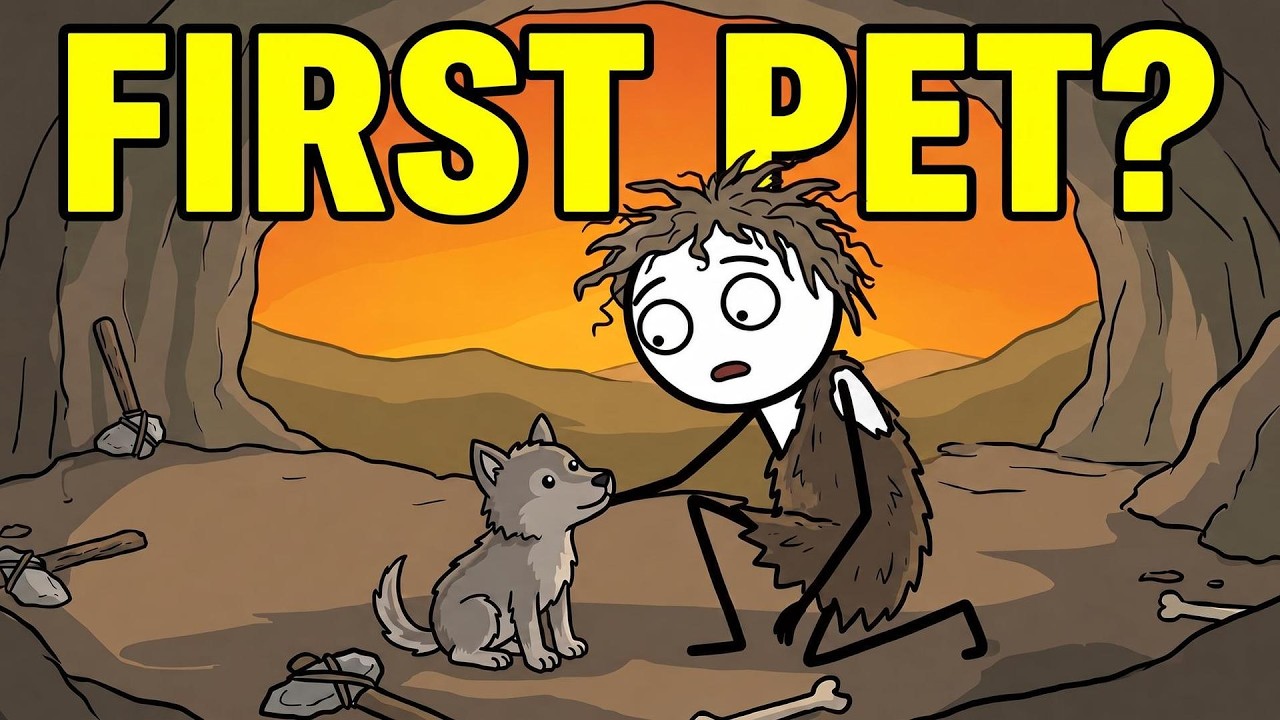
Rather than being the result of domination or deliberate training, the partnership appears to have grown through mutual benefit and trust. Scientists suggest the process likely began when early humans encountered wolves near their camps. Some wolves may have lingered at the edges of human settlements, feeding on scraps. Over time, the boldest wolves that tolerated human presence ate more regularly, while the calmest survived longer.
The most aggressive wolves remained in the wilderness. Generation after generation, these invisible choices reshaped the animals, favoring those that could coexist with people. This slow transformation appears in the archaeological record. Ancient graves show dogs curled beside humans, some wearing ornaments, and others placed with unusual care facing the person they accompanied in life.
Researchers interpret these remains as signs of grief and emotional attachment rather than practical utility. They argue that humans did not treat these animals as food, tools, or trophies, but as companions. Before dogs fully crossed that line, other animals also formed quieter agreements with humans. Ravens followed hunting parties and led people toward fresh carcasses while circling overhead for their own reward.
Wildcats lingered near growing settlements, chasing the rodents attracted by stored grain. In exchange, the cats reduced the loss of supplies. Even reindeer, whose migration routes humans learned so well that entire communities shaped their lives around them, became familiar rather than frightening. Yet not every animal could become a pet.
Ancient humans respected the difference between companionship and survival. A bear cub might seem harmless for a season, but adulthood could turn curiosity into danger. A young fox could linger around camp for scraps before returning permanently to the wilderness. Only a few species truly crossed the boundary, and only one crossed it completely.
The exact moment when the first wolf accepted food from a human hand is lost to history. Researchers note that the decision would have carried real risk. Wolves were competitors and predators, seen as threats to the survival of early human families. Feeding one in a time of scarce food would have seemed irrational to everyone watching.
Yet the archaeological and genetic evidence suggests that somewhere, someone made that choice, and the consequences echoed for tens of thousands of years. The result is the deepest partnership in human history, one that was not born through domination but developed through trust. Dog and human shaped one another over countless generations.
The animal that once stared into the darkness deciding whether humans were prey or partners eventually became the companion sleeping at the foot of millions of beds.