The Sahara Desert was once a green savanna dotted with lakes, rivers, and wildlife, a transformation driven by a period of sustained monsoon rains that lasted roughly 10,000 years. During this time, early humans did not merely survive the constant rainfall; they built settlements, created extensive rock art, and developed sophisticated methods to cope with a climate that has since completely vanished. The most immediate threat from relentless rain was not dampness but hypothermia. Wet skin and clothing lose heat far faster than dry materials, meaning the primary challenge for ancient peoples was keeping their bodies dry enough to avoid a lethal drop in core temperature.
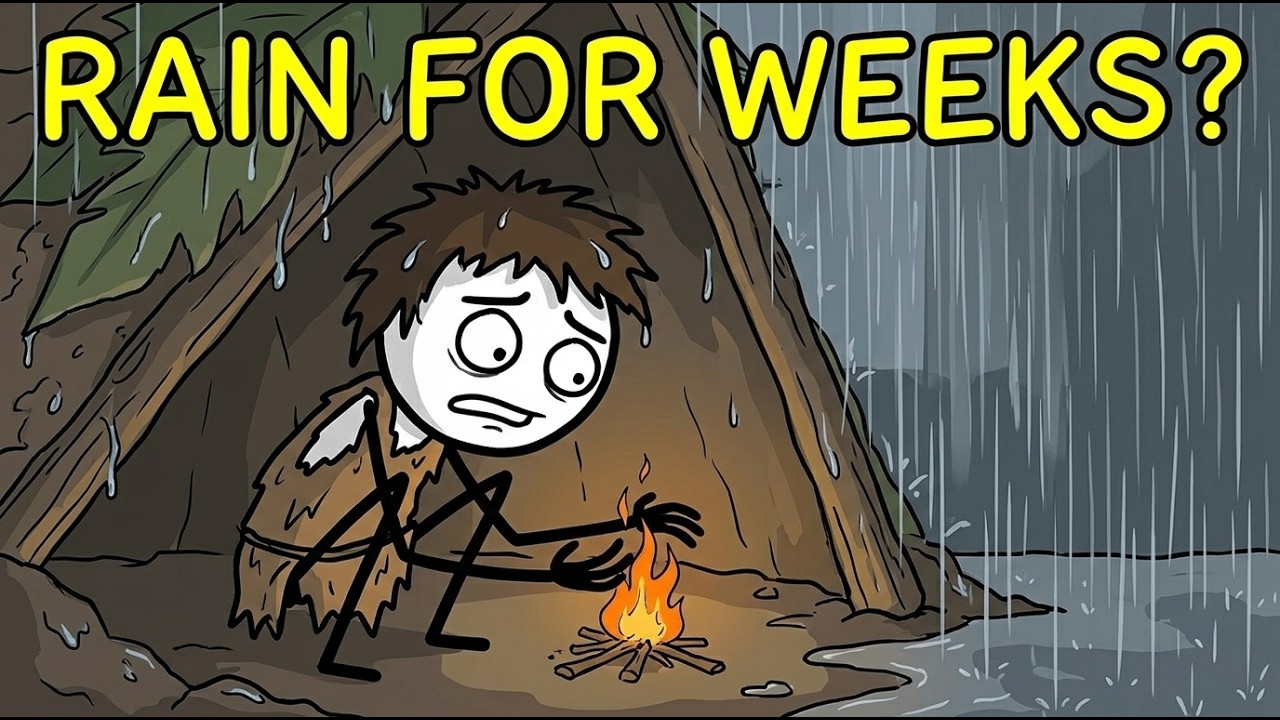
This led to the development of tailored clothing made from animal hides, which were scraped, stretched, and treated with fats and oils to enhance both water resistance and insulation. Shelter design was equally critical. While natural caves offered ready-made protection, ancient builders in other regions engineered steeply angled thatched roofs to shed water and constructed dwellings with raised floors to survive seasonal flooding. Many settlements also incorporated perimeter drainage channels to redirect runoff and prevent the rot and disease that came with standing water.
These survival strategies became the foundation for entire civilizations that grew around the presence of water. The African Humid Period, roughly 14,500 to 5,000 years ago, saw the monsoon push further north, turning the Sahara into a habitable landscape. Ancient rock art from the era depicts swimmers, hippos, and cattle in regions that are now barren, while archaeological sites like Takarkori in Libya show nearly 5,000 years of continuous human occupation and contain ancient DNA revealing a previously unknown North African genetic lineage. This wet era did not end suddenly but through a turbulent period of repeated droughts and bursts of extreme wetness.
As the rains finally retreated around 5,000 years ago, populations migrated toward the Nile Valley and other water sources, carrying their accumulated knowledge with them. This pattern of civilization rising and falling with rainfall is also evident in the Harappan civilization of the Indus Valley, which depended on strong monsoons for its agriculture until the rains weakened, and in the Indian Peninsula, where hunter-gatherers were forced into permanent farming as their lush environment dried up. Researchers have also found that human survival was not entirely dependent on immediate rainfall. A study on East Africa’s Rift Valley suggests that natural springs, fed by groundwater stored in certain rock types, provided a reliable water supply that buffered communities against the worst swings in climate.
This slow-release natural reservoir system gave settlements near these springs a decisive survival advantage, independent of their other skills. Flood management was another major achievement. From around 7,600 BC, communities along major rivers developed organized responses to seasonal flooding. In ancient Egypt, the Nile’s annual flood was not seen as a disaster but as the very basis of agriculture, fertilizing the floodplain and dictating the rhythms of planting and harvest.
This required constant engineering to protect against floods that exceeded the beneficial range. The overall picture is not one of passive endurance. Ancient humans adapted on multiple fronts simultaneously, from engineered clothing and shelters to migration patterns that followed the shifting monsoon and agricultural systems built around predictable floods.
The people who lived through the Green Sahara did not just scrape by; they built lasting structures, created enduring art, and adapted for thousands of years to a world defined by water, proving that sustained rain was not always a catastrophe but often the very reason civilization became possible.